A lawsuit involving billions of dollars in climate grants is headed back to court on Tuesday, more than a year after the Environmental Protection Agency tried to cancel the awards and claw back the money.
For the nonprofit groups that were blocked from spending the funds while the legal battle played out, it’s been a long wait. Some have had to cut staff and drastically restructure because the money has been frozen. One asked the E.P.A. to end its participation in the program altogether, despite the fact that its work had barely started.
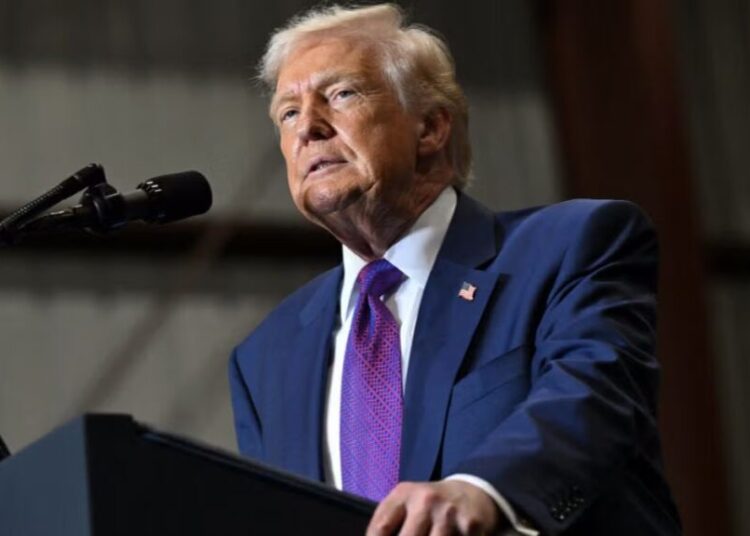
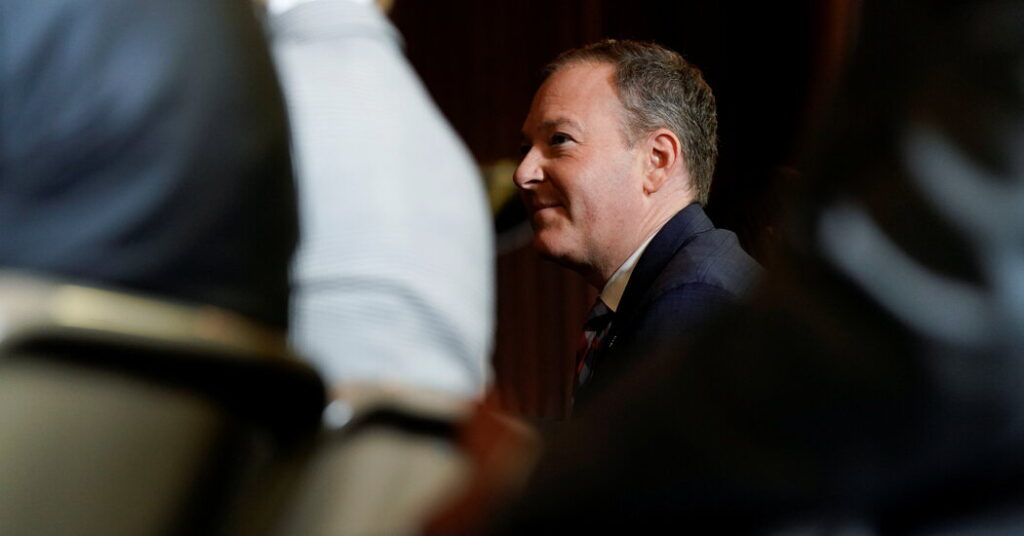
Last February, Lee Zeldin, the E.P.A. administrator, seized $20 billion in clean energy grants known as green bank funding, that were awarded to eight groups under the Biden administration. Mr. Zeldin claimed there was misconduct, conflicts of interest and potential fraud.
But investigations by the Federal Bureau of Investigation and the agency’s Office of Inspector General have not presented evidence of fraud. Still, the E.P.A. sought to freeze the funds and cancel the grants, which totaled roughly double the agency’s budget for 2025. Lawsuits followed, and on Tuesday the U.S. Court of Appeals for the District of Columbia Circuit will reconsider an earlier ruling that found the case should be tried in a different court.
The eight nonprofit groups expected to spend the last year leveraging billions of government dollars into low-cost loans and investments for renewable energy projects around the country.
Instead, some are struggling to stay afloat.
“We’ve had to lay off a very sizable part of our team,” said Tim Mayopoulos, chief executive of Power Forward Communities, which had been approved for a $2 billion grant. The organization has not been able to fund any of the projects it had announced, like energy-efficiency upgrades in affordable housing developments. And while the plan was to assemble a team of 30 to manage this work, the organization is now down to two employees, said Mr. Mayopoulos, a former chief executive of Fannie Mae.
At Climate United, which was awarded nearly $7 billion in grant funds, staffing has shrunk to fewer than 10 from about 80 people, said Beth Bafford, the organization’s chief executive. Everyone else has been let go, has been reassigned or has quit, she said.
“We’re really focused on two core things,” Ms. Bafford said. “One is how do we push the work forward that we all love doing? And two is how do we get this legal process to a conclusion that gives us access to funds and allows us to do the work that we were meant to do in the first place?”
In September, a three-judge panel on the U.S. Court of Appeals for the District of Columbia Circuit determined that it did not have jurisdiction over the case, ensuring the funds would remain frozen as the case worked its way through a court that considers federal contract disputes.
Months later, the appeals court agreed to review the case in an en banc hearing, which means 10 judges will weigh in, instead of the typical three-judge panel.
Though the plaintiffs see the new hearing as a hopeful development, they are not expecting to see the money anytime soon, Ms. Bafford said. A decision after Tuesday’s appearance could take months and may be followed by an appeal to the Supreme Court.
Justice Climate Fund, which was awarded a $940 million grant, has asked the E.P.A. to bring its award to a close, though it spent only $13 million before its funds were frozen. It’s not clear whether completing this process would mean the organization gives up any claim to frozen grant funding. The request was prompted by a desire to move forward, said Amir Kirkwood, the organization’s chief executive. He said the E.P.A. hadn’t responded to the request.
The frozen grants came from the Greenhouse Gas Reduction Fund, a $27 billion grant program established by Congress in the Inflation Reduction Act, which passed in 2022 without Republican support.
The grants were thrown into chaos last February, when Mr. Zeldin announced that the E.P.A. had found “billions of dollars’ worth of ‘gold bars’” at an outside financial institution.
The “gold bars” referred to a hidden-camera video made by the conservative group Project Veritas, in which a Biden E.P.A. staff member compared the outgoing administration’s efforts to allocate money in its final months to tossing gold bars off the Titanic. The outside financial institution was Citibank, which had entered an agreement with the E.P.A. to manage the grant dollars.
While Mr. Zeldin initially suggested fraud had been involved in the grant decisions, the E.P.A. has backed away from that claim in recent legal briefs. Instead, the agency has said that it can cancel the grants because its priorities have changed. It has also argued that the case was filed in the wrong court and should be heard in the Court of Federal Claims, which deals with contractual disputes.
In September, two Trump-appointed judges at the U.S. Court of Appeals for the District of Columbia Circuit sided with the agency. Now, a panel of 10 judges will reconsider. They include three Biden appointees, three Trump appointees and four Obama appointees.
“In early 2025, E.P.A. Administrator Zeldin proudly terminated $20 billion in G.G.R.F. funding that was awarded to eight National Clean Investment Fund and Clean Communities Investment Accelerator entities as serious concerns were raised regarding self-dealing and conflicts of interest, unqualified recipients and reduced government oversight,” said Brigit Hirsch, a spokeswoman for the E.P.A.
Environmental groups, legal scholars and politicians have filed briefs in support of each side.
Republican attorneys general from 24 states led by West Virginia filed a brief supporting the cancellation of the grants. “The program’s evaluation criteria prioritized ‘climate equity’ over financial stability, effectively directing taxpayer dollars to advance an ideological agenda that disadvantages energy-producing states like West Virginia,” they wrote.
Forty members of Congress filed a brief supporting the nonprofits. “At its heart, this is a case about whether the executive branch can freeze and confiscate lawfully made funding awards held in private bank accounts without due process,” they wrote. “If so, then perhaps no one in the United States is safe from such unchecked arbitrary action.”
Claire Brown covers climate change for The Times and writes for the Climate Forward newsletter.
The post Billions in Climate Grants, Frozen for a Year, Are Back in Court appeared first on New York Times.