Matthew Lynn is a financial columnist and author. He writes for the Daily Telegraph and the Spectator in London.
Over the last two decades, China has pumped huge amounts of money into owning the world’s critical raw materials and infrastructure. In effect, it was trying to buy an empire. But over the last few weeks something has become painfully clear. It failed, and in the end, financial power is no substitute for the real thing.
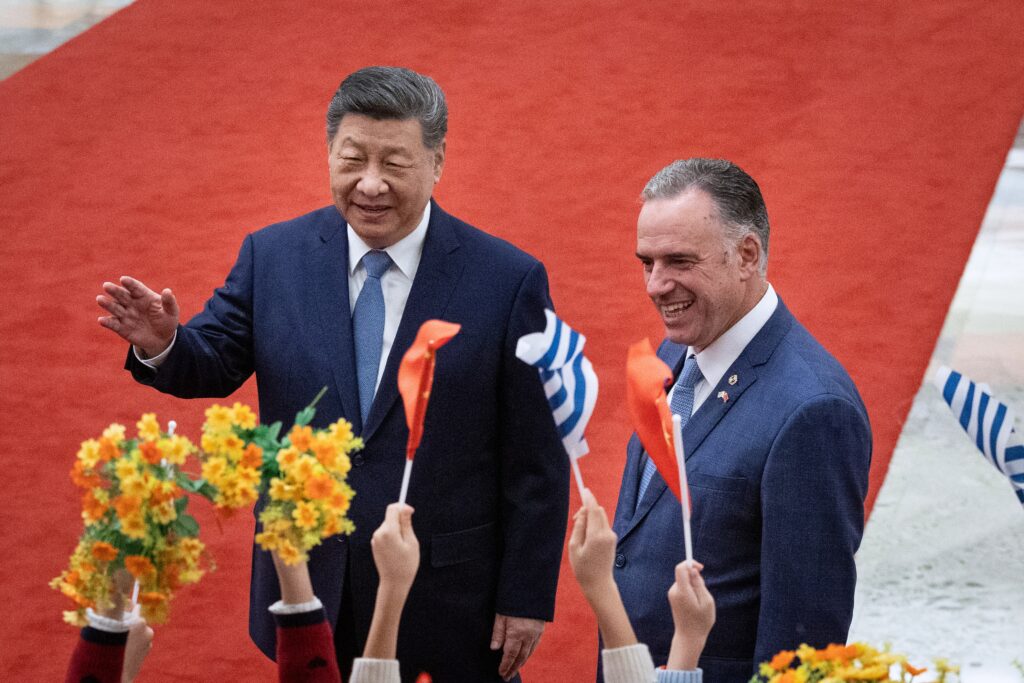
Launched in 2013 by President Xi Jinping, the Belt and Road Initiative aimed to connect the world through cheap loans and equity partnerships that spanned the world. To many policy analysts, it looked like a concentrated effort to turn China into a superpower to match the United States. It was variously described as “debt-trap diplomacy,” “creditor imperialism” or a “Trojan Gift.” As far back as 2011, Hillary Clinton, when she was secretary of state in the Obama administration, was warning of a “new colonialism” in Africa as China expanded its influence across the continent. With soft loans, easy credit and plenty of technical expertise, China would gradually take control of the arteries of the global economy. If anyone complained, it could simply switch off the credit and bankrupt the country, or close down the trade routes.
We can all debate whether that was really true, or whether, as Beijing’s apologists liked to claim, it just happened to think that railways and shipping terminals in Asia, Africa and Latin America were really good investments. Either way, there is now a more important point. Its power was far more fragile than it first appeared.
China’s geopolitical ambitions have suffered a whole series of setbacks. The courts in Panama have ruled against Hong Kong’s CK Hutchison owning the ports at either side of the crucial canal through which at least 40 percent of U.S. shipping flows. Following the arrest of the Venezuelan dictator Nicolás Maduro its investment in the Latin American state looks far less valuable. Iran? You wouldn’t describe any investment in the country as rock-solid right now. Italy scaled down its agreements with China in 2023. The more than $23 billion it has pumped into Argentina probably won’t secure any special favors from President Javier Milei: He hates Marxists almost as much as he loves chainsaws. The list goes on and on. China has spent an estimated $1.5 trillion on its Belt and Road strategy, a huge sum of money for what is still basically a developing economy.
In fairness to the geopolitical strategists surrounding Xi, a stealth empire was not a terrible idea. Sure, it was never cheap: Beijing doesn’t exactly believe in publishing accurate statistics, but it has spent roughly 10 percent of gross domestic product over a decade on the project, or about 1 percent of GDP per year. But it was a lot cheaper than trying to match the U.S. and the rest of NATO dollar for dollar on military spending. With enough investment, it could bring much of the world into Beijing’s orbit. If it owned all the infrastructure, plus the mines, plus the software that connected everything, then it could turn itself into a global superpower without the hassle of military invasions.
The trouble is, financial and commercial power has its limits. Ownership of any asset can be overturned by a court, as China discovered in Panama. After a change of regime, as in Venezuela, control of infrastructure can be changed by regulatory fiat. Ports and railways can be nationalized, sometimes without even any compensation. A regulatory change can be imposed at will, and a central bank can devalue a currency, rendering a loan virtually worthless. There is little a distant shareholder or creditor can do about that. It can complain or appeal if it wants to, but in the end, the decision of the government in each country will be final.
We have seen something similar take place with the European Union. The pen pushers in Brussels spent much of the last 20 years boasting about how they were turning the bloc into a “regulatory superpower.” But when President Donald Trump threatened to annex Greenland, it turned out that the power to set rules for phone chargers was hardly the deterrent they thought it was.
There is a lesson in that. China can spend all the money on infrastructure it wants. The E.U. can regulate as much as it wants to. But in a crunch, it is only military force that counts. The country that can deliver men and weapons anywhere in the world at a moment’s notice is the only one that can shape the world to its own interests. China seems to have started to work that out, which may well explain why it has kept on increasing military spending at a rate well above its GDP growth. It realized that the Belt and Road program may have been a colossal waste of money if it can’t be backed up by hard power. The U.S. will have to match with higher spending of its own.
The lesson of the last decade is surely this: You can’t buy an empire, nor can you purchase global influence. It is only hard power that counts for anything.
The post China tried to buy the world. It failed. appeared first on Washington Post.