Just over a year into President Donald Trump’s first term, there had been roughly 10,000 protests nationwide during the first Trump presidency. By the same point in Trump’s second term — January 31, 2026 — there had been more than 40,000.
Key takeaways
- After months of research, I’ve come to conclude that democratic survival in the face of threats like Trump is determined in large part by how obvious the threat to democracy is. The more people recognize that an elected leader is trying to destroy democracy from within, the less likely it is that said leader will succeed.
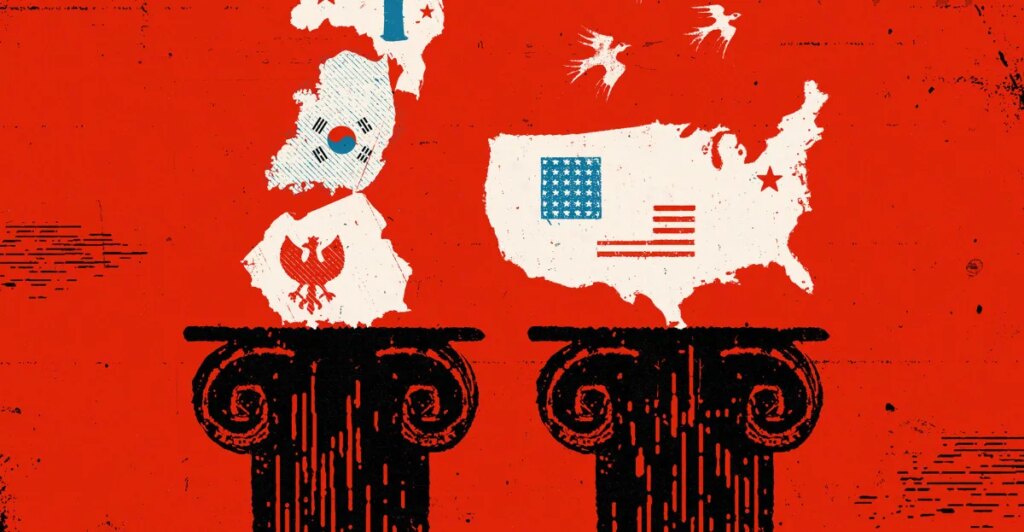
- Evidence from Brazil, South Korea, and Poland — all democracies that defeated a would-be authoritarian government — show that the legibility of threat to key segments of society was critical in mobilizing the pushback that decided democracy’s survival.
- This has important implications for the United States going forward. Instead of sidelining the issue of democracy, as some political pollsters suggest, those concerned about the issue should foreground it — working hard to illustrate how Trump’s behaviors threaten core freedoms people cherish.
They were, as you might expect, overwhelmingly in opposition to the Trump administration’s policies. Partial data — covering just 41 percent of events — showed more than 10 million participants.
The protests represented a broad citizen awakening: one that produced not just symbolic marches, but concrete and meaningful action. This could be seen across the administration, from the Tesla Takedown movement that helped push Elon Musk out of government to the recent Minneapolis anti-ICE activism that forced the Trump administration to announce an end to its Twin Cities surge.
What has motivated so many Americans to act? According to Erica Chenoweth, the Harvard political scientist whose team compiled the data,
“The top three claims expressed during the protests are concerns about the presidency, democracy, and immigration. These themes dominate the protest landscape,” Chenoweth writes. America, in their view, now has “a growing, durable, and disciplined pro-democracy movement.”
The conventional wisdom says this shouldn’t be happening. Most experts will tell you democracy is a political loser: too abstract to motivate ordinary citizens. Many believe Kamala Harris lost partly because she talked about democracy too much, missing swing voters who wanted to hear about “normal” issues like the cost of living or corruption.
But Chenoweth’s data didn’t surprise me.
I’ve spent the past six months researching how to fight democratic backsliding as part of a fellowship at the University of Pennsylvania’s Perry World House. What I’ve learned is that the conventional wisdom is wrong. Democracy is in fact a powerful motivating factor: When people are convinced that there’s a threat to their political freedoms, they can be motivated to go to extraordinary lengths to defend them.
For this reason, elected authoritarians who wish to consolidate control typically win not by flashy displays of might, but by convincing a critical mass of people that they’re just a normal politician — no threat to democracy at all.
That means the survival of democracy depends, to an extent not fully appreciated, on perceptions and narratives. In three recent countries where a democracy survived an incumbent government bent on destroying it — Brazil, South Korea, and Poland — the belief among elites, the public, and the opposition that democracy was at stake played a critical role in motivating pushback.
For the United States to make it out of its own crisis, we need to take this lesson to heart: not marginalize discussion of Trump’s threat to democracy, but bring it to the fore.
How to save a democracy
While working on this piece, I read nearly everything available on fighting modern backsliding, spending weeks combing through scholarly databases.
To be honest, there wasn’t much.
Why I wrote this story
I’ve been writing about democratic decline for about a decade at this point, and I realized that we knew a lot more about how democracies die than we do about how they survive. So for the past few months, I’ve been doing research as part of a fellowship at the University of Pennsylvania’s Perry World House to try and address that gap.
I realized during that work that there was a big obvious answer staring me in the face, but one that was ignored by most experts and even explicitly downplayed by most experts. This story is my attempt to explain what that answer is and why it means going forward for America’s crisis.
Google Scholar has over four times as many papers on “democratic backsliding” (the process by which an established democracy becomes authoritarian) as on “democratic resilience” (the academic term of art for resisting backsliding). The backsliding papers also get far more discussion: the most discussed paper on that topic has 2,976 citations, compared to just 307 for the leading paper on resilience.
And much of the research on resilience focuses on the structural factors that help a democracy survive an autocratic bid — whether it has a high GDP, for example, or a long history of democratic rule. These are important questions, but not actionable ones. “Make your country richer” is not exactly helpful advice.
The end result: While most scholars of democracy can tell you how to kill one, very few have evidence-based ideas about how to save one.
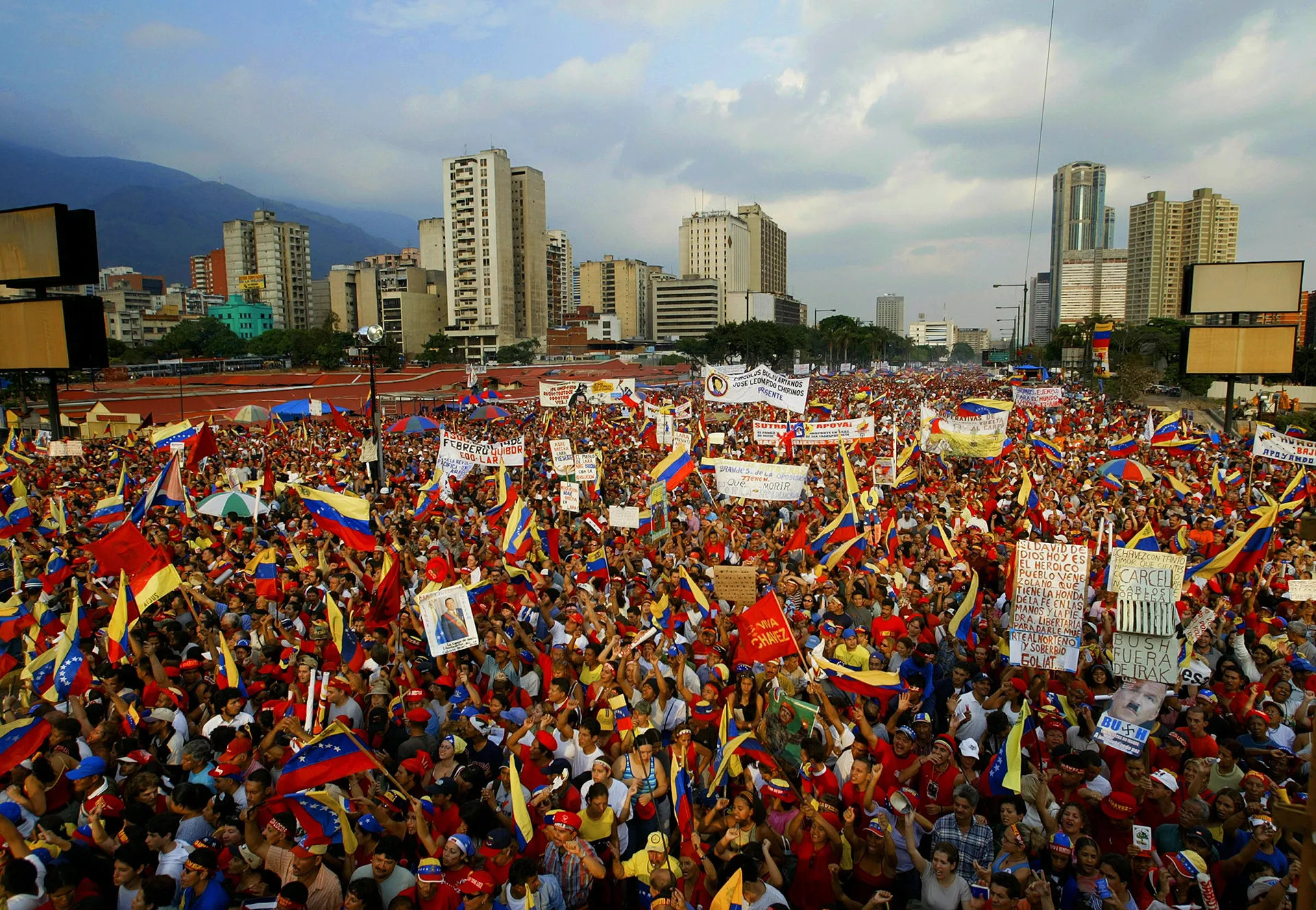
Laura Gamboa is an exception. A political scientist at the University of Notre Dame, she published a book in 2022 on strategies against backsliding used by opposition parties — contrasting Venezuela, which collapsed into dictatorship under Hugo Chávez, and Colombia, which survived a similar autocratic bid by President Álvaro Uribe.
Elements of the Venezuelan opposition took extreme measures to overthrow Chávez, staging general strikes and even a coup attempt. The Colombian opposition, by contrast, was more institutional: They aimed not to force Uribe out but to blunt his legislation and defeat his party at the next election.
The Venezuelan opposition’s radicalism made them, not Chávez, appear as enemies of democracy, Gamboa found — giving him the public cover he needed to crack down. In Colombia, the opposition’s insistence on playing by the rules denied Uribe similar opportunities and delayed his power grabs long enough that he could be forced out by legal means.
While most scholars of democracy can tell you how to kill one, very few have evidence-based ideas about how to save one.
This argument for strategic moderation raises a question: Why do would-be dictators care so much about having a pretext? If Chávez wanted to seize power, why didn’t he just do it?
Because when they do, Gamboa notes, the backlash is overwhelming. She cites, as one example, Peruvian President Pedro Castillo’s 2022 declaration of a state of emergency. The move was so obviously authoritarian that it galvanized Peruvians, and the international community, to act — leading to Castillo’s impeachment and arrest on the very same day as his attempted power grab.
Smart authoritarians, Gamboa notes, “have learned that they can avoid this kind of backlash and maintain a democratic facade by undermining democracy gradually instead.”
Virtually every expert on backsliding has observed that would-be authoritarians value a democratic facade. But too few appreciate the implication: that autocrats have good reason to believe their project will fail if too many people see it as authoritarian, creating a point of vulnerability their opponents can exploit.
My book The Reactionary Spirit focuses on why modern authoritarians work so hard to hide their true intentions. The answer, I think, is straightforward: People still want to live in a democracy. Polls from around the world show strong international preference for democratic systems, leading would-be autocrats from Chávez to Hungary’s Viktor Orbán to spend tremendous resources convincing supporters they are playing by democratic rules.
But this doesn’t just explain why autocrats talk the way they do: it explains a major part of why they succeed or fail.
To defeat an authoritarian project, people — in courts, legislatures, the military, business, civil society, and the mass public — must choose to fight rather than collaborate in democratic decline or ignore it altogether.
These different social groupings make decisions for diverse, often contradictory, reasons. But I think the government’s success at building and maintaining a democratic facade is one of the most important factors, simply because many people genuinely care about preserving democracy.
Under ordinary political circumstances, this concern is unnoticeable. People in democracies generally assume political life will continue as normal, and so they prioritize other concerns: political squabbling, bureaucratic infighting, the pursuit of short-term profit, or even non-political hobbies and interests.
The purpose of a democratic facade is to maintain this expectation of normalcy. But once it is punctured, either due to a misstep by the authoritarian or proactive measures by their opponents, the resistance can be overwhelming.
Political scientists and democracy activists typically focus on structural factors (development level, polarization), institutional design (presidential versus parliamentary systems), or raw power politics (how many seats the executive’s party controls) to explain why authoritarians succeed or fail. All these things matter, in some cases more than the perception of a threat to democracy. There’s no one-size-fits-all theory of democratic collapse.
But the legibility of the threat matters much more than most people give it credit for, and it has played a decisive role in some of the biggest cases of democratic resilience in recent memory.
Brazil: A threat legible to the elite
For decades, Jair Bolsonaro was a backbencher in Brazil’s Congress, notable primarily for his lack of legislative accomplishments and bombastic rhetoric. He once, for example, suggested that parents of gay children should have beaten them more when they were young.
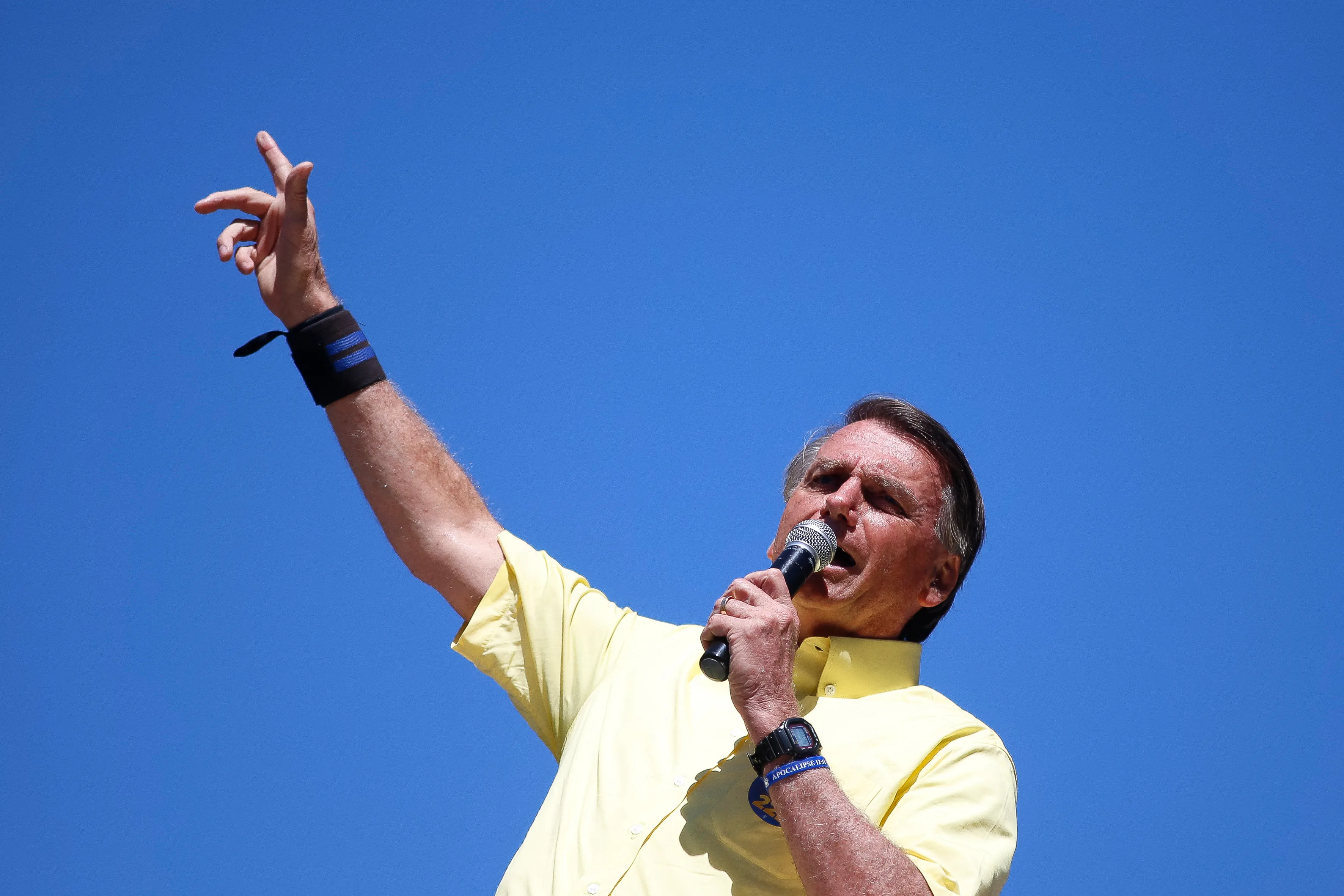
He brought the same vicious bluntness to his anti-democratic politics. A former army captain, he spent much of his career openly praising the country’s military dictatorship (in power from 1964 to 1985). When he voted to impeach the left-wing President Dilma Rousseff, a former anti-dictatorship guerrilla tortured after the military caught her, he dedicated his vote to the officer who supervised her abuse.
When Bolsonaro ran for president in 2018, many in the Brazilian elite laughed it off — surely no one like that could win. But the so-called Trump of the Tropics indeed won, powered by a far-right base and mainstream voters disgusted by a massive corruption scandal. The question then immediately became whether he was as sincere as an authoritarian as he seemed.
Though Bolsonaro had tried to backtrack his support for the dictatorship during the campaign, his early moves were telling. His first Cabinet included about as many soldiers as civilians. He refused to form a coalition with other factions in Congress, necessary to pass legislation in Brazil’s hyper-fragmented multiparty system, and relied on executive powers instead.
But Bolsonaro’s thuggishness was his undoing. The threat was so obvious that it almost immediately prompted resistance from the Brazilian elite. And nowhere was this more striking than in Brazil’s Supreme Court, which became the most pivotal actor in stopping Bolsonaro’s power grabs.
Before 2018, the court was notoriously divided. But after Bolsonaro took office, the court swiftly identified the gravity of the situation.
“We must resist the destruction of the democratic order to avoid what happened in the Weimar Republic when Hitler, he being elected by popular vote…did not hesitate to annul the constitution and impose a totalitarian system” in 1933, Justice Celso de Mello wrote in a 2020 text message to a WhatsApp group with his fellow justices.
The lead figure in the pushback was Justice Alexandre de Moraes. Moraes was fully bought into Mello’s alarmist stance, saying last year that “we [the court] realized that we could be Churchill or Chamberlain. I didn’t want to be Chamberlain.”
The Moraes-led court took an aggressive stance, perhaps best embodied by its controversial 2019 investigation into threats against the justices. Launched under questionable legal authority — justices aren’t generally empowered to order investigations — the order both uncovered real misinformation networks and led to some clear violations of speech rights.
No one should believe the Moraes court’s record is democratically perfect. But its interventions to defend Brazilian democracy were critical.
When Bolsonaro tried to bypass Congress using provisional decrees, the court ruled against him. When he tried to install his personal bodyguard to supervise the national police, the court blocked him. When Bolsonaro’s government dispatched the Federal Highway Patrol to block buses full of Lula voters on Election Day 2022, the court cleared the roads.
When Bolsonaro’s supporters ransacked the legislature, presidential palace, and Supreme Court on January 8, 2023, it was the court that led the inquiry — uncovering both Bolsonaro’s role and a conspiracy to launch a military coup.
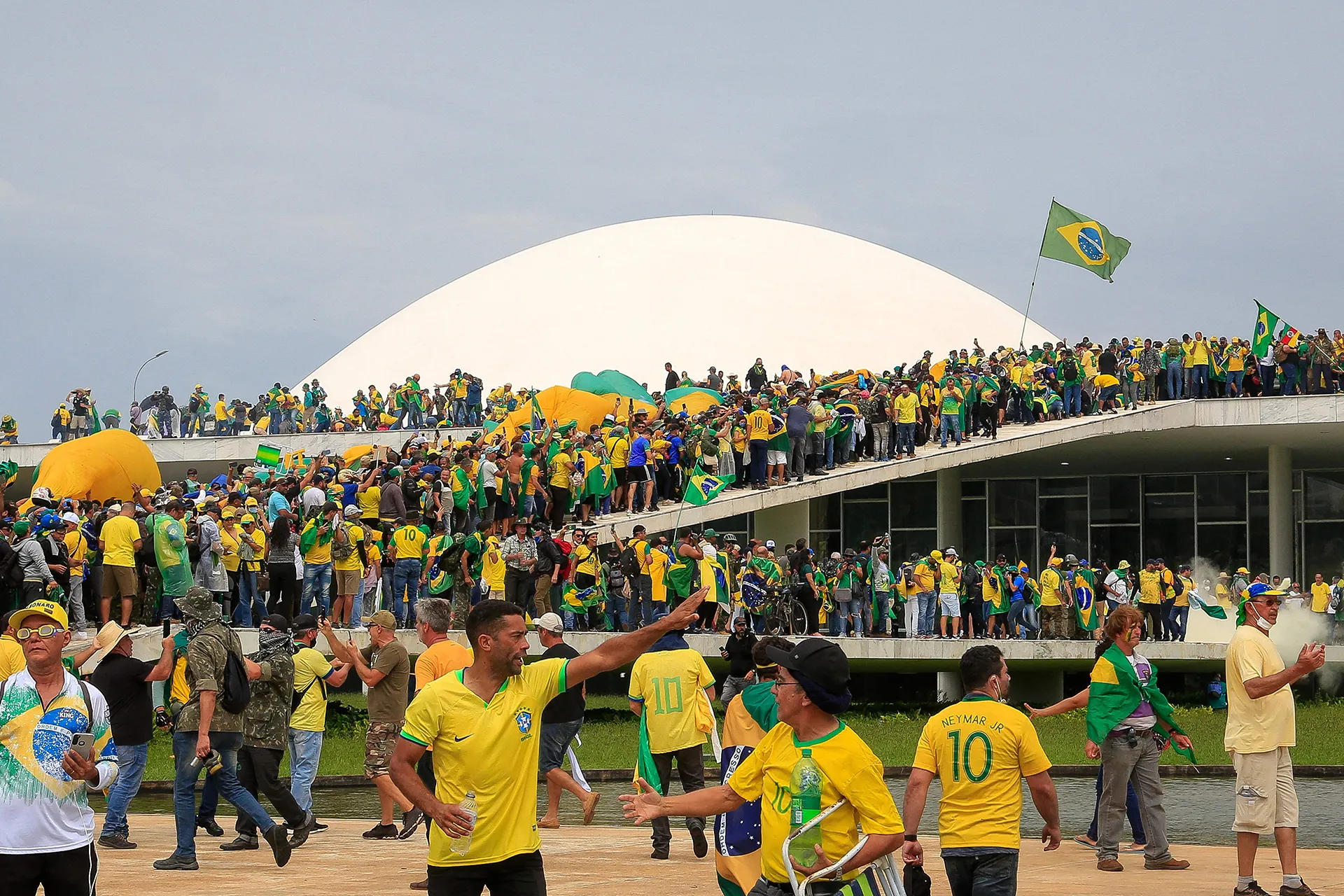
As a result, Bolsonaro is not competing in the 2026 presidential elections, but rather serving a lengthy term in prison — as are many of his co-conspirators in the coup plot.
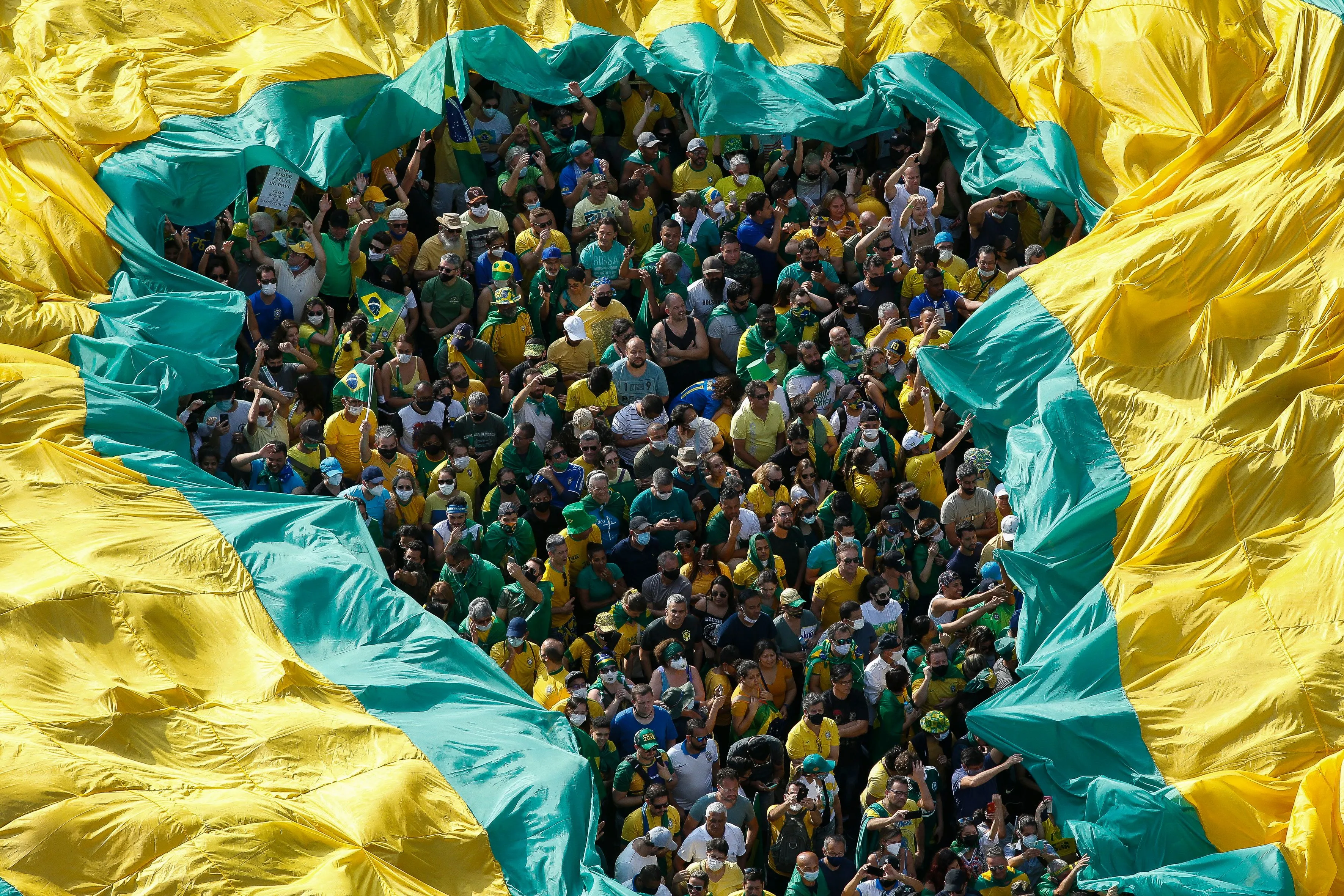
The court was not the only actor that mattered. Congress refused to bless his power grabs, and the military opted not to launch a coup. Watchdog agencies investigated; the press covered abuses relentlessly. And Lula beat him in a close 2022 election by explicitly campaigning on democracy to reach center-right swing voters.
All of these actors responded, at least in part, because the Bolsonaro threat was legible: his actions made clear who he was and what he would do if no one stopped him.
South Korea: A threat legible to the public
If Bolsonaro was the Trump of the Tropics, South Korean President Yoon Suk Yeol was the Bolsonaro of East Asia.
Winning the presidency in 2022 on a wave of anti-incumbent sentiment, Yoon represented the extreme right flank of Korean politics. Like Bolsonaro, he was openly nostalgic for a past dictatorship toppled in the 1980s, and like Bolsonaro, he issued an insincere apology when this became awkward.
Plagued by low approval ratings, Yoon struggled to make his mark — with evidence suggesting he began preparing a coup as early as fall 2023. After losing the 2024 midterms, Yoon grew more and more publicly paranoid about the specter of Communist infiltration, accusing the opposition-controlled legislature of being a North Korean catspaw. On December 3, in the dead of night, Yoon declared martial law.
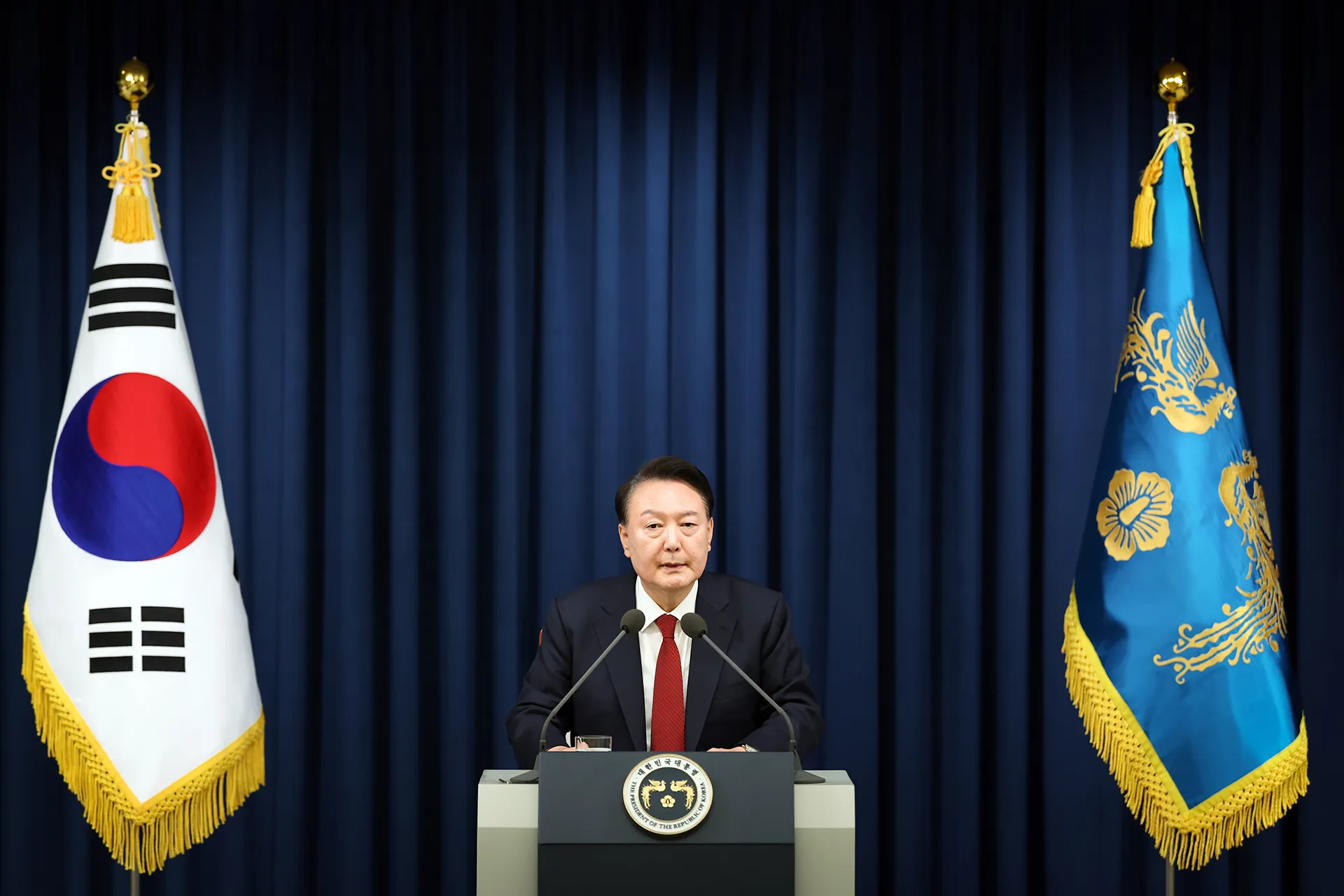
It was the most overt authoritarian move imaginable — and it failed almost immediately. Parliament convened and voted unanimously to end the emergency, with members of Yoon’s own party joining in. He was impeached and ultimately removed from office in April 2025; just last week, Yoon was convicted on charges of leading an insurrection and sentenced to life in prison.
Korea, like Brazil, showed extraordinary democratic resilience. And in many respects, the story is similarly about the threat’s legibility to the elite: Though Korea is a deeply polarized country, the leaders of both Yoon’s party and the opposition condemned Yoon’s announcement as undemocratic and mobilized the National Assembly vote within two hours to end the coup. One of the most famous images from the night is opposition chief Lee Jae Myung leaping a fence to enter the legislature after police blocked the doors.
But research by Korean scholars in the year since the coup attempt points to an equally important story — the legibility of the threat to ordinary Korean citizens, and how that motivated thousands of ordinary people to act as swiftly as the legislators.
“The high level of civic awareness and voluntary participation was essential in restoring democratic resilience,” professors Jae-seung Lee and Dae-joong Lee write in a 2025 paper extracting lessons from the Korean crisis.
Knowing that there would be an immediate effort by legislators to end the emergency, the president had planned to swiftly arrest and potentially even execute his political opponents. The protestors who converged on the legislature obstructed that plan, buying vital time.
“While a smaller number of citizens might have been easily overpowered by the military, they exhibited no fear of the armed forces and instead actively sought to confront them. Some demonstrated extraordinary courage by physically blocking the paths of armoured vehicles with their bodies,” Lee and Lee conclude. “Without the citizens’ response, the original operation – namely, the arrest of lawmakers and their subsequent imprisonment without a search warrant – might have succeeded before the National Assembly could vote to annul martial law.”
This is not new in South Korea. The country has an unusually active culture of protest, rooted in the successful movement to overthrow Gen. Chun Doo-Hwan’s military dictatorship in the 1980s. That movement created a national mythology lionizing democratic protest against military rule, which is partly why thousands mobilized within minutes to contest Yoon’s martial law declaration.

Korea gives lie to the notion that democracy is “too abstract” to matter to large swathes of the public. And it can matter even when the threat is less obvious than a literal declaration of martial law.
Poland: A threat legible to the opposition
Poland’s would-be authoritarians, the Law and Justice party (PiS), first took power in 2015. Unlike their peers in Brazil or Korea, PiS did a much better job masking their intentions: no open praise of dictators, no martial law.
Instead, PiS followed the Hungarian model. Hungary is perhaps the most successful example of a modern authoritarian suborning a previously healthy democracy, and Viktor Orbán, the country’s leader, employed subtlety and legalistic tactics rather than overt power grabs. In Poland, instead of declaring martial law, PiS worked to change the composition of state-run media and the judiciary — firing both veteran journalists and non-partisan judges, and replacing them with government allies.
This subtler approach worked for a time: PiS won another parliamentary majority in 2019, with democracy concerns taking a back seat to economic issues. Democracy is not a rhetorical silver bullet: simply invoking it, without doing the background work to render the invocation credible, will not overcome a canny authoritarian.
But the intentions of PiS were clear to at least one group: Poland’s other political parties. Divided before PiS came to power, the opposition was pushed together by a shared sense of threat. The more dangerous PiS seemed, the more incentive they had to cooperate with each other. And ultimately, that was decisive in the party’s 2023 defeat.
In 2019, the opposition parties managed to win control of the Polish Senate by striking a deal to avoid competing against each other in individual districts. It was a choice born out of necessity, a sense that “those who do not join the democratic opposition help PiS” — as Dariusz Wieczorek, a politician from a faction called The Left, explained at the time.
The victory didn’t topple PiS — in Poland, the lower house determines control of the government — but it gave the opposition real power to obstruct its legislative agenda. It also set the stage for the 2023 contest, where they defeated PiS’s majority in the lower house and retook control of government.
The main issue in that election was not democracy per se, but the PiS-controlled high court’s politically disastrous decision to ban abortion. However, the party’s more directly authoritarian politics also played an important role in the outcome.
In May 2023, PiS proposed a law targeting opposition leader Donald Tusk’s ability to run for office. While the law only passed in watered-down form, even the threat was enough to further unite the opposition parties and galvanize their supporters.
“The huge turnout at a key opposition march in Warsaw on June 4—which played an important part in the growing momentum behind the opposition and the sense that they could win— was partly a direct response to the passing of the ‘lex Tusk’ the week before,” the scholars Stanley Bill and Ben Stanley write in their recent book on the rise and fall of PiS. “In the aftermath to the election, key PiS figures conceded that the obsessive focus on Tusk had probably been a mistake.”

Despite all that, PiS managed to win the largest individual seat share of any party. But due to years of persecuting the opposition, no one was willing to form a coalition that kept PiS in power.
“In 2023, when it lost the majority it had held since 2015, PiS was unable to find a partner because its Manichaean rhetoric and methods of exercising power had precluded cooperation with other parties…with arguably similar policy platforms in certain areas,” Bill and Stanley conclude.
Perceptions of democratic threat can thus have more subtle effects than turning institutions or even citizens against a ruling party. It can change the way that even the preexisting opposition thinks about politics, in ways that make them more effective at fighting back.
The lesson for America: You have to fight the narrative war
In theory, the United States looks like a clear counterexample to the legibility theory. Many people predicted that a second Trump administration would be dangerously authoritarian. Kamala Harris centered that argument late in her campaign, and it made little difference in the outcome
I don’t think this view of the Harris campaign is right. But more importantly, people tend to see things differently before and after elections.
It is hard for many to believe democracy could die before it starts happening, especially if the leader they might elect had been in office before and democracy survived. Three of the most notable contemporary assaults on a democracy —in the United States, Hungary, and Israel — have been orchestrated by leaders who had previously been elected, lost in free and fair elections, and returned due to voter dissatisfaction with the alternative. The voters weren’t affirmatively voting for authoritarianism; they just didn’t rate the risk very highly.
Once a threat becomes legible — primarily, by an elected authoritarian beginning to act in authoritarian ways once in office — people start prioritizing democracy in a way they didn’t beforehand.
And indeed, there are good reasons to think that’s the case in the US in 2026. There was no meaningful pro-democracy movement in 2024. Today, data like Chenoweth’s reveals an enormous one, fueled by reaction to Trump’s lawless power grabs and ICE’s assault on civil liberties. Even in deep-red areas, many people just don’t like what they’re seeing.
The actionable advice here is straightforward: people with political influence and platforms need to work to make the threat to democracy more legible to more people, and channel citizen energy toward the kind of blocking strategies Gamboa’s research suggests work best.
Productive backlash to authoritarian behavior isn’t automatic. In Hungary, pro-democracy forces didn’t mobilize swiftly enough to prevent authoritarian consolidation; in Venezuela, they went too far too quickly, and gave Chávez the pretext he needed to crush them.
What differentiates success from failure is narrative leadership. Think of the Brazilian justice warning his fellow justices not to act like interwar Germans, Korean protesters livestreaming their way to the legislature, or Polish politicians puncturing PiS’s democratic pretensions. It has two components: showing how particular government policies threatened core rights, and telling concerned citizens what they could do about it.
In today’s America, the need for narrative leadership is urgent. This is not just about positioning anti-Trump politicians for elections: it’s about what must be done now to ensure that Trump cannot consolidate the powers of an Orbán or Chávez.
There are some successful examples of this happening already. During the ICE surge in Chicago, Gov. JB Pritzker launched a campaign encouraging Illinois residents to film ICE agents. “Authoritarians thrive on your silence,” he said at the time.
In a recent interview with the New Republic’s Greg Sargent, Pritzker Chief of Staff Anne Caprara describes this as an intentional exercise in narrative leadership, describing ICE’s immigration crackdown as a form of authoritarian politics and making citizens feel like they could actually help stop it by changing the narrative.
For every ICE propaganda video coming out of Chicago, she told Sargent, “there are 50 videos in everybody’s timeline of actual incidents where people can see what’s happening.”
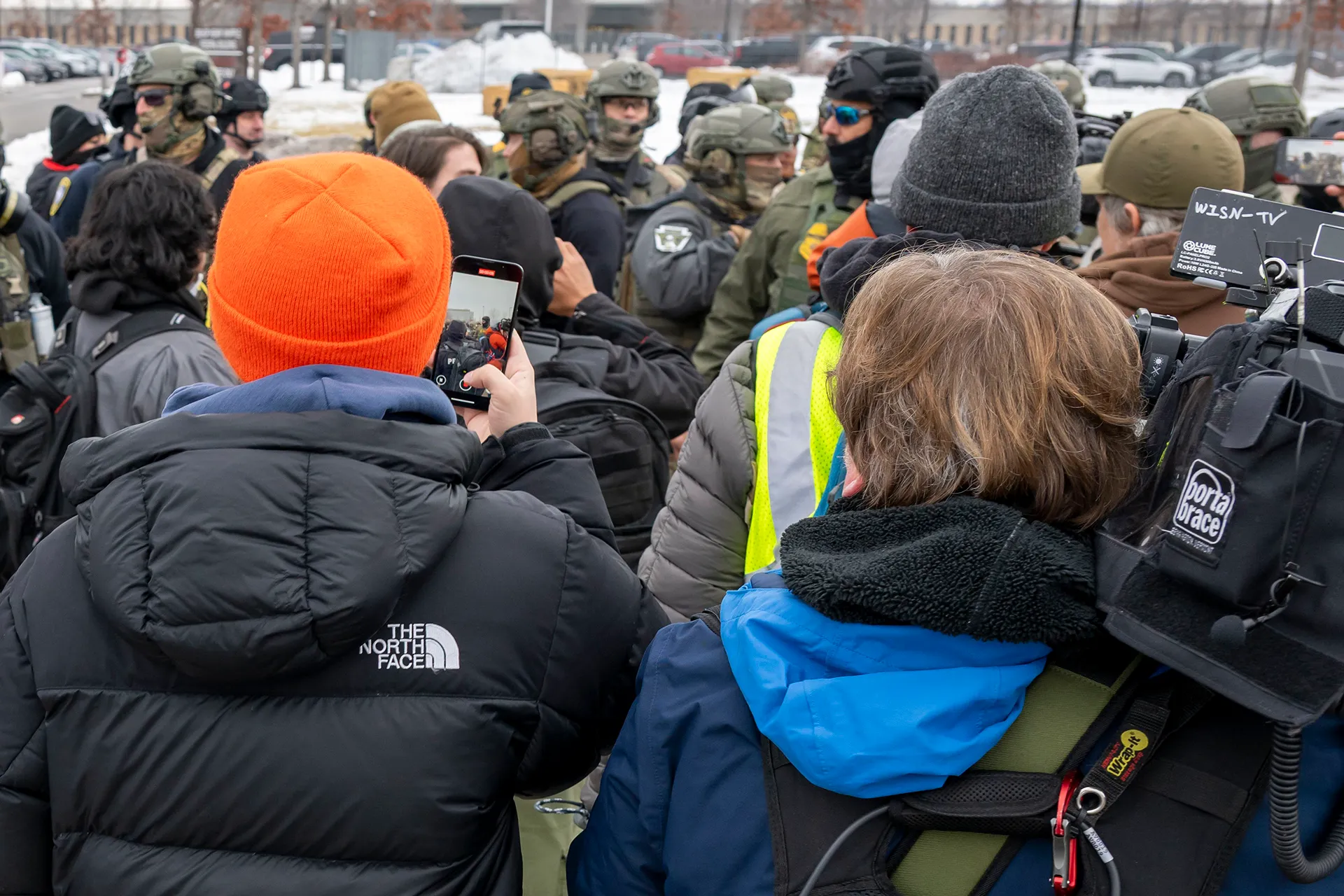
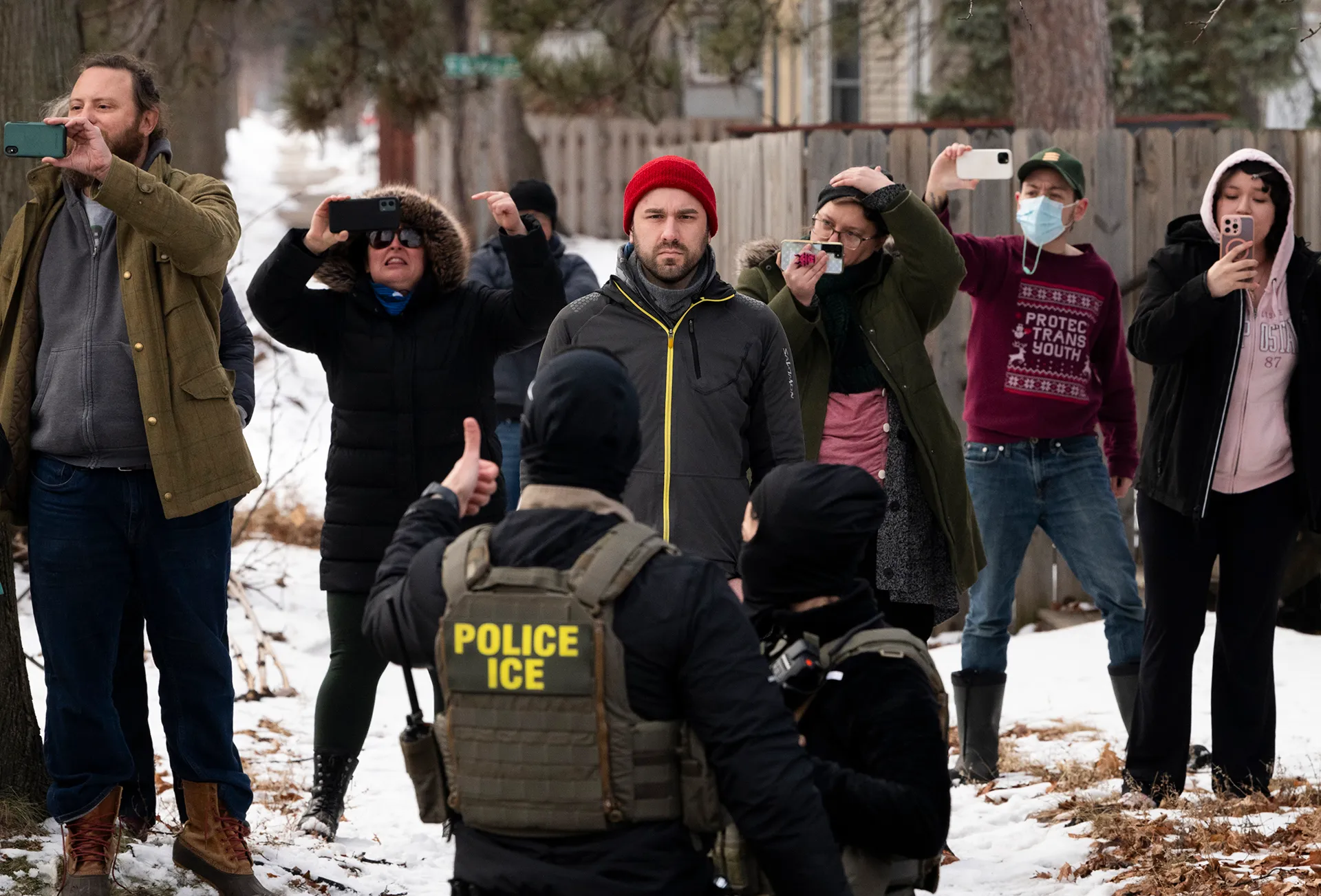
For months, Trump’s approval rating on immigration has been dropping; since the terrible killings in Minneapolis, it has gone into freefall. What was once a political strength for the president is now a weakness, thanks in large part to a deliberate effort to make the authoritarian thuggishness of his policies legible to the public.
This is not identical to what happened in Brazil, South Korea, or Poland. But neither were events in those countries identical with each other. In each case, the process of making democratic threats legible happened in different ways for different social groups in different contexts.
There is no doubt that there is a version that can work here, too. In fact, if the data is any guide, it is happening already.
This story was supported by a grant from Protect Democracy. Vox had full discretion over the content of this reporting.
The post How to stop a dictator appeared first on Vox.