I find that after all that has been going on in Minneapolis, I’m not enjoying the look of my greatcoat as much as I used to. Should I change what I wear because of current events? What are some options that would work as well? — Jane, Brooklyn, N.Y.
Clothes on their own are just pieces of cloth sewn into a pattern. It is the associations we attach to them that change how we see them — and how others see us in them.
Thus your reaction to the greatcoat, a standard piece of outerwear since the 18th century that has recently made an unexpected return to the political conversation.
A quick recap: Originally conceived as a sort of wearable blanket for military troops, the greatcoat became standard apparel for the British Army in World War I, which led to its wider adoption in the general population, as well as to its co-opting by the fashion world.
Designers were attracted to its sweep and swagger, much as they had been attracted to the trench coat, the peacoat, the aviator jacket and assorted other garments that had their roots in the military. But by removing such clothes from the battlefield and reinventing them in new fabrics, their wartime associations were dulled, and they were rendered costumes fit for the skirmish of a daily commute. At this point, they are essentially just another winter coat option. Or they were.
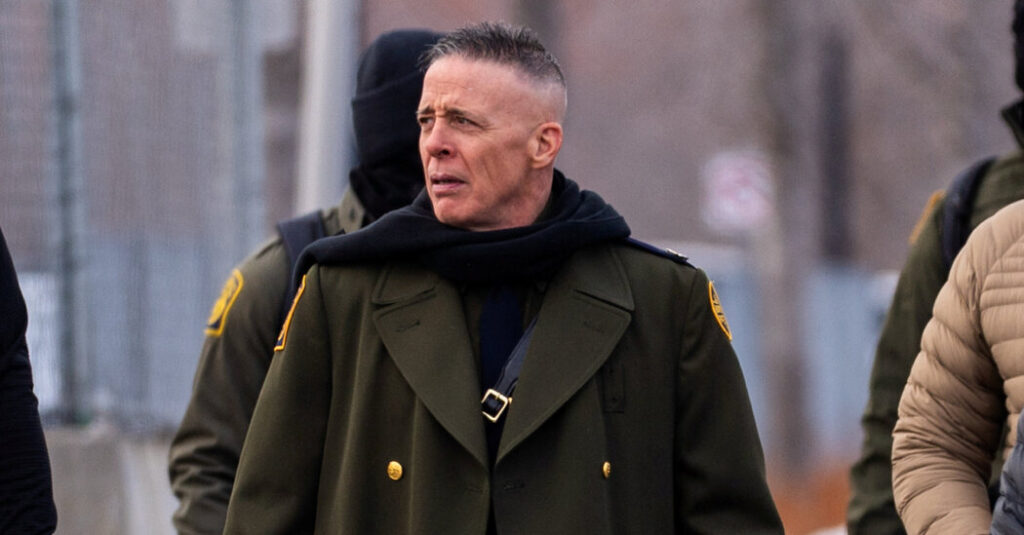
As the ICE raids picked up steam across the country, the greatcoat once again became a symbol of a military operation, thanks to Gregory Bovino, the Border Patrol official who became a face of ICE and who made it part of his uniform. Between the purpose of the raids, with their racial subtext, and the way Bovino wore his coat — often with a black scarf, brass buttons and his buzz-cut hair — the look reminded many people on social media of the troops in Nazi Germany.
Thus the greatcoat took on new (or old) meaning.
While I can see why you would be leery of the association, and the idea that those around you might make an unwelcome or simply misguided connection, it is important to remember that all greatcoats are not created equal. At least in the eyes of their beholders.
The key here is how Bovino styled his coat and where he wore it. Take the coat out of that context, and you change its first impression. If you wore your greatcoat with a floral scarf — or even a scarf in a cheerful color — a knit hat and sneakers or some other nonmilitary footwear, I don’t think that the minds of most people would leap to ICE and the crisis in Minneapolis.
It’s worth remembering that fashion isn’t the only sector that repurposed military garb for its own ends. So have many protest movements, which consciously subverted the origin story of army uniforms by claiming them for their own, effectively altering their significance.
If, however, you can’t shake the association — if donning your coat makes you feel as if you are demonstrating kinship and support for an action that you abhor and betraying your values — it may be time to store the greatcoat. You can always retrieve in a few years, at which point it will probably have taken on whole new meaning.
For the moment, opt, perhaps, for a puffer or a parka, outerwear with mostly outdoor-rec associations rather than military associations. They will provide cover of a different kind.
Your Style Questions, Answered
Every week on Open Thread, Vanessa will answer a reader’s fashion-related question, which you can send to her anytime via email or X. Questions are edited and condensed.
Vanessa Friedman has been the fashion director and chief fashion critic for The Times since 2014.
The post Should I Stop Wearing My Greatcoat Because of ICE Raids? appeared first on New York Times.