For the second time in weeks, the New York City government is mustering an armada of plows, salters, shovelers, homeless outreach teams and emergency medical workers in anticipation of a powerful winter storm.
There are obvious similarities between the storm expected to strengthen overnight and the one that began on Jan. 25 and was preceded and followed by a period of bitter cold. But there are also differences, including both the pattern of the weather and the particulars of the government’s response.
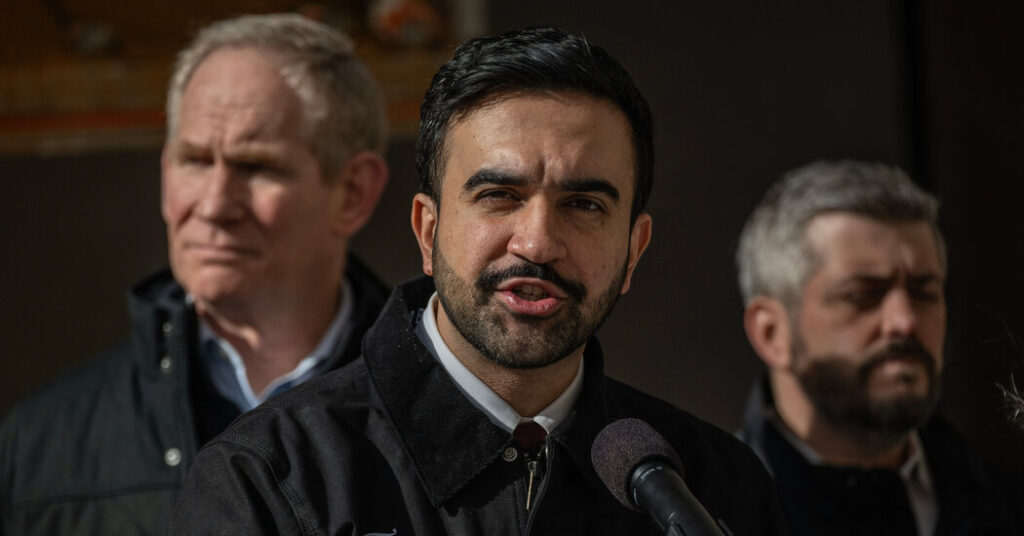
“These are blizzard conditions,” Mayor Zohran Mamdani said at a news conference on Sunday, emphasizing the combination of wind, snow and coastal flooding. “New York City has not faced a storm of this scale in the last decade.”
The January storm was an early test of Mr. Mamdani’s leadership and the effectiveness of his administration. He was initially praised for his frequent and detailed communication to New Yorkers, but also drew criticism over the city’s approach to homeless people who live on the streets.
Now, the heavy snowfall has brought another test, and the city in some ways is tweaking its approach. Last time, it had a pool of some 500 emergency snow shovelers. Now, Mr. Mamdani said it has more than twice that number.
Last time, the city had about 2,500 sanitation workers as part of the response, he said, and this time 100 more are expected to work 12-hour shifts plowing and spreading salt. Public school students will have a snow day on Monday, whereas in January schools operated virtually.
This time, the city is instituting a ban on travel on city roads until Monday at noon, affecting cars, trucks, scooters and e-bikes, Mr. Mamdani said. The ban is intended to keep people from traveling in unsafe conditions and to keep the roads clear for police vehicles and ambulances.
The danger posed to homeless New Yorkers on Sunday was front and center, with Mr. Mamdani saying that the city had made 86 placements so far to shelters or other indoor places. Mobile warming units are roaming the streets.
Overdose prevention centers will be open through the night, because Mr. Mamdani said many of the deaths in the last storm were overdose-related.
There is far more snow expected during this storm.
But the effects of the extreme weather may be over faster. The forecast shows warmer weather after the snow falls, which means it is likely to melt faster and there is less of a need to deploy melters, the mayor said.
Mihir Zaveri covers housing in the New York City region for The Times.
The post New York City Faces Its Second Big Storm in Weeks appeared first on New York Times.