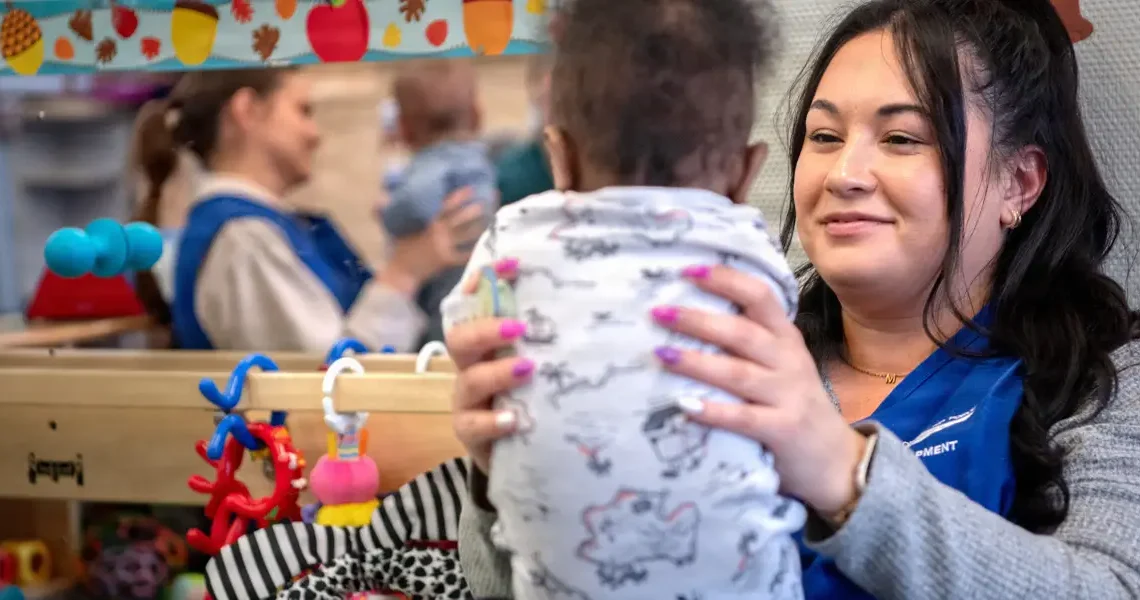
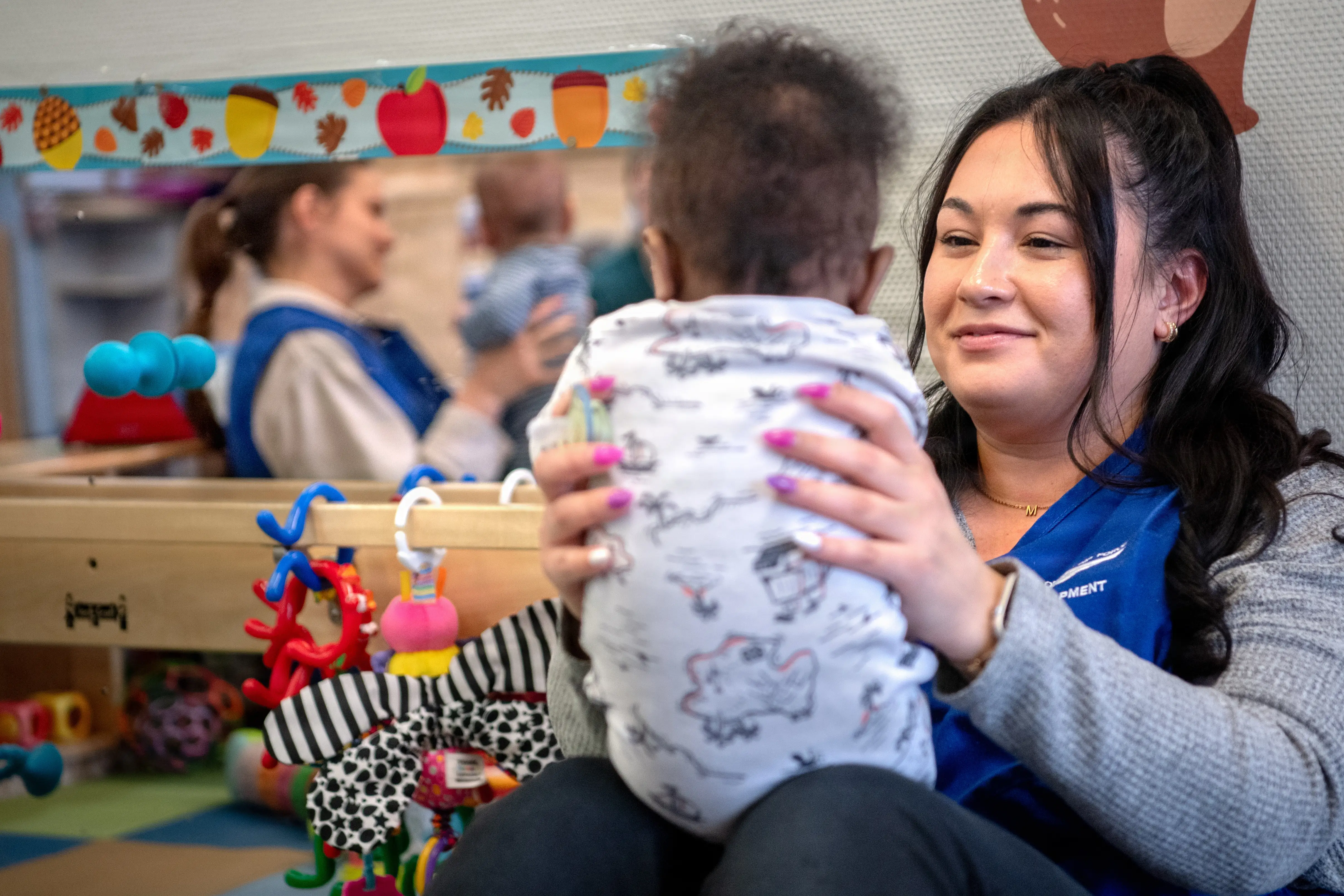
There are an estimated 7,800 children on US military childcare waitlists. Military families and advocates say the number masks deeper shortfalls that continue to sideline working spouses and strain service members.
Lawmakers raised the issue during a recent congressional hearing, calling the persistent backlog a quality-of-life problem, even as the waitlist has notably dropped from 12,000 children in 2024.
Advocates told Business Insider that the number isn’t the whole picture and excludes families who’ve given up out of frustration or can’t use base centers that lack evening, weekend, or specialized care.
“We can’t say that we are a military that cares about our families if we pretend to provide childcare and then we’ve got a waitlist that’s got 7,800 babies waiting on it,” Massachusetts Democratic Sen. Elizabeth Warren said to service senior enlisted leaders during last week’s hearing.
None of the service leaders present disputed that figure.
Master Chief Petty Officer of the Navy John Perryman acknowledged that the Navy still has roughly 1,400 children in unmet need status, while Chief Master Sergeant of the Air Force David Wolfe said his service’s waitlist stands at around 2,700, though there are efforts underway to open new spots.
It is not clear how the remaining waitlisted children are divided between other services.
In 2022, the Air Force had 95,000 children under 5 but space for only about 23,000 in its child development centers, a 2023 service report on childcare found.
An Air Force spokesperson attributed that disparity to the number of children entering and leaving care throughout the year. “The annual number served will not correlate with daily capacity and can be significantly higher,” they said.
Not all families require on-base care. But the report added that more facility construction alone would not be a “viable solution to meet all potential demand.”
Kayla Corbitt, a military spouse and the founder of a nonprofit dedicated to helping military families find reliable childcare, told Business Insider that many families lose hope amid long waits. Staying on the waitlist, she said, requires logging on every couple of months to reconfirm before families are automatically disenrolled.
And for some families, the barriers extend beyond backlogs.
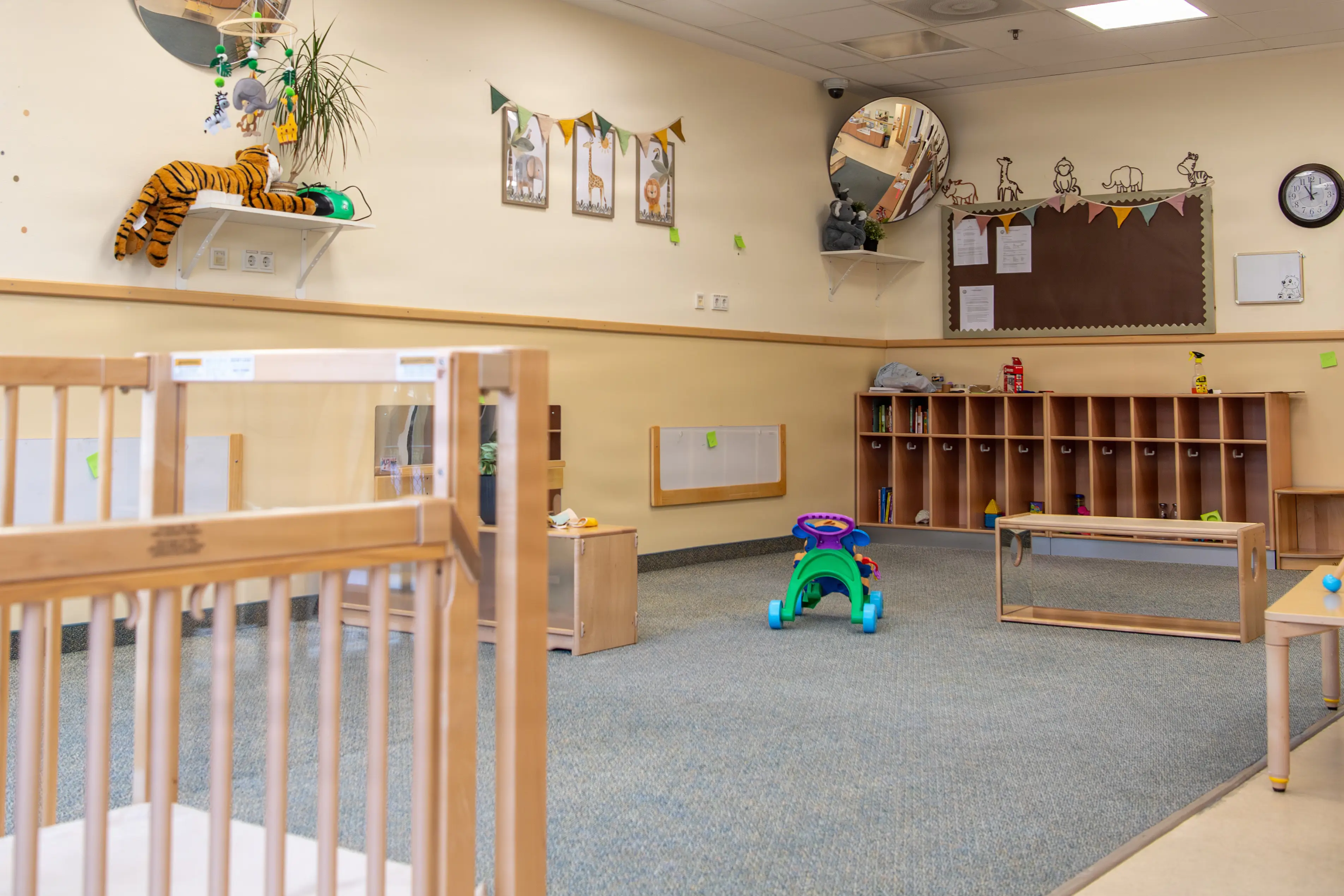
“Anyone needing evening care, weekend care, shift work care, which is a lot of the military, they aren’t going to try to get on that waitlist,” Corbitt said, explaining that most child development centers, or CDCs, on bases don’t offer late evening or very early morning care needed for troops on 24-hour duty or for deployed service members with spouses who work unusual hours.
Additionally, children with special needs face significant obstacles in finding care, Corbitt said, as many CDCs are not equipped to provide care, and the policies sometimes vary from facility to facility, making it hard for families to know what to expect when they move.
Brigit Schneider, an Air Force spouse and mother of three children, wants to return to work as a financial planner to better support her family, but because her local childcare center won’t accept children with feeding tubes, one of her young children is shut out.
“From a special needs mom perspective, it’s an extra layer of challenge,” she told Business Insider.
Schneider pays nearly $1,000 a month for one child to receive on-base childcare, another child is receiving private care due to the severity of their disability, and a third is at home. Schneider says the third should be able to receive base care.
“A G-tube really is not a hard medical device to learn how to use,” she said.
Generally, though, military CDCs won’t accept children with gastrostomy tubes. Facilities are often unable, or unwilling, to provide higher levels of care, Corbitt said.
Air Force childcare programs are “supported by a multidisciplinary team of experts who provide consultation and support to ensure the highest quality of inclusive care,” an Air Force spokesperson told Business Insider following a query regarding the service’s childcare.
The service “offers a network of on- and off-installation care options and works closely with families to identify the appropriate setting for their child,” said the spokesperson, adding that waitlist data helps inform future allocation requirements.
Staffing shortages are another obstacle to reliable access for military personnel. Military childcare workers face unusually high attrition rates, around 50%, Warren said at last week’s congressional hearing, driven largely by meager pay.
Compounding the issue is the lack of a clear pathway that would allow qualified providers to move easily between states.
Nearly 40% of childcare workers are military spouses, said the Marine Corps’ top enlisted leader, Sergeant Major Carlos Ruiz, during the hearing. “If we can just be a little bit more smart about transferring folks and directly hiring from one CDC to another, we can reduce the attrition,” he said.
Government watchdogs have repeatedly flagged childcare accessibility as a point of concern for the US military. A 2024 Government Accountability Office report found that while the services focus heavily on recruiting new childcare workers, they do not consistently measure whether employee retention efforts are effective.
The military’s childcare shortages aren’t unique to the armed forces. Many Americans in the civilian world struggle to find reliable, reasonably priced childcare.
Often, a year of childcare amounts to an entire average salary, costing tens of thousands of dollars. The cost of childcare in the US has increased by over 150% over the last quarter-century and continues to climb, often outpacing inflation. In some areas, childcare costs can exceed rent or mortgage payments.
Read the original article on Business Insider
The post Thousands of military families are stuck on childcare waitlists. More spots may not be enough to fix the deeper problems. appeared first on Business Insider.