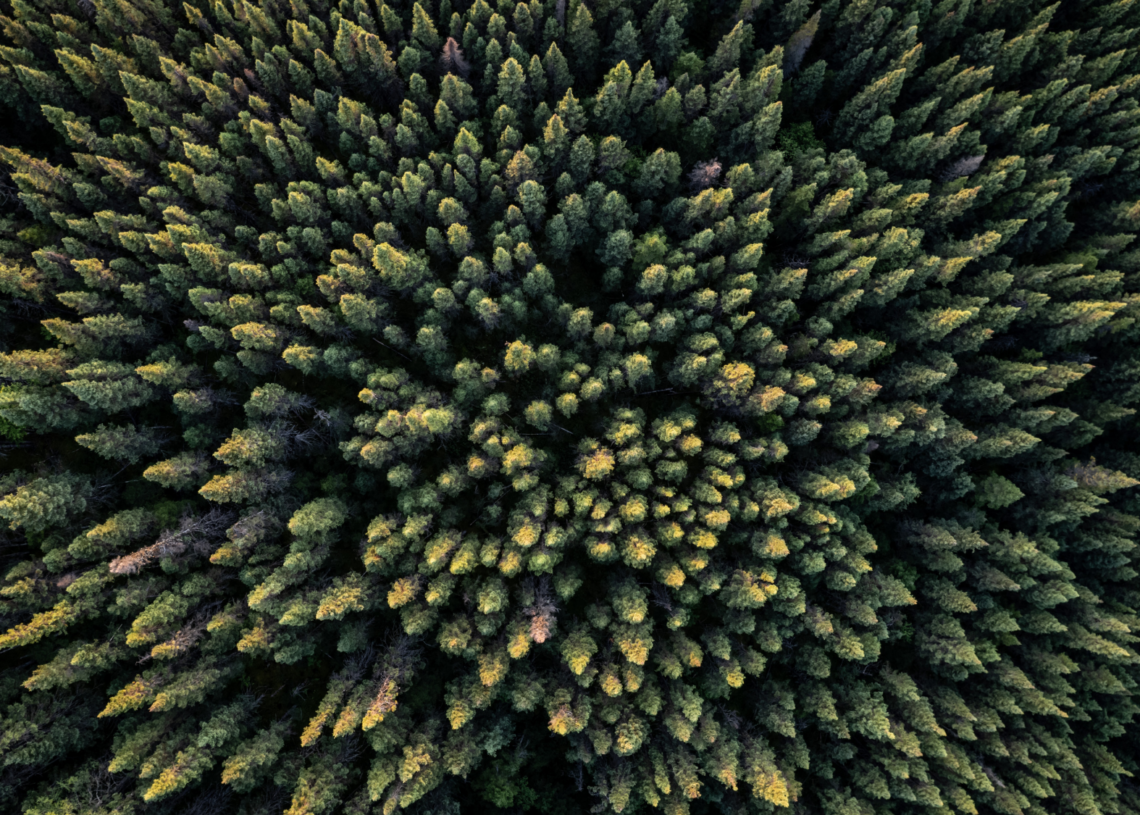
The effects of climate change are happening now. Some are subtle, like a new type of bird that possibly only exists because of climate change. Others are not subtle at all, like how a new study published in Biogeosciences by researchers including scientists from NASA Goddard Space Flight Center found that between 1985 and 2020, tree cover across the boreal forest biome is increasingly retreating northward in a desperate race to keep pace with its preferred environment.
The researchers analyzed decades of satellite imagery from NASA’s Landsat program. They found that boreal forests, which are the vast northern woodlands stretching across Canada, Alaska, Scandinavia, and Russia, expanded by roughly 12 percent over 36 years. That’s great news. The one downside is that they’ve shifted north by about 0.29 degrees of latitude, meaning that they are retreating from warming southern edges and advancing into once frozen territory.
This matters because boreal forests are one of Earth’s largest terrestrial carbon sinks. Trees store about 861 gigatonnes of carbon. The study estimates that recent boreal growth could account for an additional 1.1 to 5.9 gigatonnes of carbon sequestration. A lot of the expansion is made up of younger forests, which tend to absorb a ton of carbon as they grow.
This doesn’t sound all bad on the surface, but that same warming that’s pushing forests north is also destabilizing them. Western Canada has seen massive wildfires, bark beetle outbreaks that devastated pines, and shorter winters and hotter summers that are drying soils and stressing ecosystems. The odds of large-scale die-offs in the future are increasing. While there are gains in some regions, they are offset by huge losses in others.
Understanding how these forests grow, die, and respond to rising temperatures is going to take a lot more monitoring and field research, all of which might be more necessary than ever. Boreal forests are our buffer against climate change. If they’re struggling, it’s only a matter of time before we are, too.
The post Forests Are Steadily Creeping North, and That’s Not a Good Thing appeared first on VICE.