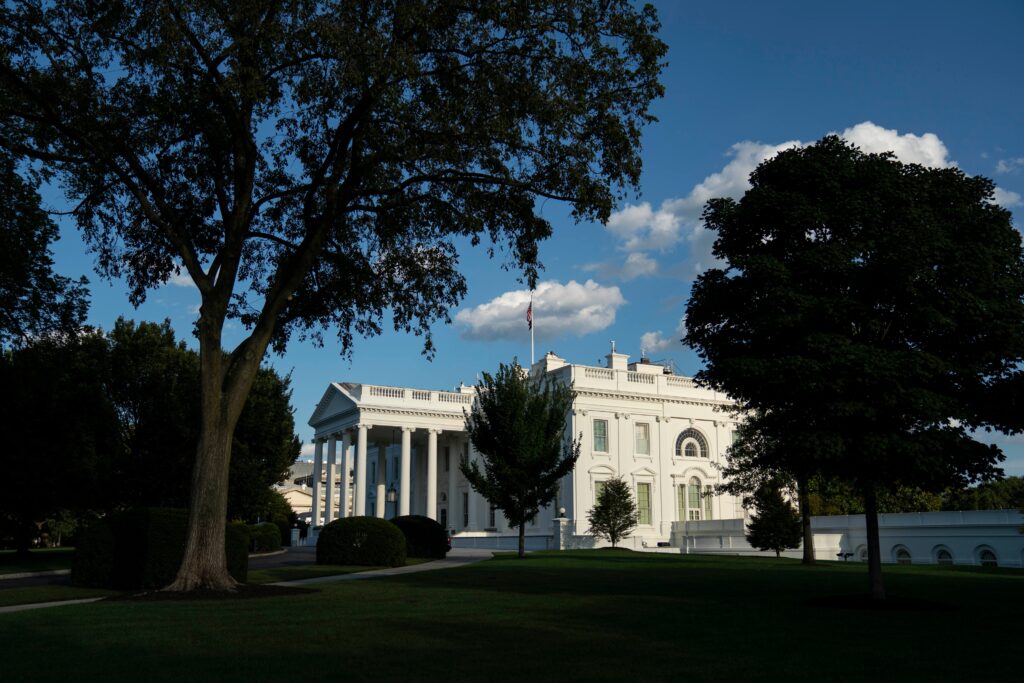
The White House will make the case Monday to Congress — and to voters — that it has developed a strategy to address frequent frustrations involving U.S. medical care, such as too few physicians and too much paperwork.
The Trump administration casts its physician-focused agenda as a fix for a strained health care system — pointing to a $50 billion funding program for rural health it contends will boost the number of doctors in remote areas, efforts to reduce payment distortions that favor hospitals rather than doctors, and regulatory changes intended to speed insurance approvals for tests and follow-up care.
“Together, these reforms will enable faster, more affordable, and higher-quality physician services for Americans,” the White House writes in the Economic Report of the President, an annual document previewed with The Washington Post and set to be transmitted to Congress on Monday.
The economic report, which does not offer new proposals, is best understood as a distillation of White House economists’ thinking ahead of this year’s midterm elections, in which voters’ frustrations regarding health care costs and access are set to play a central role. Past administrations have often used the report, which is written by the president’s Council of Economic Advisers, as a messaging document to rally support for their initiatives. This year’s report addresses health care affordability, a key focus for President Donald Trump and his advisers, and says it is working to “unleash” more competition in health care markets to lower costs and improve quality.
Democrats and health care advocates have panned some of the administration’s health care policies, such as the significant reductions to Medicaid funding in last year’s One Big Beautiful Bill Act. The administration’s critics warn those changes will lead to harms, such as millions of people losing their Medicaid coverage, that outstrip any potential benefits in the law for patients and health care providers, such as the law’s $50 billion fund for rural health. Republicans have defended their reductions in Medicaid funding by saying they protect the program’s solvency.
Other Trump health care initiatives have received bipartisan praise, such as efforts to equalize some payments between hospitals and independent physicians after years of Medicare often paying far more for a procedure if it is performed at a hospital rather than at a physician’s clinic. The idea, known as “site-neutral payments,” has been cheered by liberal-leaning think tanks that agree with the administration’s contention that the current system distorts the health care system by paying hospitals more than physician practices for the same procedures. Experts on both sides of the political aisle also agree that the system creates incentives for hospitals to then acquire physician practices, with the added costs passed along to patients.
Meanwhile, the Trump administration has used its Center for Medicare and Medicaid Innovation to develop new pilot programs for paying health care providers, such as an effort intended to expand clinicians’ use of treatments for chronic diseases. Officials have also called on insurers to improve the process of reviewing and approving physicians’ requests — a concept known as “prior authorization” that has increasingly been blamed for denying necessary follow-up procedures.
Prior authorization “is the single most significant wedge that fractured trust” between providers, patients and health insurers, Chris Klomp, who runs the nation’s Medicare program and serves as the operational leader of the Department of Health and Human Services, said on “The Heart of Healthcare” podcast last month.
Klomp added that the Trump administration is not seeking to eliminate the use of prior authorization, crediting the tactic with saving money and cutting unnecessary use of the health care system, but said that it needs to be faster and not obstruct the process of seeking care.
“It should be invisible to the patient, invisible to the provider,” Klomp said.
Trump administration officials have also made their case directly to physicians, urging them to buy into their Make America Healthy Again messaging.
“We can make this work, but I have to have you involved,” Mehmet Oz, who runs the Centers for Medicare and Medicaid Services, said at an American Medical Association meeting in November, as he appealed to medical leaders to support administration efforts to reduce the burdens of prior authorization and other hurdles.
Zeke Emanuel, a health care expert who helped craft the Obama administration’s Affordable Care Act, characterized the Trump package of health care ideas as a mixed bag.
“They get a bad grade on coverage. They’re doing some important stuff on cost,” said Emanuel, a University of Pennsylvania bioethicist. He praised the administration’s efforts to test new payments to health care providers, adding that CMS officials had been responsive to ideas on how to improve physicians’ work. But he criticized the $50 billion rural health program, which Trump has repeatedly touted and will allow federal officials to award funds to proposals that they deem promising, as a “slush fund” with little staying power.
“It’s not a structural solution,” Emanuel said, comparing the program’s scope to the more than $5 trillion spent on U.S. health care every year. “It’s not going to solve the problem of rural health care access.”
Health care is once again set to be a key issue in this year’s midterm elections. Voters say that health care costs are their top economic concern, according to polling conducted by KFF, a nonpartisan health care think tank and polling organization, and political groups are jockeying to win their support.
The Center for American Progress, an influential liberal-leaning organization, laid out a package of reforms last week that the group says will boost health care coverage and limit charges for patients. Neera Tanden, the organization’s president, who served as the Biden White House’s top domestic policy official, and her colleagues said that their proposed “Patients’ Bill of Rights” would address insurance-industry practices that frustrate many voters, such as steep annual premium hikes. The CAP authors also go further than Trump administration officials and call for a ban on prior authorization.
Let’s meet voters where they are: Lower health care costs nowhttps://t.co/WlxF12nEBD
— Neera Tanden
(@neeratanden) April 8, 2026
Meanwhile, Paragon Health Institute, a conservative-leaning organization founded by Brian Blase, who served in Trump’s first White House as a top economic adviser focused on health care, has issued its own series of reports on how to address physicians’ concerns, including proposals for site-neutral payments and recommendations on how to tackle provider shortages, and other health care challenges.
Some of Paragon’s ideas have already been adopted by the Trump administration, and Blase has hailed the administration’s “meaningful” efforts to “address numerous distortions created by long-standing, misguided government policies” related to Medicare.
The post White House says it’s boosting affordability through physician reforms appeared first on Washington Post.