If you want to understand where the American economy is going, don’t watch the stock ticker. Watch The Pitt.
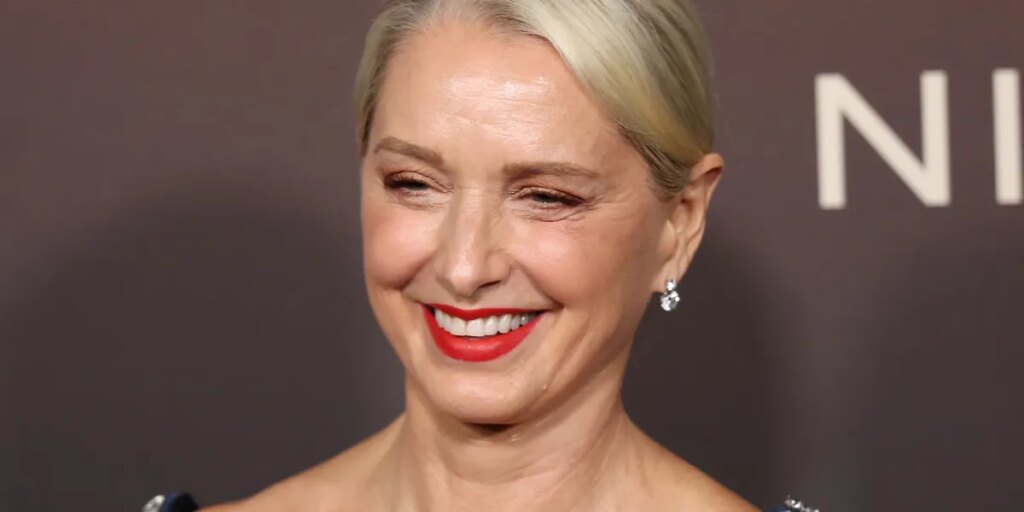
The Max medical drama that became one of the most-talked-about shows of early 2025 doesn’t center on a brilliant surgeon or a rogue attending. It centers on nurses and residents grinding through a single 15-hour shift in a Pittsburgh emergency department. Nurse Dana—competent, underpaid, indispensable, and increasingly aware of her own leverage—isn’t a supporting character, as masterfully played by the Emmy-winning Katherine LaNasa. She’s the whole point.
She’s also, it turns out, a near-perfect portrait of where American prosperity is actually heading.
The thought experiment
Alex Tabarrok, the George Mason University economist, recently posed a thought experiment on his influential Marginal Revolution blog that reframes the entire AI jobs debate. Imagine, he wrote, that AI was going to create a 40% unemployment rate. Sounds catastrophic. Now imagine AI was going to create a three-day workweek. Sounds wonderful. His punchline: those two scenarios are mathematically identical. Sixty percent of people employed full-time produce the same aggregate working hours as 100% employed at 60% of the hours.
The difference between catastrophe and wonderland, Tabarrok told Fortune at greater length, is not about the raw economics of AI. It’s how society chooses to distribute the gains from AI abundance. His own calculations suggested that between 1870 and today, working hours fell roughly 40%—and that decline was a feature, not a bug. The optimistic case is that AI simply continues the trend: compressing work, expanding leisure, lifting living standards.
The catch
But Tabarrok’s optimistic vision has a structural obstacle: the boss.
Fortune’s own reporting found that even as AI has compressed what used to take eight hours into as little as two, executives aren’t sending workers home early. They’re filling the reclaimed time with more output. The hours aren’t being returned to workers. They’re being extracted by employers.
This is the gap in the three-day workweek theory. The productivity gains are real. The redistribution isn’t happening. And if white-collar work keeps compressing while companies pocket the surplus, the question that matters most isn’t how much work AI can do. It’s where the displaced workers actually go. What does any of this have to do with Nurse Dana? The labor market is already voting with its feet, and it’s headed in her direction.
The market is already answering
Nursing—long celebrated for its meaning and quietly dismissed for its paycheck—has emerged as the most structurally durable career in the AI economy. The median registered nurse now earns $93,600, nearly double the national median of $49,500. In major cities, average base pay has crossed $102,000. Certified Registered Nurse Anesthetists clear $223,000. Even travel nurses average over $101,000. RN pay has grown 11% since 2023 alone, with wages in skilled nursing care up 26.5% since the start of the pandemic.
The Pitt is set in Pittsburgh for a reason: it’s a post-industrial city that reinvented itself around healthcare and education after manufacturing left. That arc is now playing out nationally. The forces that made Nurse Dana’s labor indispensable are the same ones reshaping the entire U.S. workforce.
Seventy-three million baby boomers are flooding into their 70s as patients while simultaneously retiring from the nursing workforce, squeezing supply and demand from both directions at once. During COVID, what might have been a decade of workforce attrition happened in the blink of 36 months or so, triggering mass burnout and early retirements that sent wages up 26.5% between 2020 and 2024. And the AI wave that is disrupting analysts, paralegals, and journalists has barely touched nursing — because presence, empathy, and physical judgment are, so far, unautomatable.
Dana’s real-world counterparts aren’t just in demand. They’re in a structural shortage with no near-term resolution. This has actually been a plot point of The Pitt‘s second season, with a cyber-hack forcing the hospital to temporarily bring back Nurse Monica, who blames her layoff on the hospital overly digitizing.
What AI does for nurses, not to them
Unlike the white-collar careers that AI is disrupting in early 2026, such as finance, law, or journalism, AI isn’t the threat for nursing work. It’s the tailwind.
Ambient clinical documentation tools—software that listens to patient encounters and generates chart notes automatically—are already cutting hours of paperwork from nursing shifts. AI-assisted triage systems help emergency departments prioritize patients faster. Automated monitoring flags vital changes before a human might catch them. In each case, the technology is handling the tasks that nurses have long described as the worst parts of the job: charting, redundant documentation, and administrative drag. What’s left is the work that actually requires a nurse.
Tabarrok told Fortune he believes AI’s most underappreciated upside is medicine itself, citing estimates that a cure for cancer would represent a $50 trillion boost to the global economy. (The estimate draws on the economic value of statistical life, a standard framework used in health economics and federal cost-benefit analysis.) If he’s right—if AI produces genuine clinical breakthroughs in the next decade—the nurses administering those treatments, monitoring those patients, and translating those outcomes into human terms become more central to the economy, not less.
The job AI can’t write out of the script
This is the detail that The Pitt gets right that most workforce commentary misses.
Dana isn’t hard to replace just because of her credentials. She’s hard to replace because of what she does with them in real time: reading the room, deescalating a family in crisis, catching what the monitor missed. Those are not tasks awaiting a better model. They are irreducibly human. And the market is valuing them at a high rate in 2026.
Career changers are coming around. Nursing school enrollment is climbing. Accelerated bachelor’s programs—designed for adults who already hold a degree in another field—are filling with workers fleeing AI-disrupted industries. The Bureau of Labor Statistics projects demand for advanced-practice nurses will surge 35% over the next decade, a number that would look extraordinary in any sector, let alone one already at effective full employment.
But aspirational and accessible aren’t the same thing. Accelerated BSN programs typically take 12 to 18 months and can cost $50,000 to $100,000. Clinical placement slots are limited. Faculty shortages at nursing schools have forced programs to turn away tens of thousands of qualified applicants each year. If nursing is the new reliable path to the middle class, the door is real but the bottleneck is significant.
And the profession’s appeal rests on a tension that The Pitt doesn’t shy away from. The same scarcity driving wages up is a symptom of a profession under enormous strain. Burnout, unsafe staffing ratios, mandatory overtime, and moral injury—these are the conditions that created the shortage in the first place. Whether nursing remains aspirational over the next decade depends less on nurses’ pay and more on whether hospitals and health systems invest in the conditions that keep nurses at the bedside. Pay got them in the door. It won’t keep them there alone.
Tabarrok’s history shows that every major wave of automation has eventually compressed working hours and raised living standards. If AI continues that pattern, the workers who land on their feet won’t be the ones whose jobs survived automation. They’ll be the ones who moved into fields where presence, judgment, and human contact are the entire product.
The factory floor built the postwar middle class. In 2026, the most reliable address for American prosperity increasingly has a nurses’ station attached—and one of the country’s top economists just told you why.
For this story, Fortune journalists used generative AI as a research tool. An editor verified the accuracy of the information before publishing.
The post The most valuable worker in the AI economy is Nurse Dana from ‘The Pitt’ appeared first on Fortune.