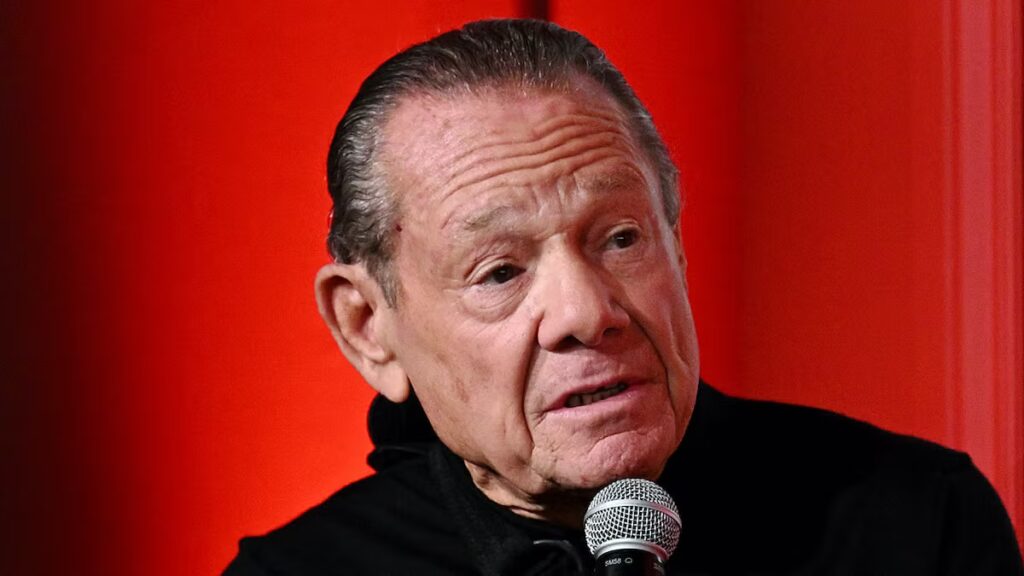
I’m not sure who’s keeping Hollywood’s bingo card, but the return of Michael Ovitz was definitely not on mine.
Once considered the most powerful man in Hollywood, Ovitz now proposes to return to the entertainment industry he left behind – or more accurately, was driven from – with a plan by billionaire and investor Bill Ackman to buy Universal Music Group, one of only three major music publishers that control the vast majority of the global music publishing market and the home of megastars Taylor Swift, Bad Bunny and Sabrina Carpenter, for $64 billion.
In the letter Ackman sent the UMG board of directors last week, he proposes to buy a controlling stake in the company, with a current market cap of $42 billion, and that Ovitz, 79, “one of the most recognized global entertainment executives,” would become the chairman of the board, replacing Sherry Lansing. Lucian Grainge would remain the CEO.
This is something of a shock to those who haven’t seen a sign of Ovitz in Hollywood for 20 years or so, since his final bid for relevance in running the Artist Management Group (AMG) failed in 2002. He finally slunk out of the entertainment industry to do something else in Palo Alto — investing, mentoring tech entrepreneurs, advising mega-investors such as Marc Andreessen and investigating the wonders of artificial intelligence.
And he has successfully built real clout in Silicon Valley.
Bullish on AI and bearish on entertainment, Ovitz advises CEO Alex Karp of Palantir Technologies, which is soaring on government defense and commercial contracts. Since the 2010s, he both invested and offered strategic counsel to Palantir through his firm Broad Beach Ventures. And according to the website of his company Treville Capital he was instrumental in negotiating early commercial contracts for the company, which now has a $306 billion (you read right) market cap.
And yet Hollywood still pulls him back. Why, I wonder?
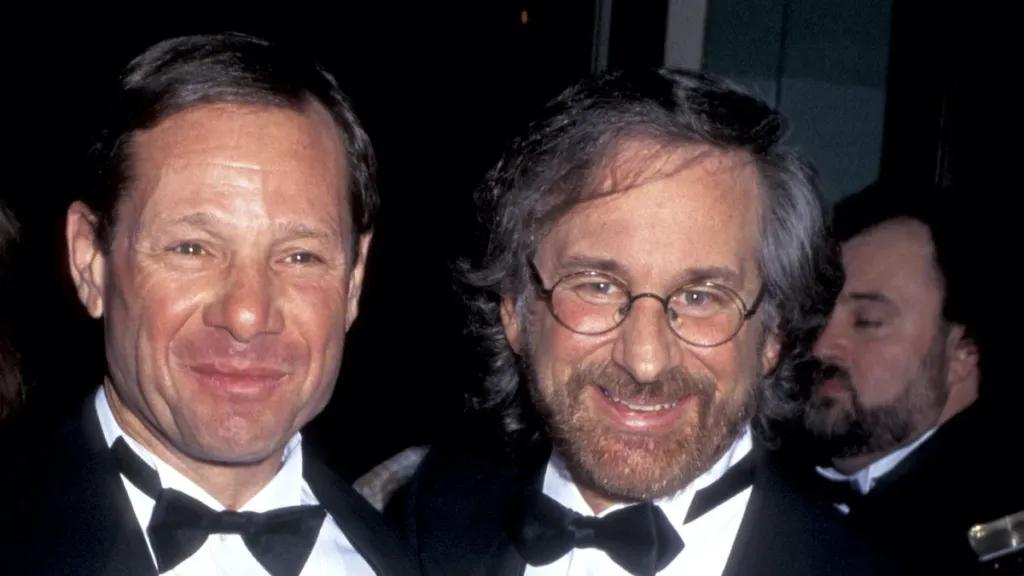
At the time he left, Ovitz was probably the most hated man in the industry, having twisted too many arms, betrayed too many partners, broken too many promises. Before that, he had been the town’s singularly powerful broker, co-founding CAA in 1974 and building it for two decades into a powerhouse where he personally represented everyone from Barbara Streisand to Martin Scorsese to Meryl Streep, an endless A-list clientele at a time when talent commanded tens of millions of dollars for projects. He built a packaging model to which the Hollywood studios had to submit, and was known as a ruthless negotiator and strategist, a relentless flatterer and bully.
Undeniably, Ovitz was a huge success, but by the time he left CAA for a brief but disastrous tenure at the Walt Disney Company in 1995, the town was rooting for his failure.
So why come back to a place that rejected him? It might be as simple as – he can’t help it. Or maybe, as one corporate leader from his era told me, he’s seeking some kind of redemption.
Ovitz is a close advisor to Ackman. And the problem for Ackman, who bought 10 percent of UMG from Vivendi four years ago and now owns about 3 percent, was that UMG stock has been persistently moribund despite company growth. Since 2021, UMG has been listed on the Dutch stock exchange called Euronext, and since then, the share price has dropped 23%from its €25.10 closing on the first day of its Euronext listing. Ackman was ready to sell.
According to an individual close to the deal, it was Ovitz who proposed to Ackman to instead align with Lucian Grainge and buy the whole company. Ackman had previously advocated moving UMG off the Dutch exchange to list it on the S&P. Doing so, he believes, would draw investment from major institutional funds such as Blackrock, Vanguard and Fidelity, which are required to hold a percentage of all companies in the S&P. That alone is expected to drive the share price up.
But Ovitz also believes he brings personal value to the deal: as a conduit for digital innovation, in fostering relationships with artists. And as a path back to that small circle of power brokers who run the industry.
An individual close to UMG told me that Ovitz has only met Grainge a couple of times.
Standing in the way of Ovitz’s UMG ambition is the French Bolloré family, the controlling shareholder of Vivendi, parent of Canal+, Havas and publisher Hachette, which owns 18 percent of the company. Vivendi, which they own, separately owns another 10 percent.
Clearly the Bollorés need to agree to sell to make this happen and their posture is unclear. Ackman’s bid claims to offer a 78% premium to UMG’s stock price, which includes 5 euros per share plus equity in the US-based new UMG. That might be a useful target for the Ovitz charm — he still has it.
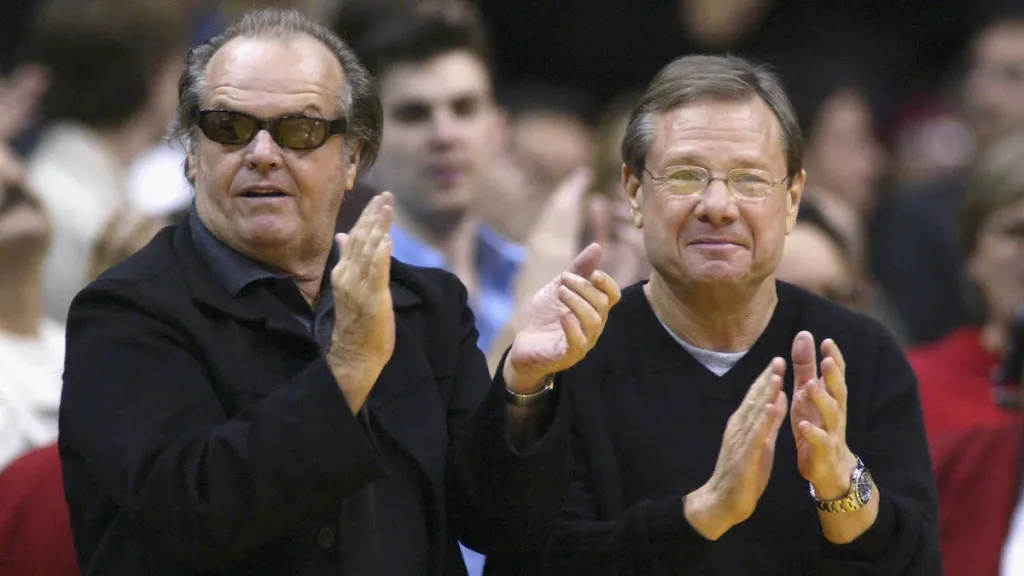
I don’t know Ovitz well, but I know for certain that despite the passage of years, there are some in Hollywood who still carry a grudge, or at the very least are wary of his reputation. The scars of his tenure at Disney hurt Michael Eisner’s legacy after Eisner brought him in. Ovitz’s split with his CAA founding partner Ron Meyer continued to send ripples through a community where Meyer remains well liked.
And Ovitz’s legacy of agent-turned-dealmaker ruthlessness lives on, ironically not in the image of his own agency, CAA, where the elegant CEO Bryan Lourd operates quite differently, but more in the person of Endeavor’s Ari Emanuel, whose take-no-prisoners ethos echoes Lao-Tzu’s “Art of War,” which Ovitz famously recommended as a playbook.
In his 2018 memoir, “Who is Michael Ovitz?” the former power broker owned some of the personal damage he wrought. “I was a control freak. A shape-shifting machine. A Terminator,” he wrote. “That was the image I took great care to project, anyway,” he continued, adding, “It was an image I grew to hate.”
That may be what passes for an apology. Most of us have moved on. And the proposed UMG deal? The board and the market will decide.
The post Michael Ovitz Wants Back In. Will Hollywood Have Him? appeared first on TheWrap.