Iranian officials on Sunday emphasized a lack of trust in American negotiators but appeared to leave the door open for further diplomacy after marathon peace talks in Pakistan ended without a deal.
Iran’s top negotiator and the speaker of its Parliament, Mohammad Bagher Ghalibaf, said in a statement on social media that while Iran had approached the negotiations in good faith, the U.S. team had failed to “gain the trust of the Iranian delegation.”
He pointed to the precedent that the United States had set: Over the past year, it has twice attacked Iran in the middle of negotiations. Still, he indicated that future talks were a possibility, saying that it was now time for Washington “to decide whether it can earn our trust or not.”
The remarks from Mr. Ghalibaf, his first since the talks ended, came after defiant statements from the leader of the U.S. delegation, Vice President JD Vance. Before departing Islamabad, Mr. Vance said that the United States had put out its “final and best offer,” and told reporters that Iran had “chosen not to accept our terms.”
Mr. Vance’s posturing did not go unnoticed. Mohammad Javad Zarif, who was the foreign minister of Iran when the country reached a nuclear deal with the United States in 2015, said on social media that Mr. Vance’s comments reflected the reason the latest round of talks had failed. “The U.S. must learn: you can’t dictate terms to Iran,” he said. But it was “not too late to learn,” he added. “Yet.”
The talks were the highest-level face-to-face meeting between American and Iranian leaders since 1979. The three main sticking points, according to two Iranian officials familiar with the talks, were the Strait of Hormuz, the fate of Iran’s highly enriched uranium, and reparations for the damage caused by six weeks of intense U.S.-Israeli strikes.
Masoud Pezeshkian, the Iranian president, said on social media that a deal could be reached if Washington “abandons its maximalist approach and respects the rights of the Iranian people.” He earlier told President Vladimir Putin of Russia in a phone call that the United States’ “maximalist approach” was the primary obstacle and that if the U.S. “adheres to international legal frameworks,” a deal would not be far off, according to the Iranian state broadcaster IRIB.
Ali Gholhaki, a conservative analyst close to Iranian officials, said that the United States had also refused to commit to stopping Israel’s bombardment of Lebanon, adding that it seemed “the Americans didn’t come to negotiate.” An Iranian state television report similarly said the United States’ “overreach and unreasonable demands” had stymied the talks.
Still, Iranian officials suggested that they were not closed off to future diplomacy. A spokesman for Iran’s foreign ministry, Esmaeil Baqaei, told Iranian state media that Iran would “continue to work to bring the two views of Americans and Iranians closer together.”
The negotiations had taken place “in the aftermath of a 40-day war and in an ambience of mistrust and skepticism,” Mr. Baqaei said. “Naturally, we should have never expected to reach a deal in one session.”
Iran’s ambassador to Pakistan, Reza Amiri Moghadam, said on social media that the talks were “not an event, but a process.” They had “laid the foundation for a diplomatic process that, if trust and will are strengthened, can create a sustainable framework for the interests of all parties,” he wrote.
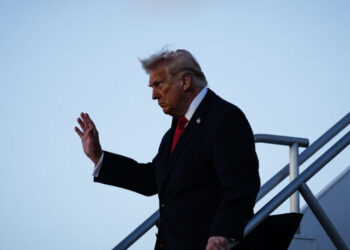
President Trump said in an interview on Sunday with Maria Bartiromo of Fox News that the Iranians “haven’t left” the bargaining table. He credited his staggering threat to wipe out Iran’s civilization with bringing them to the table in the first place, and he said he felt that the United States would be getting “everything” it wanted from Iran.
Isabel Kershner, Sanam Mahoozi, Farnaz Fassihi and Katie Rogers contributed reporting.
Anushka Patil is a Times reporter covering breaking and developing news around the world.
The post Iran’s Top Negotiator Says Talks Failed Because U.S. Failed to Win Trust appeared first on New York Times.