Note: This article contains spoilers from “DTF St. Louis” Episode 7.
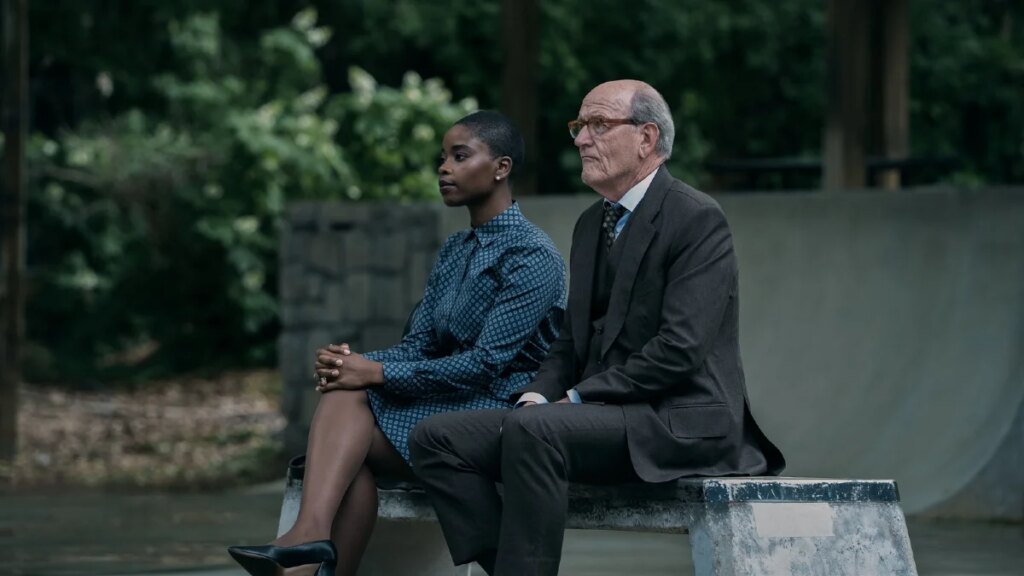
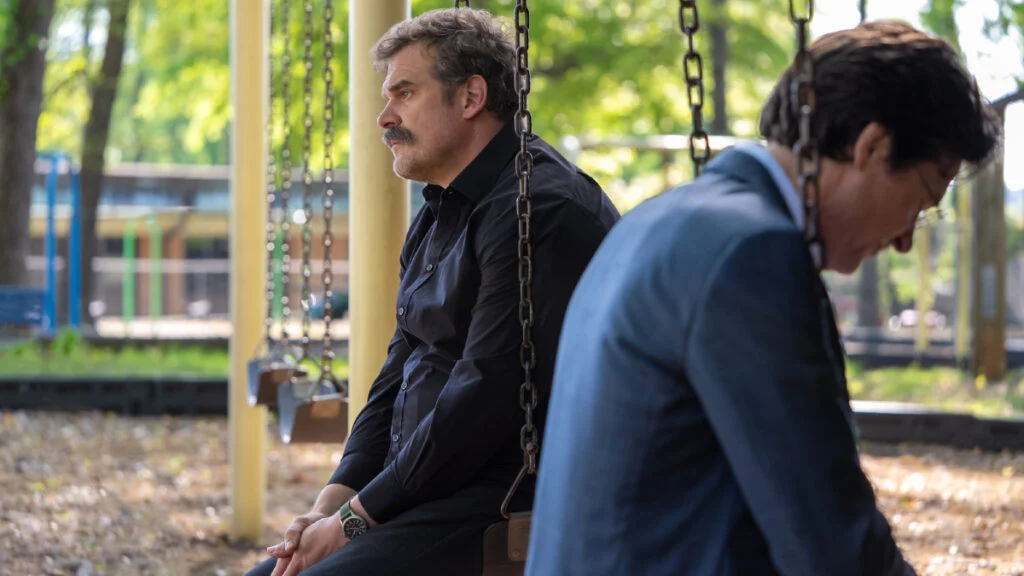
Just like that, “DTF St. Louis” is over. The mystery has been solved, and the solution is more tragic than anyone — including Detective Homer (Richard Jenkins) and Special Crimes Officer Jodie Plumb (Joy Sunday) — could have seen coming. It is revealed in the HBO dramedy’s seventh and final episode that it was, indeed, Clark Forrest (Jason Bateman) who met up with his best friend Floyd Smernitch (David Harbour) at the Kevin Kline Community Pools in the early hours of the same day that the latter was eventually found dead.
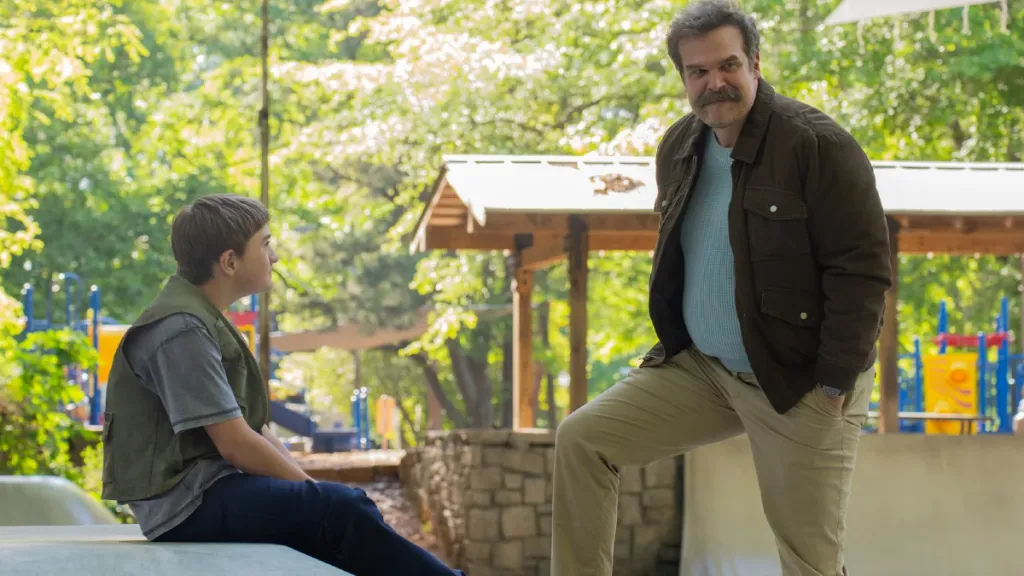
The two men danced in their underwear together and Clark tried, desperately, to give Floyd the arousal, the validation, that he had been searching for. It all ends messily, though, with Clark collapsing to the floor and realizing that he’s just a middle-aged, lonely guy who does not and never has known what he is doing. Floyd comforts him and stays behind only to see his stepson Richard (Arlan Ruf) watching him through one of the building’s windows. Richard, it turns out, signed onto Floyd’s computer earlier that night to check off his daily goals and saw his stepfather’s DTF St. Louis account still open.
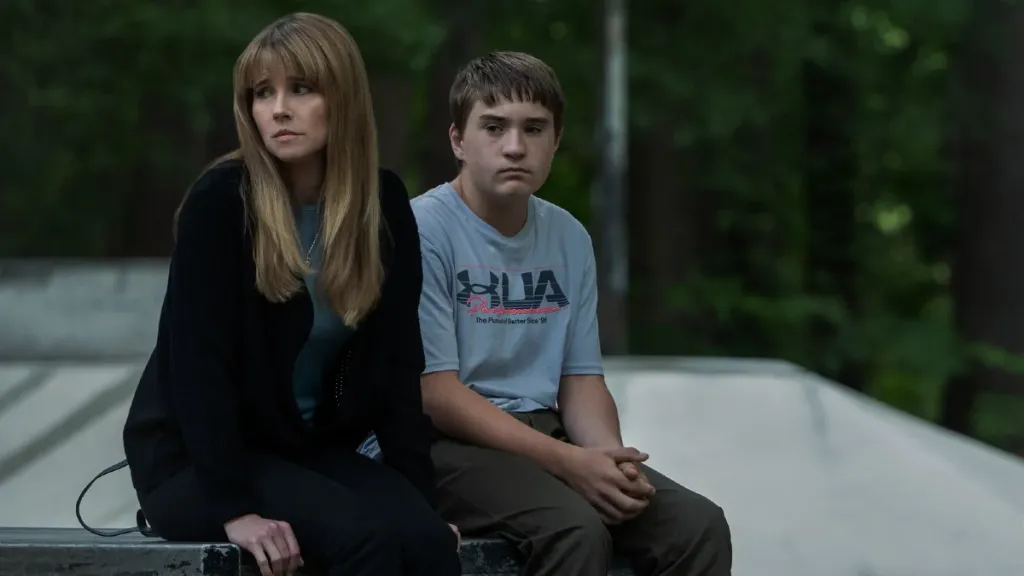
He saw Floyd’s profile. He saw the set meeting time at the Kevin Kline pools, and he went there to tell Floyd that he was disgusting and did not deserve to be married to his mom, Carol Love-Smernitch (Linda Cardellini). Heartbroken and shattered, Floyd signed to a confused Richard that he loved him before knowingly chugging the entire, fatal dose of Amphezyne that he’d poured into his can of alcohol. Floyd took his own life. His suicide means that Carol will not get the life insurance policy that Clark had set up for him, and when Clark returns home at last from prison, he finds that his wife and daughters are gone.
“DTF St. Louis” ends on this tragic note, and it is one that series creator Steven Conrad hopes will resonate with viewers.
“Seven hours is a lot of somebody’s time, and you just hope that it that feels like it left you with something,” the writer and director told TheWrap. “The challenge of the entire thing is to go, ‘Okay, this has to end in a way where Homer did his job, Jodie did her job, but the audience also feels like this wasn’t just a crime being solved. That there was some other transmission, you know, in the midst of all of it.”
The finale does not offer much hope for its survivors’ futures moving forward.
Regarding Carol’s life after “DTF St. Louis” Episode 7, Conrad said, “She’s not going to get an insurance settlement. They don’t pay those out for suicides. But her impulse to let Richard know that Floyd wanted to give this message of love to him overwhelmed that consequence. So she’s just gonna keep scrapping. She’ll come to terms with the fact that what Floyd needed was some tenderness, and Clark could give it to him. Carol could not anymore. She’d really tried and it was gone. It was just gone.”
“She’ll have to make peace with the idea that she no longer had a way to save Floyd, and she’ll struggle to make sense of that. But she does have that fighter’s instinct,” Conrad added. “Floyd never knows that he’s in a fight, that being alive as an adult means being in a fight for your life. She knows it. She’ll keep fighting.”
As for Clark?
“He’s gonna have to grow up,” the “DTF” creator acknowledged. “One of the cool things about the show is that he comes across initially as kind of a serial philanderer. But then we reveal in Episode 6 that he’d never had an affair before. Carol was the first time he ever strayed, and I think it makes more sense that he’s terrible at it. [Laughs] I don’t think he’s gonna do it again if he gets another chance.”
Below, Conrad dives further into the tragedy at the heart of “DTF St. Louis,” his partnership with HBO, how the series explores the crushing reality of financial insecurity and the “responsibility” that made it impossible for Harbour’s Floyd to ultimately make it out of the series alive.
This interview has been edited for length and clarity.
TheWrap: What did you have first: The clues or solution to Floyd’s death?
Steven Conrad: I knew conditionally what the consequence was going to be. The tagline for the app is, ‘All the Excitement. None of the Consequences.’ That’s the gamble that these guys make. Obviously there’s no such thing as no consequences, and I recognized in Floyd… he just felt like a stepfather to me. Some guys are, you know? And there can be good ones and there can be indifferent ones. The struggle for a good stepdad is it’s a rock up the hill. It’s a tough job. There’s no benefit to the doubt.
So I knew that was going to be what he was carrying around, and I knew that someone as sweet as him could find a way to get there. To get the rock up the hill. And then I knew Floyd was going to drop it and break it. I also knew that there wasn’t a version where the child was capable of doing anything that could amount to someone’s death. It had to be emotional and unfixable, and then fixable by another terrible decision that isn’t going to fix anything, either.
The show is so tonally distinct. It is not afraid to be absurd at times and also deeply tragic at others. What was your partnership like with HBO? What kind of notes did they have?
Conrad: I have to say, and this is a compliment to the partnership, that they’re an engaged group of filmmaking partners. By engagement, I don’t even just mean that they are checking in. They’re engaged in the sense that they’re in it before you make it — expecting it to look and feel and weigh and be measured in a specific way. It needs to be sound, right? No extra parts. Let’s just make sure that the components of this are all very, very good. They are in it like that.
When you’re trying to find your bandwidth of tone, you can break a spell very easily by just not being able to read where the audience is in each moment. At the same time, if you don’t continue to try to delight, then you’re going to lose them another way. It’s the difference between them shaking their head if you swing and miss and them leaning back and looking at their phones. So HBO and I tried to identify together, “Where are we? Are we trying too hard? Is this not going to feel organic?” People who have done it less than them will say, “I just don’t believe this,” but HBO is smart enough to know that characterization doesn’t have anything to do with making a show. It’s not supposed to be believed. It’s supposed to be experienced. So they think of it in terms of the experience. “Can we make the experience of this tighter?”
Take something as simple as the detectives going to arrest Clark in the pilot. The sheriffs, they’re all running up the stairs and they’re chanting, “Here we go. Here we go. Here we go.” That makes no sense! [Laughs] Except that now there’s a charge to the scene, a pre-charge to the arrest that I wanted the audience to feel. When I wrote it and shot it, though, it began with them all congregated at the bottom of the stairs practicing the chant and some guys just weren’t getting it. Homer had to help out and then they finally did it and I filmed them doing it up three flights of stairs. I showed that to HBO and they said, “One set of stairs.” Who’s to say which one is better? But they never told me to take it out, and that is one of the wildest things anybody dreamt up for “DTF.” It was always about measuring what we were going to ask the audience sit in in every moment.
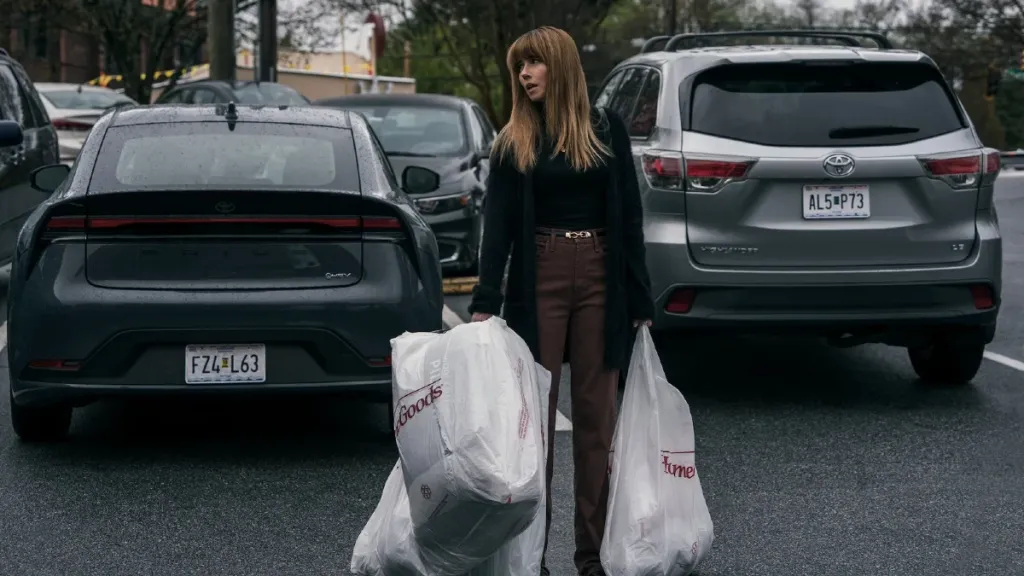
It is very rare to see characters in a show or movie who are financially struggling the way Carol and Floyd are. Their heads and mouths are basically just floating right at the water line the whole show. Why was it important for you to explore that kind of crushing financial situation in “DTF”?
Conrad: That’s a great description of it, because they’re very near suffocating. If that water line goes up another inch, there’s going to be real consequences. The way Carol explains it is that Richard’s life is vulnerable. They have a home, and someone could take their home. You’ve got to start chipping away at this debt, because it’s going the other direction every year. There are penalties, consequences to Floyd’s spirit, his really naive and very beautiful spirit… You know, people can be lighter when someone in their life is doing the heavy lifting. I saw a documentary once about Ennio Morricone, and he was being interviewed with his partner on a couch, and she described herself as the “protector of his talent.” I thought, “God, that’d be a nice thing to have.”
But imagine if you were an artist and someone was right next to you thinking, “He’s not paying the household bills. He’s not going shopping or putting gas in the car.” Floyd is one of those spirits that, because of his gifts, he’s been allowed to float around a little bit. Until now. Until this summer. This summer, the rent’s come due, and they can’t pay it. So Clark is a kind of impulsive salve to Carol. Like she knew, instinctively, that they could give each other something they both needed. I don’t think in reflection it was as transactional as we make it seem while plotting out the whodunnit. In my estimation, people are drawn to each other because that other person has something that we need. It could be that they’re just very funny. It could be that they’re very honest, and you need that gift in that specific period of your life.
Floyd and Carol weren’t going to make it through the year no matter what happened to him. At one point, Floyd mentions that Carol’s first husband was a “bad guy,” and I sort of left it to the audience to fill in the blanks. But that’s Richard’s father, and you can imagine very easily Carol having to contend during those years with someone who was cruel. And then here comes Floyd 10 years ago and he’s giant and he’s kind and he’s the antidote. He makes her feel safe and she is, therefore, attracted to him. 10 years later, he doesn’t make her feel safe anymore. He makes her feel vulnerable, and there goes the intimacy. Clark comes around and Clark makes her feel safe. So the clearest way for me to explore this trade, this trade of what someone might be able to give somebody else when they really need it, was when I could say that it’s money. Money is the quiet plight of so many people’s lives that robs their sleep, because you can’t find a way out.
Obviously, the show also has middle age on its mind and middle age is a terrifying time because you have to confront the idea that you’re not going to get the promotion. The invention you’ve been working on is still in the garage. It’s still years and years away. The solution has eluded you and now you’re facing more years of the same, and the same isn’t the same anymore because suddenly the same is a sinking hole. So money, it just felt like an identifiable pressure and something that could ultimately be tied to sexuality. The show obviously has sex on the mind and those two things — money and sex — are two things that come swimming around in middle age, for sure.
DTF, the app, lurks around in the background for much of the show, and then the finale reveals it to be this emotional grenade, basically. Why did a hookup app feel like the right thing to push everything over the edge in this story?
Conrad: That’s a great pickup. There’s a moment that doesn’t really make any sense in the show, but it happened so I could put a point on all of it. It’s when the detectives are finally studying the last set of security footage, noticing there’s two bikes, and then Homer has the deduction that Richard was riding the other. He says, “It’s the boy,” and then the last thing he says, for no reason, is “DTF St. Louis.” But it’s to make a point about this recklessness. Clark and Forrest were playing. They were being reckless, and they’re parents. This broke everything, and it’s not even like somebody met someone on DTF who destroyed their lives. It was just the flirting with this little fire.
When we started talking about the show and about Jason and David’s performances, we talked about two kids in a fort playing with matches. It’s fun for a minute, but something terrible could happen. DTF St. Louis is this book of matches, and the something terrible happening is allowing this recklessness into your life. It’s taking your eyes off your home for a minute, not realizing that there’s a monster in there now and something that could hurt your kid because you looked away. It’s there. It’s in your house, and the sum of that, the responsibility for that mistake, that recklessness, is what puts Floyd past being able to survive another minute.
All episodes of “DTF St. Louis” are streaming now on HBO Max.
The post ‘DTF St. Louis’ Creator Unpacks Finale Twists, Floyd’s Fate: ‘No Such Thing as No Consequences’ appeared first on TheWrap.