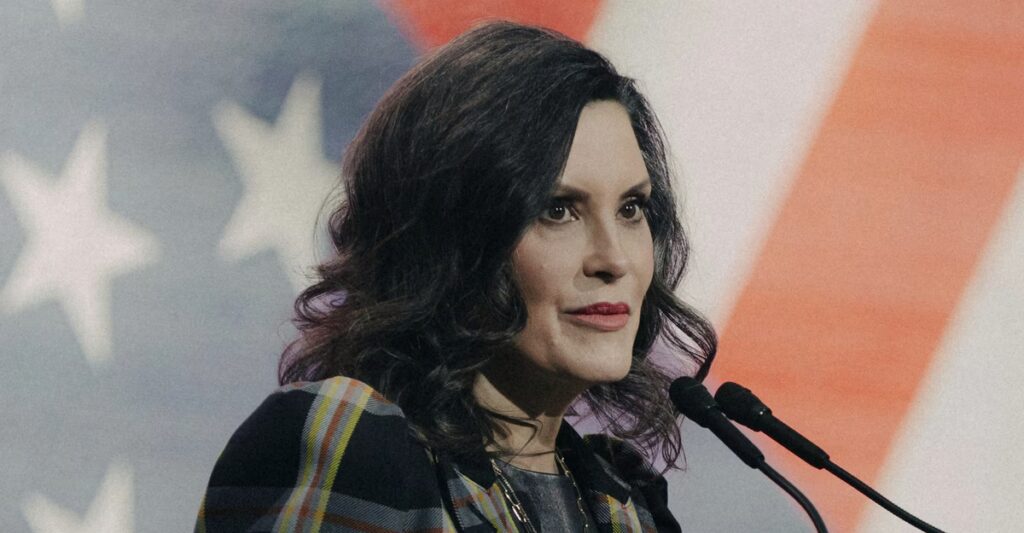
Read more about the Democrats who might run for president in 2028 here.
When I first met Gretchen Whitmer last fall, she seemed to want to talk about anything except Donald Trump. She avoided using his name, referring to him, only sparingly, as “the president.” She came closest to criticizing him when she lamented that “this constant tariff chaos is really hurting our economy.”
Our interview took place, at her team’s request, in a Marriott conference room in Ypsilanti. It lasted precisely 22 minutes. And the Michigan governor, who is formidable in person, with sharply arched eyebrows and dark hair streaked with gray, did not seem thrilled to be doing it. She smiled tightly and spoke with caution while, across from us, an anxious-looking staffer counted down our remaining time together. Whitmer was careful, in fact, to highlight her own carefulness. At a National Governors Association dinner that she had attended with Trump last year, “there was a lot of conversation that I did not agree with,” Whitmer told me. “But I just sat there and bit my tongue because I’m not going to win that debate in that moment, and it’s not going to serve Michigan well.”
Had Whitmer gone soft on Trump? For more than half a decade, she’s been “Big Gretch,” the Bell’s-drinking, fuchsia-lipstick-wearing, sometimes-performative badass from up north. She became governor during the peak of the anti-Trump resistance. Then her clash with the president during the pandemic sent her rocket into orbit. When Trump dismissed her as “the woman in Michigan,” she put the insult on a T-shirt and wore it on television; Etsy artisans hawked prayer candles with her face on them. In 2020, Joe Biden almost chose her as his running mate. After his disastrous 2024 bid, many Democrats hoped that Whitmer, not Kamala Harris, would swoop in to replace him. Now Whitmer is on the list of potential presidential contenders for 2028.
But if Democratic voters are looking for someone to confront Trump directly, Whitmer might not be their candidate. In his second term, she has instead looked for ways to collaborate with him; one of her visits to the White House last year resulted in a much-mocked photo of the governor hiding her face behind folders in the Oval Office. Contrast this approach with the likes of J. B. Pritzker of Illinois and Gavin Newsom of California, who have spent the past year waging insult warfare against the president. Even Pennsylvania Governor Josh Shapiro, whose state looks a lot more like Whitmer’s in political makeup, has repeatedly criticized the Trump administration, including calling J. D. Vance “profoundly and pathetically weak.”
Whitmer, in other words, seems to have given up the fight. Which made me wonder: Was this a tactical move—Let Gavin lose his mind on social media, while I win back the Midwest—or was it something else? The governor, after all, was the target of a pretty terrifying kidnapping plot in 2020. Had a fear of violence caused her to change course?
Whitmer didn’t cop to either of these explanations in any of our three relatively brief conversations over the past few months. She maintains that her underlying governing philosophy hasn’t changed: “I’ll take all the heat in the world if I can deliver for Michigan,” she said when we discussed the Oval Office photo.
Some Democrats approve of Whitmer’s new strategy. Others, though, think the governor has lost some of the pugnacity that once defined her. They view Whitmer as “almost groveling” and “pulling her punches” with Trump, a former senior staffer for Whitmer told me. (This person and a few others I spoke with were granted anonymity to talk candidly about the governor, who, for some of them, remains a close colleague.) During a meeting that Whitmer attended with the state Democratic caucus last spring, one lawmaker praised her for being Big Gretch and a strong fighter against Trump. But Whitmer batted down the compliment, calling the nickname a “persona” that others have put on her, according to three people with knowledge of the meeting.
Many of Whitmer’s supporters in Michigan have been feeling confused, one of these people told me. “They’re just like, ‘What happened to Big Gretch?’”
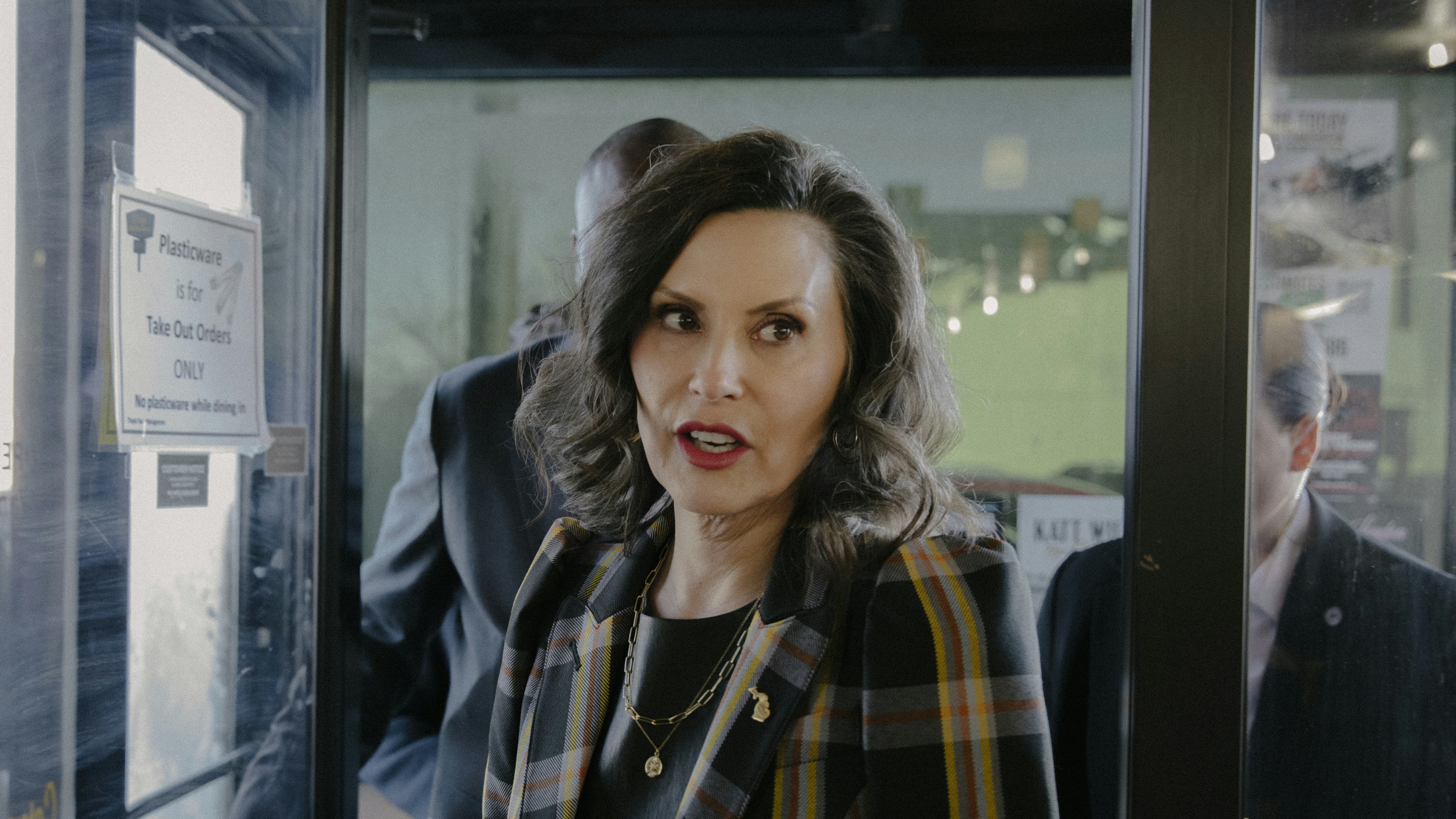
Every Whitmer supporter—and even most of her critics—will tell you that the governor’s single greatest strength as a politician is that she sounds like a regular person. Whitmer, who is 54, is authentic Michigan, down to the nasal vowels; she’s never lived anywhere else. She seems to enjoy making fun of herself. In her book, True Gretch, the governor freely admits that she partied too hard as a teenager and once vomited on her high-school principal. She writes about pulling out her dental flipper to make her colleagues laugh. These days, Instagram provides the best glimpse of Whitmer’s personality. One recent video shows the governor’s endearing struggle with a family recipe for popovers. “Why is it so thick?” she asks, frowning into the blender. “Oh, the milk’s not in there!”
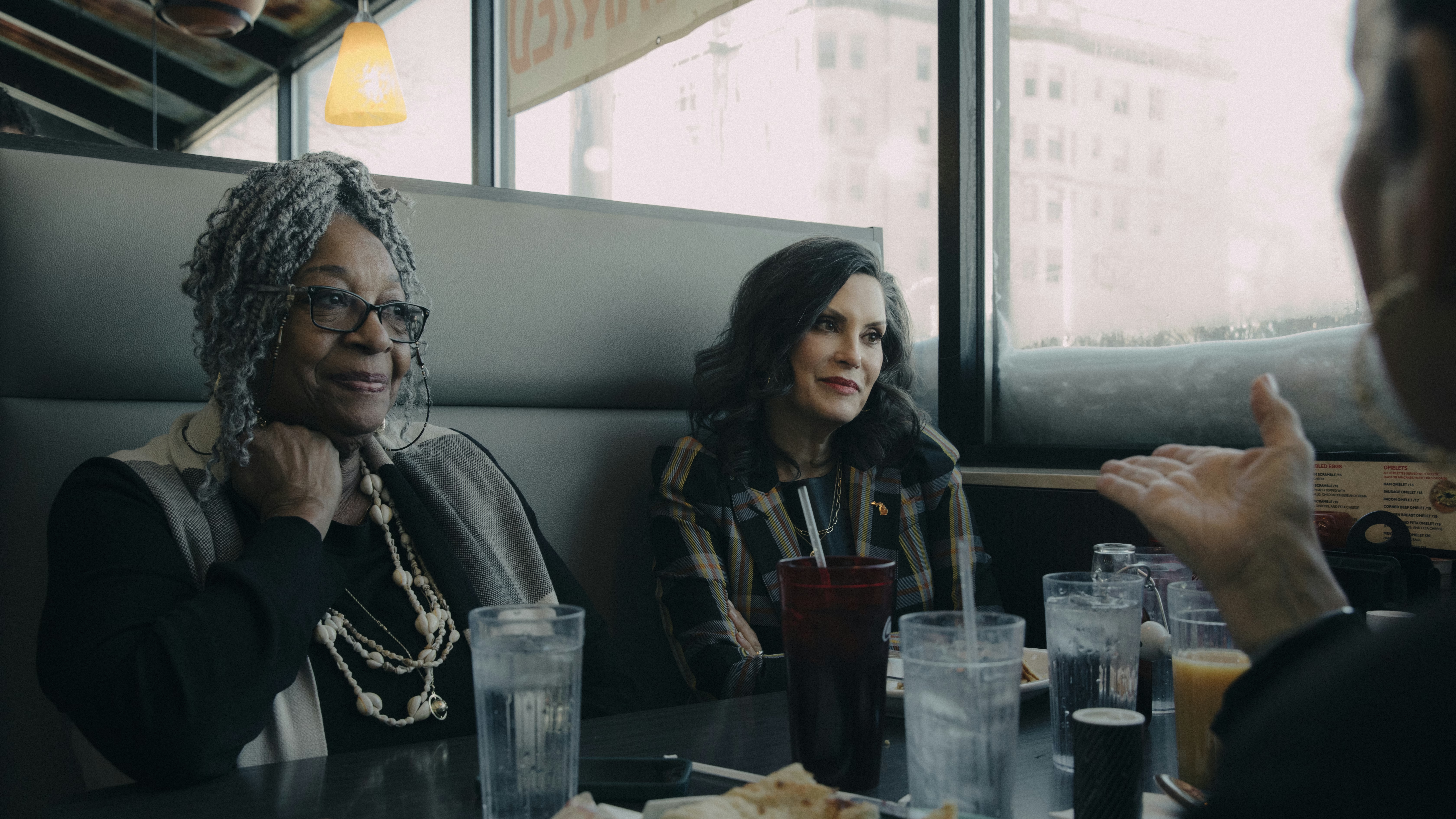
It took a while for me to see this side of Whitmer. While reporting this story, I watched her speak at political events and a book talk. Eventually, I was able to see her interact with regular Michiganders at a diner in downtown Detroit in January, though the crowd there wasn’t particularly organic; ahead of the visit, Whitmer’s team had asked several local party leaders and activists to attend. Still, I got a small taste of a bigger truth: Big Gretch is a good time.
Weaving among tables, Whitmer took selfies and clutched hands. “If I could carry a tune, I’d sing to ya!” she told a man at the counter celebrating his birthday. She posed for a photo with a group of waitresses and somehow ended up with a toddler in her arms. “You’re so cute!” she squealed. At one point, Whitmer joined three women in a booth, ordered a stack of silver-dollar pancakes, and then insisted that a staffer take one. “Eat it, Henry!” she chanted. “Eat it! Eat it!” Later, Whitmer told me with a sly smile that she’d read The Atlantic’s recent profile of Newsom. “I enjoyed that one of your colleagues described Gavin as handsome ‘in a faintly sinister way,’” she said.
A Detroit rapper popularized the nickname Big Gretch, which the governor’s team insists that she “loves,” during the early months of the pandemic. But Whitmer’s reputation as a political force in Michigan goes back decades. Her parents, Richard and Sherry Whitmer, served, respectively, as the Republican head of the state’s Commerce Department and the Democratic assistant attorney general. Whitmer studied communications at Michigan State University in the hope of becoming a sports broadcaster. But after interning for a Democratic lawmaker in Lansing, she followed the same path as her parents: law school, then politics.
She spent six years in the Michigan state House, and another nine in the state Senate, four of them as minority leader. Back then, Democrats were used to being outnumbered, which meant that they were used to having to shout to be heard. And Whitmer was louder than anyone else. When a fellow Democrat was barred from speaking after using the word vagina on the house floor, Whitmer helped stage a performance of The Vagina Monologues on the steps of the state capitol. Once, during a debate, she chided her Republican colleagues until they told her that she was out of order. “Go ahead and gavel me!” she replied. “Her stuff got quoted more than anybody else,” Randy Richardville, a former Republican majority leader, told me. She was funny and direct. “I used to tell my people to stop watching her, stop listening, stop paying so much attention,” he said.
Many Americans first encountered Whitmer in 2013, when she revealed in a speech on the floor of the Michigan Senate that she had been raped in college. Republicans had been pushing for legislation to require women to buy a separate insurance policy to pay for abortions, including in the case of rape or incest. “I think you need to see the face of the women who you are impacting with this vote today,” Whitmer told her colleagues. The legislation passed anyway. But women from all over the state called to thank Whitmer for her honesty.
Even though Whitmer was viewed as liberal, she seemed to genuinely like her Republican colleagues. Richardville recalled a time when Whitmer was particularly angry about some piece of GOP legislation and was harsh with him on the senate floor. Afterward, the two still met in his office for a drink. “We were kind of like those cartoons—the dog and chicken or whoever they are. They punch in and punch out at five,” Richardville said. Years later, when state Senate Majority Leader Mike Shirkey, a Republican, said that Whitmer was “on the batshit-crazy spectrum,” she sent him a birthday cake decorated with the words Happy 65th BAT Day!
Whitmer announced that she was running for governor a few months after Trump’s election in 2016. Her slogan, “Fix the damn roads,” was folksy and charming, and in November 2018, a generally excellent year for Democrats, she was elected by almost 10 points. After her first year in office, she delivered the Democrats’ response to the president’s State of the Union address, in which she called out Trump’s bad behavior. “Bullying people on Twitter doesn’t fix bridges; it burns them,” Whitmer said. One month later, the coronavirus came to Michigan.
Like other governors, Whitmer ordered residents to stay at home and schools to close as the virus spread. She felt comfortable criticizing Trump’s leadership from the start. “The federal government did not take this seriously early enough,” she said in a mid–March 2020 interview on MSNBC. In response, Trump urged Whitmer to “work harder.” A few days later, Whitmer doubled down on CNN. “I don’t want to be in a sparring match with the federal government,” she said. “But we are behind the eight ball because they didn’t do proper planning.” Soon, the president was on Fox News blasting Whitmer for complaining. He told reporters that he’d instructed Mike Pence, who was coordinating the federal and state pandemic response, not to call “the woman in Michigan.” On Twitter, Trump dubbed the governor “Gretchen ‘Half’ Whitmer.”
The situation in Michigan felt especially volatile. Whitmer extended the state’s stay-at-home order through April and initially issued restrictions that many Michiganders found ridiculous, including closing golf courses and outdoor garden centers. That month, 3,000 protesters descended on Lansing. “LIBERATE MICHIGAN!” the president tweeted in support. Subsequent protests featured armed men loitering outside Whitmer’s office in the state capitol building. The governor faced personal scrutiny, too. After boating restrictions were lifted, her husband, Marc Mallory, tried to use their relationship to get his boat in the water before other people could. A year later, Whitmer was caught violating social-distancing rules with friends at a Lansing bar.
She apologized for some of those missteps. More important to liberals, she didn’t cower in the face of Trump’s attacks. “You said you stand with Michigan—prove it,” she tweeted at the president in March 2020, challenging him to send more masks and ventilators. She appeared on The Daily Show in the T-shirt printed with Trump’s quote, tweaked for a sharper effect: That Woman From Michigan. At the time, Democrats were desperate for heroes, and Whitmer quickly became one. “Big Gretch” merchandise began to appear in tchotchke shops alongside Nevertheless, she persisted mugs and Ruth Bader Ginsburg yoga mats. At one point during the pandemic, Robert De Niro called in to a Whitmer-administration finance meeting to show his support for the governor.
All of this attention seemed like it might add up to something, and by summer 2020, Whitmer was being vetted for vice president. She wasn’t sure about it at first, people familiar with her thinking at the time told me; she struggled to imagine herself as a creature of Washington, D.C. She got along well with Biden, though, and by the time he asked her to fly to Delaware for an in-person chat, she was ready to say yes. Biden didn’t ask. The moment called for a Black running mate, the former senior staffer for Whitmer told me, so he had to choose Kamala Harris. “But I think he wanted it to be Whitmer,” this person said. Asked to confirm, a former adviser to both Biden and Harris said that the assessment carried “some weight.”
Whitmer campaigned happily for the ticket, but behind the scenes she was dealing with a nightmare. Earlier in the summer, the head of her security detail had sat her down in the sunroom of the governor’s residence and offered an urgent update: A group of men tied to a militia group called the Wolverine Watchmen, outraged over her COVID restrictions, was plotting to kidnap and possibly kill her. For the next several weeks, federal and state officials monitored the group as it staked out Whitmer’s multiple residences. Publicly, the governor said nothing. Finally, in early October 2020, the agents had collected enough evidence to arrest the men and foil the plot.
On October 8, Whitmer delivered a steely televised address, calling the men “sick and depraved.” In an article for this magazine, she unloaded on Trump, writing that “his violent rhetoric puts leaders across the country in danger.” During an interview on Meet the Press, she had a small sign reading 86 45, an apparent reference to removing Trump from office, visible in the background of her shot. (When Michigan Republicans accused the governor of calling for Trump’s assassination, a press aide for Whitmer said in a statement, “It’s pretty clear nobody in the Trump campaign has ever worked a food service job.”)
The situation shook Whitmer and her family. Her husband had received so many threats at his dental practice that he was forced to retire early. Her then-teenage daughters, Sydney and Sherry, refused to return to the family’s summer cottage in Elk Rapids, one of the locations staked out by the plotters. In Lansing, $1 million in security upgrades, including a perimeter fence, were installed around the governor’s mansion.
As Michigan emerged from the pandemic, Whitmer was winning again. She was reelected by a huge margin in the 2022 midterms, during which voters also approved a measure to make abortion a constitutional right and state Democrats got their first governing trifecta in nearly 40 years. With their new power, they repealed right-to-work legislation and made breakfast and lunch free for all public-school students, among other accomplishments. The national buzz around Whitmer was growing louder, and Whitmer didn’t shut it down. She filmed a viral social-media campaign that featured a Barbie doll named Lil Gretch zooming around Lansing in a pink convertible, wrote True Gretch, and launched a political-action committee to recruit and train candidates. “People frickin’ loved her,” one Democratic state lawmaker recalled.
But around the same time, some people in Michigan began to detect a change in the governor. Local journalists and state lawmakers who’d been accustomed to watching Whitmer banter with reporters and field unscreened questions from constituents noticed that she’d become less spontaneous and less accessible. Her already tight inner circle became tighter. Her team began giving news outlets notice of the governor’s schedule hours in advance, instead of days. “They never emerged from the lockdown, and they act like it,” partly because of the kidnapping threat, Chad Livengood, the politics editor of The Detroit News, told me. (A Whitmer spokesperson said that the governor maintains “very deep engagement” with state legislators, and that her office “implemented new security protocols” for the safety of Whitmer, her staff, and reporters.)
Livengood, who has covered Whitmer since she was in the state Senate, said that these days, the governor seems “so focused on trying to follow talking points and advisers that some of that old, jocular Gretchen Whitmer talk and haggling has kind of stopped.” One well-known cable-news host also told me that Whitmer’s aides have “a lot more desire to manage” her television appearances compared with other politicians’, which feels “out of whack” with Whitmer’s interpersonal skills.
It would be understandable if the threats had made the governor more circumspect; many Michiganders were—and remain—angry about the way that she handled COVID. “There’s a heightened awareness now that I didn’t have before,” Whitmer writes in her memoir. In one of our interviews, she elaborated. “I think I’m still processing it,” she told me. “I’ve had to have my guard up for so long in such a personal and serious way, that, you know, I’m trying to just let my guard down and be me.” Some of Whitmer’s would-be kidnappers are in prison; other accused conspirators were acquitted. One of them has filed paperwork to run for governor. “It’s a strange place to be in,” she said.
Whitmer’s new reticence also coincided with a quickly deteriorating political environment for Democrats. By 2024, they were struggling to make progress on many of Whitmer’s stated priorities, including paid family leave and government-transparency reforms. Some state lawmakers blamed themselves. Others were frustrated with Whitmer. “There was no vision,” Mark Brewer, a former chair of the Michigan Democratic Party, told me. “Someone had to lead, and she didn’t.”
To some observers, Whitmer seemed to have made the calculation that, because little was happening in the Michigan legislature, she might as well pivot to national politics. Lots of Democrats hoped it meant that the governor was angling to replace Biden on the 2024 ticket. But Whitmer never wavered in her support for the 81-year-old incumbent—even after his calamitous June debate against Trump. (Although Whitmer did not endorse Harris for 24 hours after Biden dropped out of the race, the governor insists that she was not thinking of challenging her. “I wanted to take a beat and get the lay of the land,” she told me. “It had to be” Harris, she added, because “Joe Biden took so long to make a different decision.”)
The election was devastating for Whitmer, bringing both a Republican resurgence in Michigan that ended her party’s trifecta and a sweeping Trump victory. During speaking engagements, the governor likes to tell crowds that she dealt with the disappointment by watching all eight seasons of the TV show Dexter—“A serial killer to lift your spirits!”—before getting back to work.
This also appears to be the moment when Whitmer decided to try something new with Trump. The kidnapping plot might have given her a heightened sense of awareness and changed her relationship with the press. But now came the strategic recalibration. “When I was ready to reengage, after a brief break, I had done the analysis,” she told me. “This president just got reelected. My own state helped put him in the White House again. I’ve got two years. What am I going to do with these two years?”
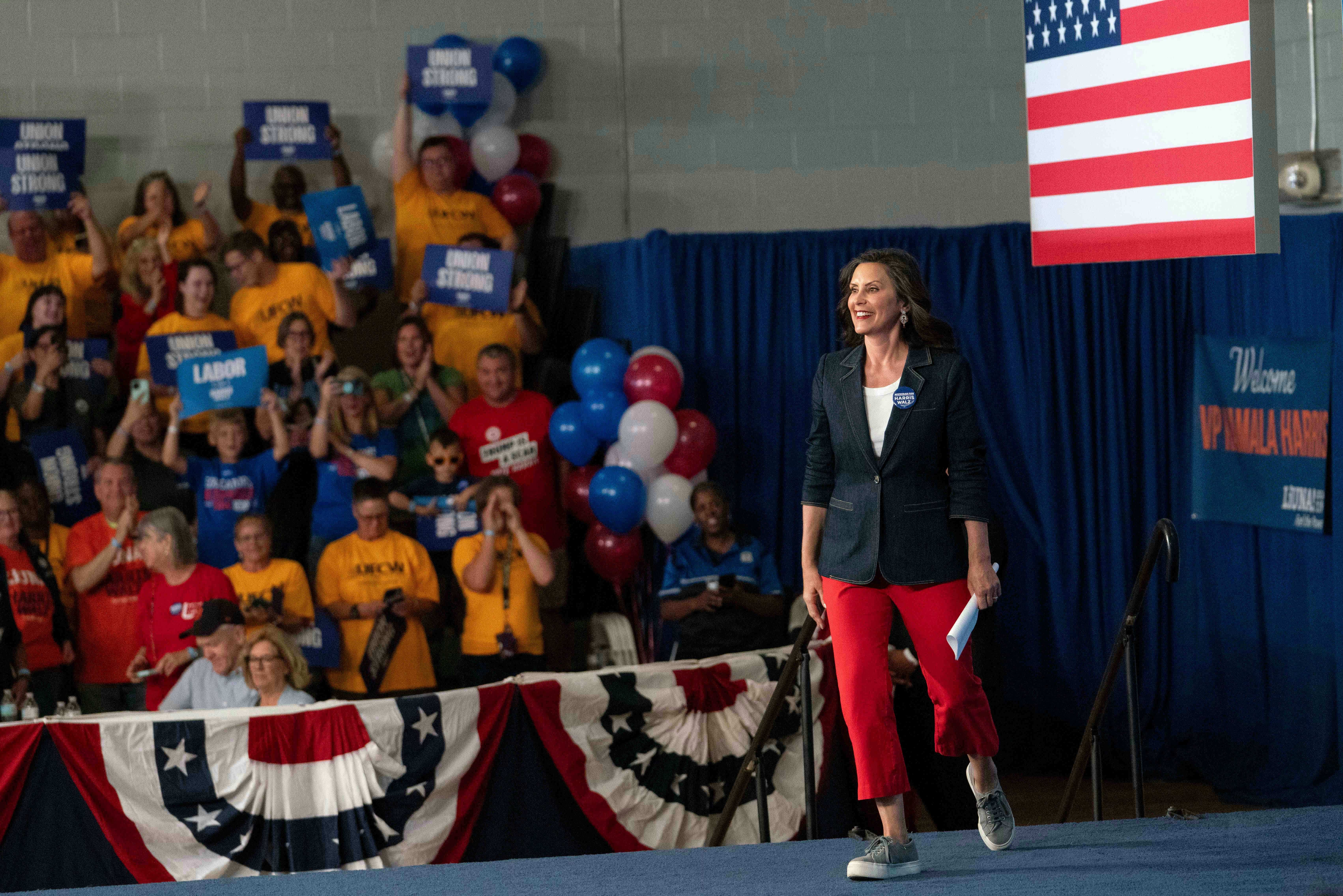
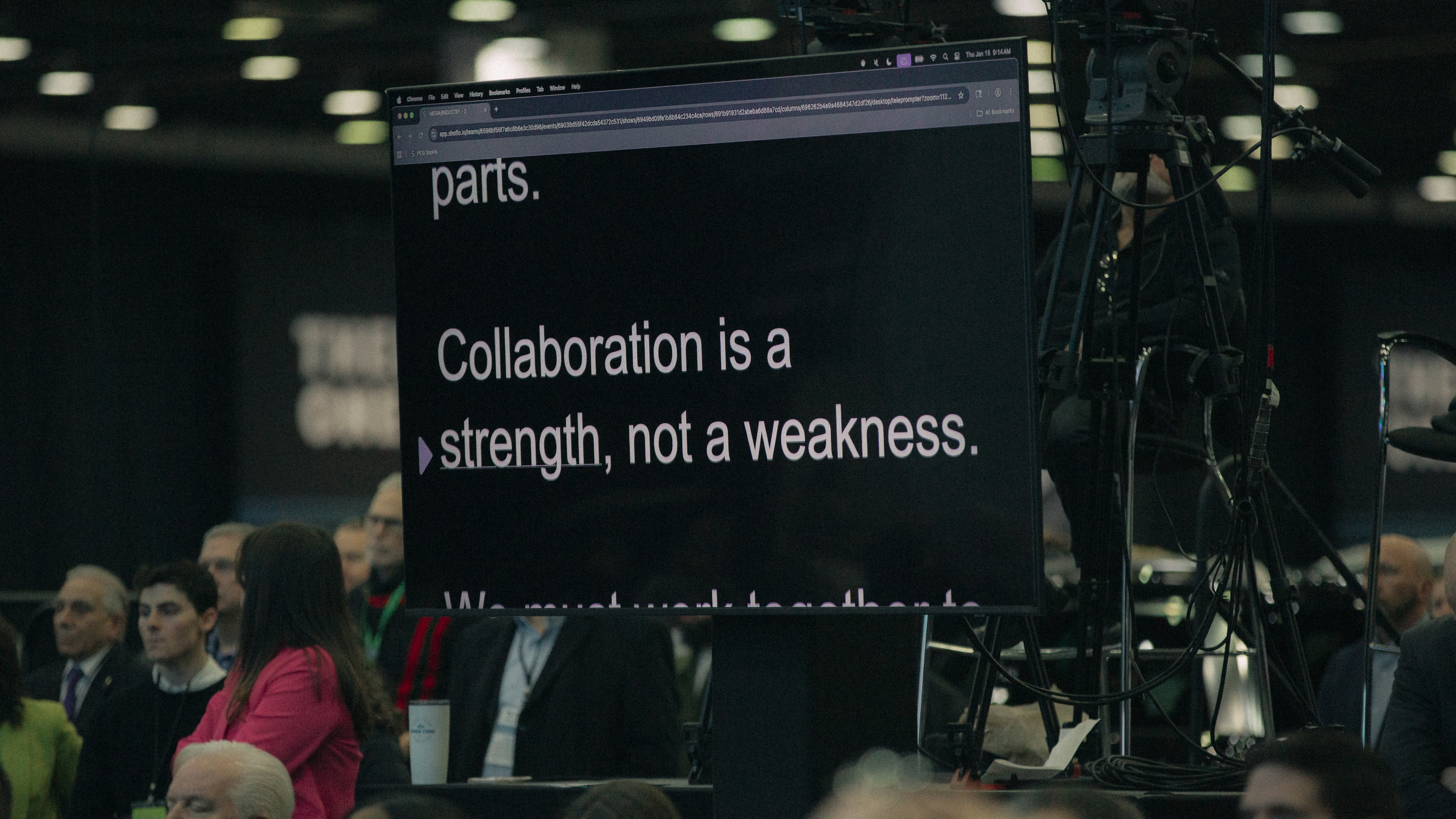
Whitmer made her intentions clear right away. On the day of Trump’s inauguration, she wrote the president a letter congratulating him and praising his recent words of support for the auto industry. She also included her personal cellphone number and invited Trump to call her if he needed anything. In her State of the State address the next month, Whitmer offered a new declaration of purpose: “I am not looking for fights,” she told Michiganders. “My north star has always been collaboration.”
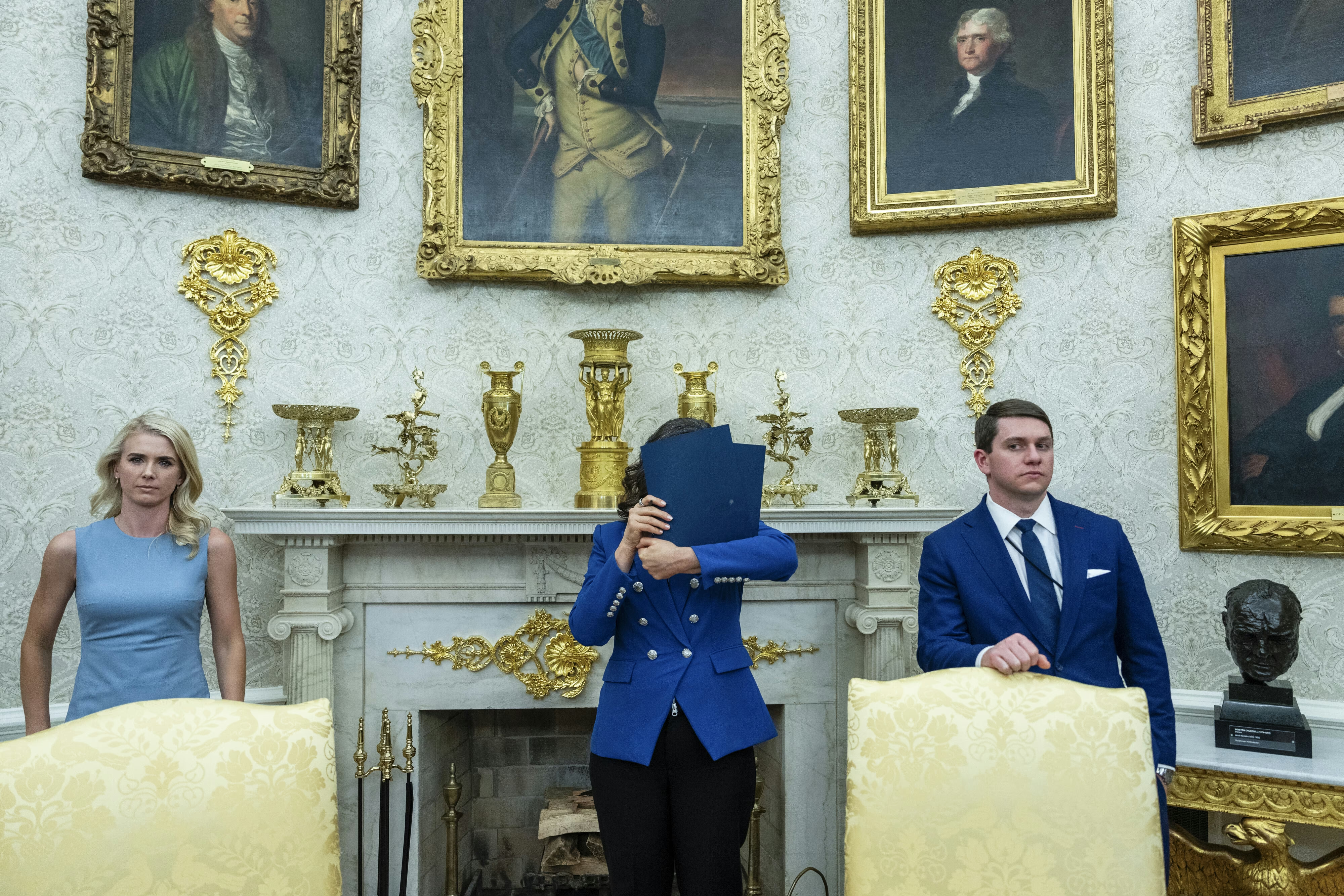
Whitmer began to set up White House meetings with Trump—she’s had three so far, compared with only one during his entire first term in office. They have discussed an array of Michigan-centric issues—emergency aid after an ice storm, a proposed semiconductor plant, a request for new fighter jets at Michigan’s Selfridge Air National Guard base. Which brings us to the moment that has probably played like a Chaplin-esque silent projection inside the governor’s brain for the past 12 months: One afternoon in April, Whitmer went to the White House with Matt Hall, the new Republican speaker of the Michigan House. She and Hall were expecting a private meeting with the president, but instead, a White House staffer ushered them into an Oval Office full of reporters. They spent the next hour positioned beside Trump as he signed executive orders related to his 2020-election lies. When a camera turned to Whitmer, she covered her face with a pair of blue folders.
Basically everyone knew it had been a setup. “She got sucked into some bullshit,” Tommy Stallworth, a Democratic former state lawmaker and a senior adviser to Whitmer, told me. (Hall defended Trump, telling me that the president had decided to merge events to save time.) But for some Democrats, the photo became an instant symbol of the party’s feckless response to Trump—and another crack in the Big Gretch persona. Unlike in Zohran Mamdani’s later visit to the White House, when the New York City mayor-elect seemed to charm Trump with his confidence, Whitmer looked helpless. The folder moment showed that Whitmer “is not the badass with these great political instincts that you’ve been led to believe,” one prominent national Democratic Party strategist told me. “I love Gretchen Whitmer,” Brewer said. “But oh my God.” (Months later, in an article dubbing Whitmer “Trump’s favorite Democrat,” Politico reported that the governor autographed a copy of the photo for Trump the next time she visited. She also brought him a mocked-up newspaper celebrating how potential federal investments could deliver a “historic jobs boom” for Michigan, as well as a flag and a bullet from Selfridge.)
To the extent that Whitmer has criticized the president in his second term, she’s kept her comments soft and a little vague. “There is room for her to be a louder voice, particularly because so many folks have gotten accustomed to hearing from her,” former Michigan Democratic Party Chair Lavora Barnes told me. At the Detroit Auto Show earlier this year, for example, Whitmer defended the Trump-maligned United States–Mexico–Canada trade agreement without mentioning the president directly: “We cannot and we should not—as some have said—we cannot and should not abandon it.” Whitmer did not issue a statement in the days after an ICE agent fatally shot Renee Good in Minneapolis. When I asked the governor why, she said, “I do not need to put out an official Gretchen Whitmer statement on every single thing that happens, because all I’d be doing is putting out press statements every day.” Two weeks later, after Customs and Border Protection agents fatally shot Alex Pretti, Whitmer quickly released an official statement saying that “the violence must stop” without referring to Pretti directly.
Even though the governor has taken some action when state residents have been threatened by ICE, she has at times been slow to do so, including in a case in which state Republicans were eager to help, according to two people with knowledge of the situation.
Whitmer seems to have concluded that she can do more with her remaining time in office through conciliation than through confrontation. The past year shows “that you can’t be too cautious with Trump, and you have to choose your battles very carefully,” Julie Brixie, a Democratic state lawmaker in Michigan, told me. “Governor Whitmer has done a great job of that.” Kansas Governor Laura Kelly, a friend of Whitmer’s, told me that states are more at risk in Trump’s second administration, which is why she figures that the approach Whitmer and her team “took in the first term cannot be the approach that they take in the second.”
In some ways, Whitmer’s new posture is working. After her Oval Office visits, the president agreed to provide some emergency aid to Michigan, and to supply new planes for Selfridge. Notably, the National Guard has not yet been unleashed on Detroit. And even though ICE agents have conducted immigration-enforcement operations in the state, they haven’t made it a special target. Whitmer believes that she has set an example for other leaders, including Mamdani, a democratic socialist, to visit the White House and work with the president.
At least some of Whitmer’s constituents seem to appreciate this. Whitmer’s visit to the diner in Detroit took place a few days after Good was killed. As Whitmer greeted a group of elderly patrons, she alluded vaguely to the violence in Minnesota. “Crazy things happening out there,” she said, before adding, “We’ve gotta keep that from happening in Michigan.” One woman nodded and replied, “That’s why you gotta keep the channel of communication open.”
It’s not clear how long this strategy will succeed. Trump could change his mind at any moment about the new fighter jets for Selfridge, which aren’t set to arrive until 2028. Whitmer’s much-desired semiconductor plant fell through, thanks to tariffs and a shift in federal policy. “I don’t think it’s worked,” Brewer said of Whitmer’s closeness with Trump. “He’s given us a few trinkets.”
Last May, the president even dangled the possibility of pardoning some of the men involved in the kidnapping plot. When the governor learned this, she told me, she called Trump, who seemed to believe that the men had been treated unfairly. “I said, ‘No, Mr. President, they had trials, and this is very serious,’” Whitmer told him, before following up with a letter urging Trump not to go through with the pardons. So far, Trump has stood down. But “nothing is written in stone,” Whitmer acknowledged. (When I reached out to the White House for a response to this and a number of other questions, an official said in an email that Whitmer and Trump “have a friendly relationship and are willing to work together to get things done for the people of Michigan, whom the President loves!”)
If Whitmer runs, her work-with-Trump strategy could double as a 2028 campaign platform. She wouldn’t say so directly, but some of her allies did. “Every social-media liberal believes that silence means complicity,” John Anzalone, Whitmer’s pollster and a Democratic strategist, told me. “Silence is sometimes just really fucking smart.”
Whitmer, who has less than a year left as governor, told me that a presidential campaign isn’t something that she’s “gearing up for.” And many Michigan Democrats think she isn’t interested, perhaps partly because of the 2020 threats against her. It’s also conceivable that, by trying to be as inoffensive as possible, Whitmer is positioning herself as the ideal vice-presidential candidate.
But the governor doesn’t seem to have ruled out a run of her own. A nonprofit group supporting her has raised millions of dollars and hired some of her former aides. While I was reporting this story, the governor attended a fundraiser and a book talk in Florida and a PAC event in Wisconsin. She launched a Substack where she plans to expound on the path forward for Democrats. And like several other would-be presidential candidates, she spoke at this year’s Munich Security Conference, though she kept her comments Michigan-focused and, somewhat perplexingly, seemed unprepared to answer foreign-policy questions.
The affirmative case for a Whitmer campaign goes like this: Right now, Democrats might want leaders who thirst for combat, but their appetites will change. Other Democratic governors have won the “mess-with-Trump primary,” the consultant James Carville told me, but in two years, the president will be “the last person that the country’s gonna want to hear about.” By 2028, voters will want candidates who, like Whitmer, have prioritized action over ideology. In this second age of Trump, Democrats “need to prove that you can make democracy work, that you have delivered for people,” the Democratic political adviser Jennifer Palmieri told me. After Whitmer met with Trump in spring 2025, her approval rating soared—and popularity in Michigan isn’t a bad barometer for someone potentially seeking national office.
The problem with this theory is that, right now at least, Democrats are not looking for careful politicians. A large majority of Democratic voters believe that their leaders aren’t fighting hard enough against Trump and his policies, according to one 2025 survey from the Pew Research Center. In a crowded 2028 primary, Whitmer “will be starting from behind, and leaning very heavily on her record, and I don’t know if that’s enough when people are just so rabidly anti-Trump,” the Democratic pollster Adam Carlson told me. Even though many Democratic donors were excited about Whitmer’s potential as a candidate in 2024, there is no longer much enthusiasm, one prominent donor-adviser told me: “There is no badass energy to Gretchen Whitmer anymore.”
Whitmer seems at least a little concerned about this perception. Toward the end of our final conversation, at the diner, I asked the governor whether she was still comfortable embracing the nickname she’d earned during the pandemic. She seemed exasperated. She spoke for a while, repeating what she’d told me earlier about advocating for her state, and noted that none of her predecessors had managed to get a Selfridge deal. Then she turned back to my question. “I am Big Gretch. Big Gretch is me,” she said. “I’m always going to show up for the people of Michigan—even when it comes at the cost of myself.”
The post Why Did Gretchen Whitmer Go Soft on Trump? appeared first on The Atlantic.