The Trump administration arrested and said it would deport the son of an Iranian woman who gained fame as a spokeswoman for the Iranian militants who stormed the U.S. embassy in Tehran in 1979.
Federal agents arrested Seyed Eissa Hashemi, his wife, Maryam Tahmasebi, and their son, who was not identified by name, after the United States this week revoked their permanent resident status, Secretary of State Marco Rubio announced on Saturday. The three are now in the custody of Immigration and Customs Enforcement pending deportation.
A State Department statement on the matter did not accuse the three arrested of any specific unlawful or harmful acts but stated that the Trump administration “will never allow America to become a home for foreign nationals tied to anti-American terrorist regimes.”
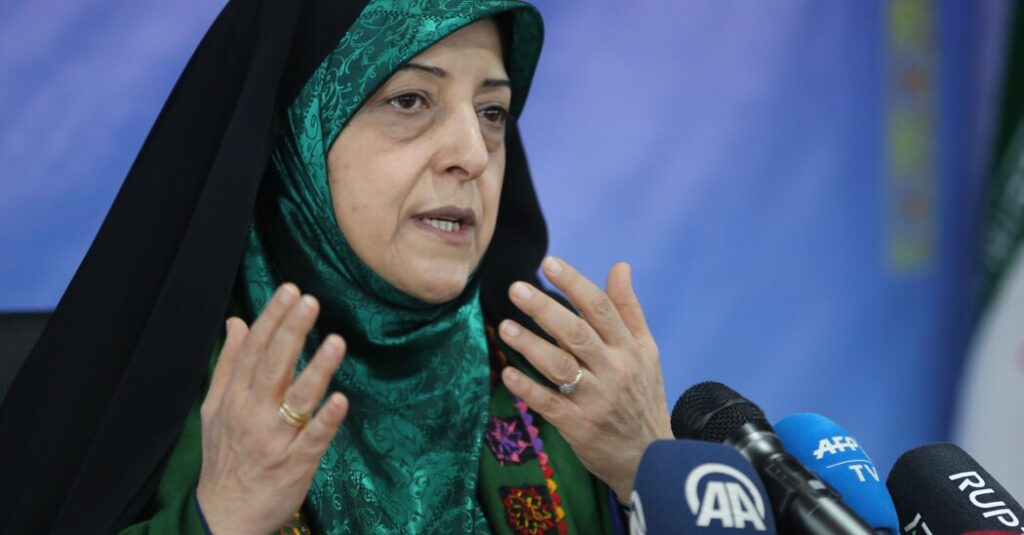
Mr. Hashemi is the son of Masoumeh Ebtekar, who served as the English-language spokeswoman for the Islamist embassy captors during the 444-day hostage crisis. Mr. Hashemi had been the subject of recent reports in conservative media outlets that portrayed him as living comfortably in Los Angeles while working as a psychology professor.
The State Department branded Ms. Ebtekar a “propagandist” who made false claims that the American hostages were treated well. Its statement noted that U.S. media reports sometimes referred to her as “Screaming Mary,” though she was more often known simply as “Mary,” her nom de guerre.
Ms. Ebtekar evolved into an Iranian reformist politician holding senior government positions advocating for the environment and the rights of women, and served as Iran’s vice president from 2013 to 2021. She has sought to move beyond her revolutionary past: In a 1998 interview with The New York Times, she asked a reporter not to focus on her role during the hostage crisis.
Mr. Hashemi entered the United States with his family in 2014 on an F-1 student visa, according to Department of Homeland Security. They were granted green cards and permanent resident status in 2016. The department said that status is revoked when the United States has “reason to believe a green card holder poses a threat to the U.S.”
The planned deportations follow similar U.S. actions against the niece of the slain Islamic Revolutionary Guard Corps commander Qassim Suleimani and her daughter. The commander was killed in a 2020 U.S. airstrike authorized by President Trump.
Michael Crowley covers the State Department and U.S. foreign policy for The Times. He has reported from nearly three dozen countries and often travels with the secretary of state.
The post U.S. Moves to Deport Son of Prominent Figure in Iranian Revolution appeared first on New York Times.