As high-level U.S. and Iranian officials met to negotiate an extended cease-fire, two American Navy destroyers entered the Strait of Hormuz on Saturday and destroyed an Iranian surveillance drone approaching one of the ships, according to multiple U.S. officials.
The operation was the beginning stage of an effort to clear mines from the strait and demonstrate to commercial tankers that the waterway could be transited safely.
The two Navy ships sailed from the Gulf of Oman before entering the Strait of Hormuz and then turning around, according to U.S. officials and others briefed on the operation. It is not clear exactly when the Iranian surveillance drone was destroyed. One person briefed on the operation said the drone was likely meant to signal a threat to the U.S. warships.
Though the American officials said the surveillance drone was not a direct threat, the Navy determined that it did not want Iranian forces tracking the ships’ movements. The American officials insisted that destroying the drone did not violate the cease-fire.
Iran strongly denied that the American warships had entered the critical international waterway on Saturday.
The U.S. military is eager to transit through the strait to show that it is open and that nations do not need to pay the tolls Iran is trying to impose.
But American officials also want to avoid an escalation at an exceedingly delicate moment, with Iranian and U.S. negotiators meeting in Islamabad for peace talks this weekend. The U.S. delegation is led by Vice President JD Vance.
In a statement, U.S. Central Command, which oversees American forces in the Middle East, said that the two ships, the U.S.S. Frank E. Petersen Jr. and U.S.S. Michael Murphy, both guided-missile destroyers, entered the Persian Gulf through the strait in preparation to locate and clear naval mines that Iran had laid in the waters. The ships were only in the Persian Gulf briefly before returning through the strait to the Gulf of Oman.
The destroyers were not assigned to locate or remove mines on Saturday, and officials said the destroyers had completed their primary task for the day when they left the strait.
The New York Times spoke to multiple people from multiple countries who were familiar with the movements of the vessels. All spoke on condition of anonymity because of the sensitive diplomatic negotiations.
Iran agreed to reopen the strait to shipping traffic as part of a two-week cease-fire with the United States announced on Tuesday. But that process has been slow, in part because Tehran cannot locate all the mines and lacks the capability to remove them, according to U.S. officials.
U.S. officials have also said that Iran is not eager to reopen the strait, and that it now wants to impose tolls on ships passing through. It is unclear how many mines are in the strait or how dangerous they are.
The Central Command statement added that more U.S. military resources, including underwater drones, would join the clearance effort “in the coming days.”
A spokesman for Iran’s military, Ebrahim Zolfaghari, denied that the American vessels had approached and entered the strait, and said Iran’s armed forces still controlled the waterway, according to Iran’s state broadcaster.
Tasnim News Agency, a semiofficial Iranian news agency, also claimed on Saturday “that there is currently no traffic in the Strait of Hormuz,” and that Tehran had refused “permission” to an American destroyer that sought to enter it.
Multiple U.S. officials disputed the Iranian account that they had blocked the ships, explaining that the destroyers had entered the strait and turned back.
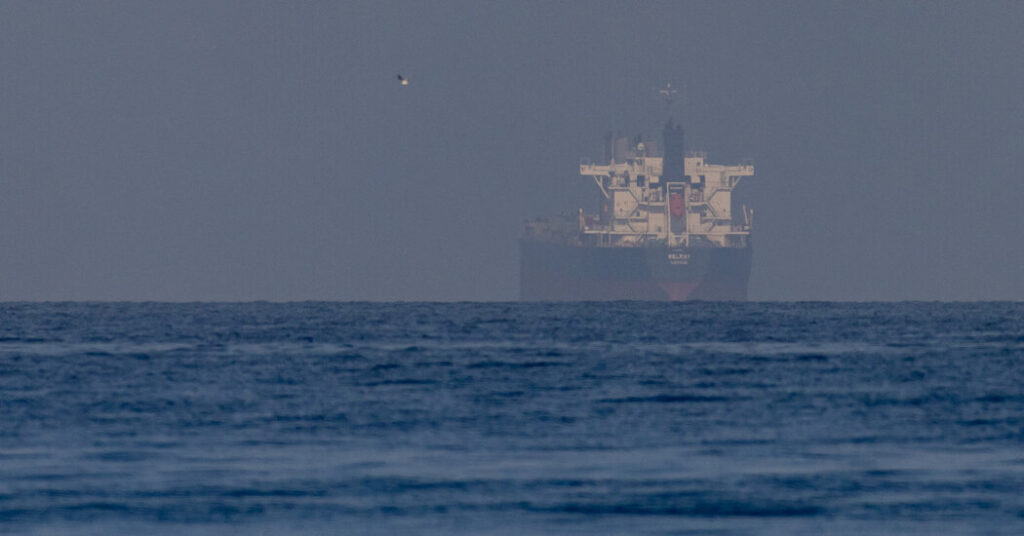
A choke point for energy and chemical shipments on which the global economy depends, the strait has been effectively closed since the United States and Israel attacked Iran in late February. Iran attacked several commercial ships and laid mines in the area in response to the bombings.
The conflict has led to widespread increases in energy prices and slower economic growth forecasts. Roughly a fifth of the world’s oil supply passes through the strait.
Reopening the strait is a central U.S. demand in the sensitive, face-to-face negotiations that continued into Sunday morning in Islamabad with U.S., Iranian and Pakistani officials. Iran has allowed some commercial ships to pass through Hormuz, but Iranian officials publicly insist that any peace deal ensure Tehran receive future revenue from shipping traffic in the waterway.
Michael Crowley covers the State Department and U.S. foreign policy for The Times. He has reported from nearly three dozen countries and often travels with the secretary of state.
The post Navy Enters Hormuz, Exits After Destroying Drone, U.S. Officials Say appeared first on New York Times.