Mayor Zohran Mamdani will announce on Sunday that New York City will open a city-owned grocery store in East Harlem in Manhattan by the end of his first term, taking an early step to deliver on a key campaign pledge.
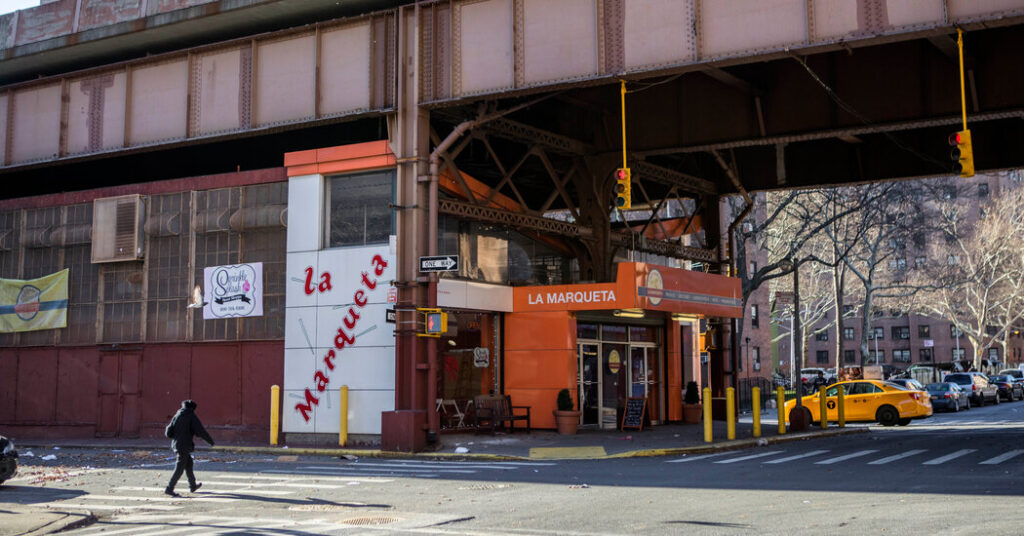
The mayor wants to spend roughly $30 million to build the store at La Marqueta, a city-owned marketplace under elevated train tracks in a predominantly Latino neighborhood. Mr. Mamdani will announce the plan at a speech on Sunday to mark his first 100 days as mayor.
As a candidate, Mr. Mamdani said he would create five city-owned grocery stores, one in each borough, in hopes of bringing down food costs for struggling New Yorkers.
A second store will open in an existing building in another borough by the end of next year, the mayor’s office said. His administration plans to open all five stores by the end of his term in 2029.
Mr. Mamdani said in a statement that corporations control the food supply chain and that the city needed to offer a public option.
“We cannot accept a status quo where even the most basic necessity — putting food on the table — feels out of reach,” he said. “This is about ensuring that every New Yorker, regardless of income or ZIP code, has access to fresh, healthy food at a price they can afford.”
La Marqueta has for decades hosted vendors beneath the Metro-North Railroad tracks along Park Avenue. It once covered five city blocks and had many vendors. But it has struggled over the years and now has a smaller footprint and fewer shops, including a garden center and a vegan soul food shop.
Mr. Mamdani said that he wanted the new grocery store to offer discounts on basic groceries and to provide “quality jobs.” The city will waive rent and real estate taxes for the store. It will be built on an empty lot and will not displace current vendors.
East Harlem is a diverse community with high poverty rates. Elsie Encarnacion, the local City Council member, said she was excited about the store.
“This means access to affordable, healthy food that is hopefully culturally relevant,” she said.
The idea of city-run grocery stores has gained national attention as a way to reduce prices and to address so-called food deserts, where supermarkets are scarce. Atlanta opened its first municipal grocery store last year. Plans for a store in Chicago have stalled.
Mr. Mamdani’s critics have warned that the stores could hurt private businesses, with one, John Catsimatidis, a Republican who owns two supermarket chains in the city, even arguing that they could lead to “bread lines of the old Soviet Union.”
Others have questioned whether city-owned grocery stores could substantially bring down prices and whether five would be enough to make a dent in a city of more than eight million people.
Mr. Mamdani is seeking to open the stores as the city is facing a major budget deficit. He proposed $70 million in capital funding to build the stores, which requires City Council approval. Julie Menin, the Council speaker, has expressed concerns about the impact of the plan on small businesses and bodegas.
During the campaign, Mr. Mamdani said that five stores could cost about $60 million annually to operate. An estimate by food policy experts found that the cost could be at least $100 million per year using union labor rates.
Stephen Zagor, an adjunct assistant professor at Columbia Business School who focuses on food businesses, said that grocery stores are difficult to run and have small profit margins. The stores will need financial support for years, like other government-backed services including Amtrak, he said.
“It’s going to be a political football — there are going to be people who don’t want to subsidize it,” he said.
Still, Mr. Zagor said that the stores could provide price stability and offer residents quality fruits and vegetables to address health concerns like obesity and diabetes.
Liz Accles, the executive director of Community Food Advocates, a nonprofit that works to improve food access, said that the store was a “critical first step.” She hopes the city will eventually have a network of 20 city-owned stores.
“New Yorkers across income categories are struggling with grocery prices,” she said.
The city plans to choose an operator to run the store and will start the procurement process this summer. City officials have examined different models, including commissary grocery stores run by the Defense Department that offer lower prices to military members and veterans.
The market in East Harlem first opened in 1936, when it operated under a different name and served as a gathering place for pushcart vendors. The city’s Economic Development Corporation runs the market and several others.
Ms. Encarnacion said she believed the City Council would support the plan as part of its efforts to address affordability, noting that there were long lines across the city outside food pantries.
“The lines are growing all over our district,” she said. “There’s still a stigma around those lines and a hesitancy to seek help when it’s so public.”
Emma G. Fitzsimmons is a public policy correspondent for The Times, covering New York City.
The post Mamdani Plans to Open First City-Owned Grocery Store in East Harlem appeared first on New York Times.