Everyone acknowledges D.C. needs more housing, including both leading candidates for mayor in the June Democratic primary that will decide the election. But recognizing the need for more supply is not the same as offering a realistic plan to get there in the current economic environment.
Socialist council member Janeese Lewis George advocates a somewhat standard progressive playbook for dealing with boomtown shortages: speed up permitting, upzone density-restricted neighborhoods and invest gobs of taxpayer money into “social housing.” These publicly owned buildings use market-rate tenants to subsidize low-income renters. She says her approach will deliver 72,000 units over the next five years.
A more serious proposal from former council member Kenyan McDuffie might seem comparatively uninspiring at first glance. While he also offers upzoning and permitting reforms, he estimates his plan will deliver 12,000 units over four years, while preserving another 20,000 units of affordable housing.
Why should Washingtonians settle for something that sounds less ambitious?
Because D.C.’s economy has changed drastically from the economy that Lewis George is planning for, in which developers yearned desperately to build, and tax coffers were overflowing with funds that could be directed to new affordable housing projects. Neither of those assumptions is true.
Before the pandemic, two decades of booming growth meant that District developers could generally rely on a simple heuristic: “If you build it, they will come.” There was a downturn immediately following the 2008 financial crisis, of course, but even that was muted in D.C. because the federal government kept growing. Ambitious youngsters flocked to the one city where jobs were still reliably available.
The median price of a home purchased in the capital city rose from $178,250 to $690,000 between 2000 and 2017. Average rents rose sharply as well, even though construction of new multifamily units — negligible at the turn of the century — rose into the thousands.
With such strong demand, the biggest constraint on new housing was simply getting permission to build. Zoning, parking minimums, red tape and D.C.’s archaic Height Act kept developers from building as much as they could and should have, so rents rose and many families were displaced, even as the city poured hundreds of millions of dollars into affordable housing initiatives such as the Housing Production Trust Fund.
But D.C.’s economy shrank by 8.3 percent on an annualized basis in the last three months of 2025, a pace worse than the city experienced during the depths of the Great Recession. While the government shutdown contributed, it’s part of a larger pattern. The city’s economy has underperformed the national economy almost every quarter since the pandemic, frequently by a wide margin. Having spent down pandemic-era relief funds, the city now faces a $1.1 billion deficit.
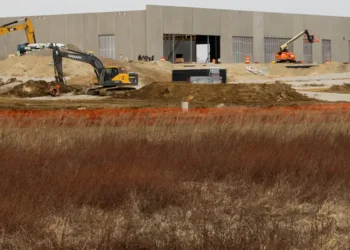
Nor is a private-sector boom in the offing. Construction in D.C. has plunged to its lowest level since the depths of the Great Recession, as population growth has slowed. Streamlining permitting and upzoning low-density residential neighborhoods won’t do much good if developers don’t think they can make money on new projects.
There will be no overflowing surpluses or infusion of outside capital to fund publicly owned housing construction, and if Lewis George tries to raise already high taxes to do so, people and businesses will move to Virginia or Maryland, further eroding the tax base.
The truth is D.C. cannot directly do much about construction costs. But the next mayor could pursue reforms of the many laws that make it riskier and more expensive to build and operate rental housing. These include onerous regulations that make it basically impossible for landlords to screen out unreliable tenants who are likely to miss rent payments or damage their property; equally onerous requirements that make it fiendishly difficult to evict nightmare tenants who don’t pay; “inclusionary zoning” mandates; and even laws that make it harder to sell a building without first allowing the tenants up to a year to pull together their own offer.
Unfortunately, making any of those changes would require the next mayor to make enemies in the Democratic Socialists of America, which Lewis George, a dues-paying member, would never dare do.
It was easy to pull together a progressive YIMBY coalition, short for Yes In My Backyard, when soaring demand made supply constraints the most important problem. To face today’s challenges, the next mayor will need to make hard choices. Fundamentally, he or she will need to be able to answer “no” when asked: Is battering landlords for political advantage more important than breaking ground on new housing?
So don’t just look at what the candidates say about the fantasy housing they’ll build. Look at what their records say about them. Lewis George has rarely, if ever, missed a chance to make life harder for landlords. McDuffie, by contrast, has shown a pragmatic willingness to work with market realities and respect property rights.
That attitude will matter more over the next four years than whatever proposals the candidates put on paper.
The post Big spending on social housing is untenable in this economy appeared first on Washington Post.