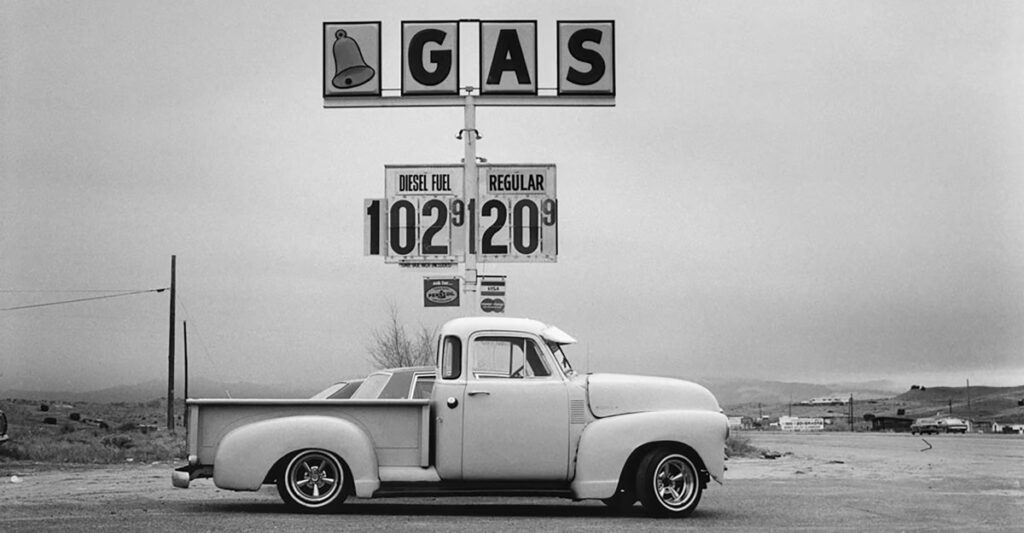
Adorning urban intersections and rising high at countryside interstate exits, the gas-station sign announces the mood of the consumer economy. For the past several weeks, the economic ramifications of the Iran war have been more or less universally represented through photographs and videos of them. It’s easy to see why: The price of gasoline is always displayed on the sign, in huge numbers that overwhelm the rest of the scene. That design, which is unlike anything else in the economy, makes the gas-price sign a kind of key to understanding American life.
Long before financial data were easily trackable in real time, gasoline offered a view of shifting market forces, seen while commuting to work or driving home from Kmart. In the analog era, workers replaced the numbers on reader boards multiple times a day, occasionally from high up on ladders. Eventually, the signs were digitized and prices were lit up in LED displays—easily changeable and neon at night.
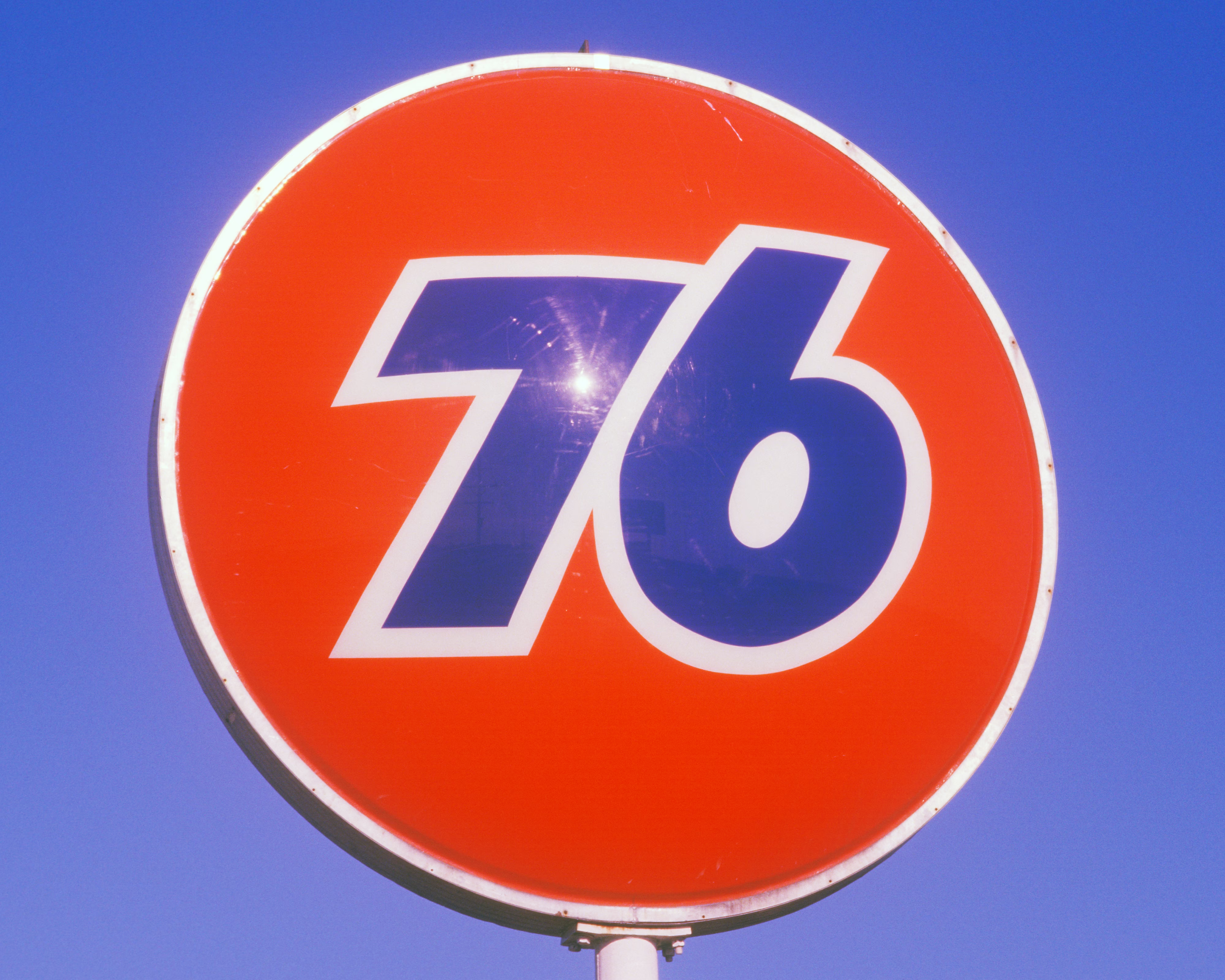
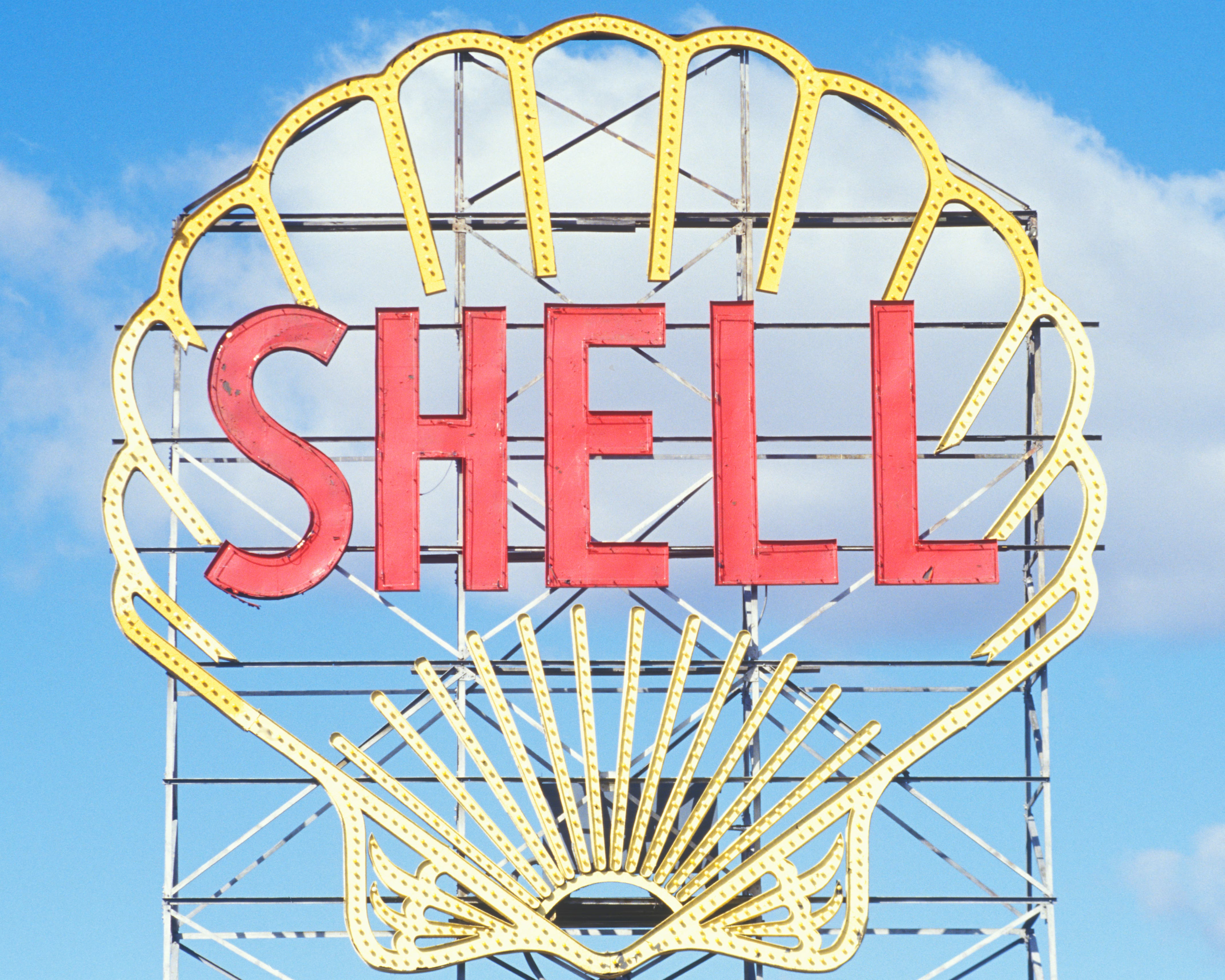
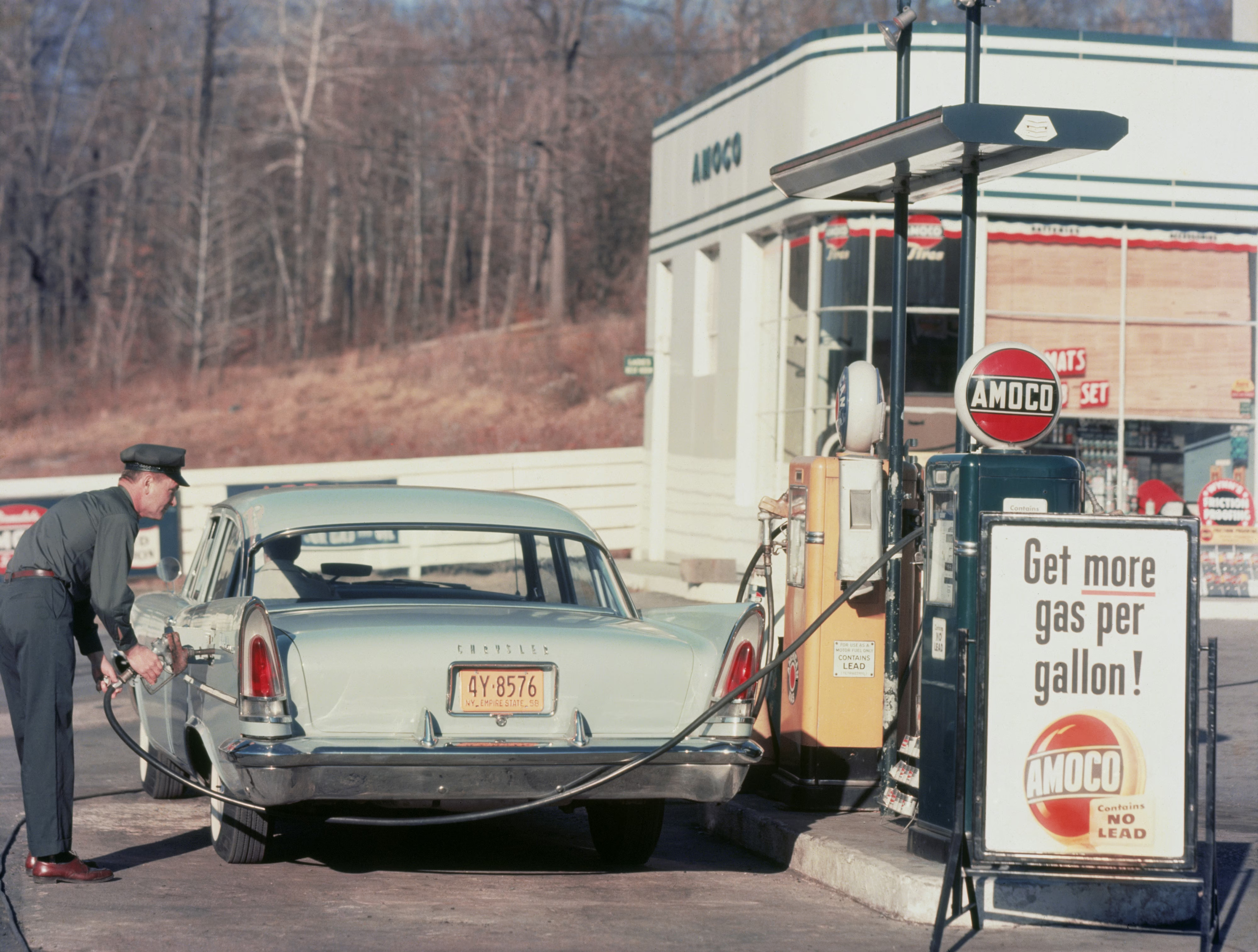
Drivers—which, in America, is really just to say citizens—learn to watch gas prices closely, to compare them constantly. Unlike with automobiles themselves, no status is conferred by splurging on gas. Groceries such as eggs and milk can be associated with lifestyle choices or socioeconomic striation, but gas is just gas. Even premium gas is just gas. It is a commodity you pay for, whose price is universally known and more or less equally charged. It is the closest ordinary people come to directly interfacing with the pure chaos of the market.
Normally, when you buy something—a loaf of bread, a rib-knit polo dress—you get a finished, usable thing. These are known as goods, and they are differentiated: The bread could have seeds or contain refined or whole-wheat flour; the polo dress might be branded Ralph Lauren or Lacoste. You do not buy the commodities that are used to create goods—wheat, cotton—in almost any circumstance. They are undifferentiated, all the same.
Technically, gasoline is a finished good too. A petroleum company refines crude oil, a commodity, into the fuel you pump into your automobile. And yet, gas works more like a commodity than a good. Gas is essentially nothing more than the price you pay for it.
[David Frum: Why Trump didn’t predict the gas-price spike]
Almost no other consumer purchase can be boiled down so purely to its price. Other goods have become somewhat undifferentiated, such as bottled water and store-brand sugar, but they possess other meaningful properties: your perception of the taste of the water, or the way the packaging fits in your hand or looks on the shelf. Even electricity isn’t a good whose price you encounter as part of the built environment; it is a service whose usage cost is averaged for later abstraction into a bill. Gasoline has no packaging, and you do not perceive it (beyond the initial smell)—but you do perceive its changing cost.
Most industries, over the course of their development, move from commodification to brand differentiation, and from products to services. Coffee went from, well, coffee to Folgers to Starbucks. Gasoline has done the opposite.
When motorcars were new, gasoline worked more like a service than a product, let alone a commodity. You’d pull into the station and someone would pump gas for you; you typically wouldn’t know the price beforehand. The petroleum companies—Standard Oil and Texaco, for example—competed on service. An attendant might be unusually friendly and efficient, or check out your car, which was probably fairly unreliable at the time.
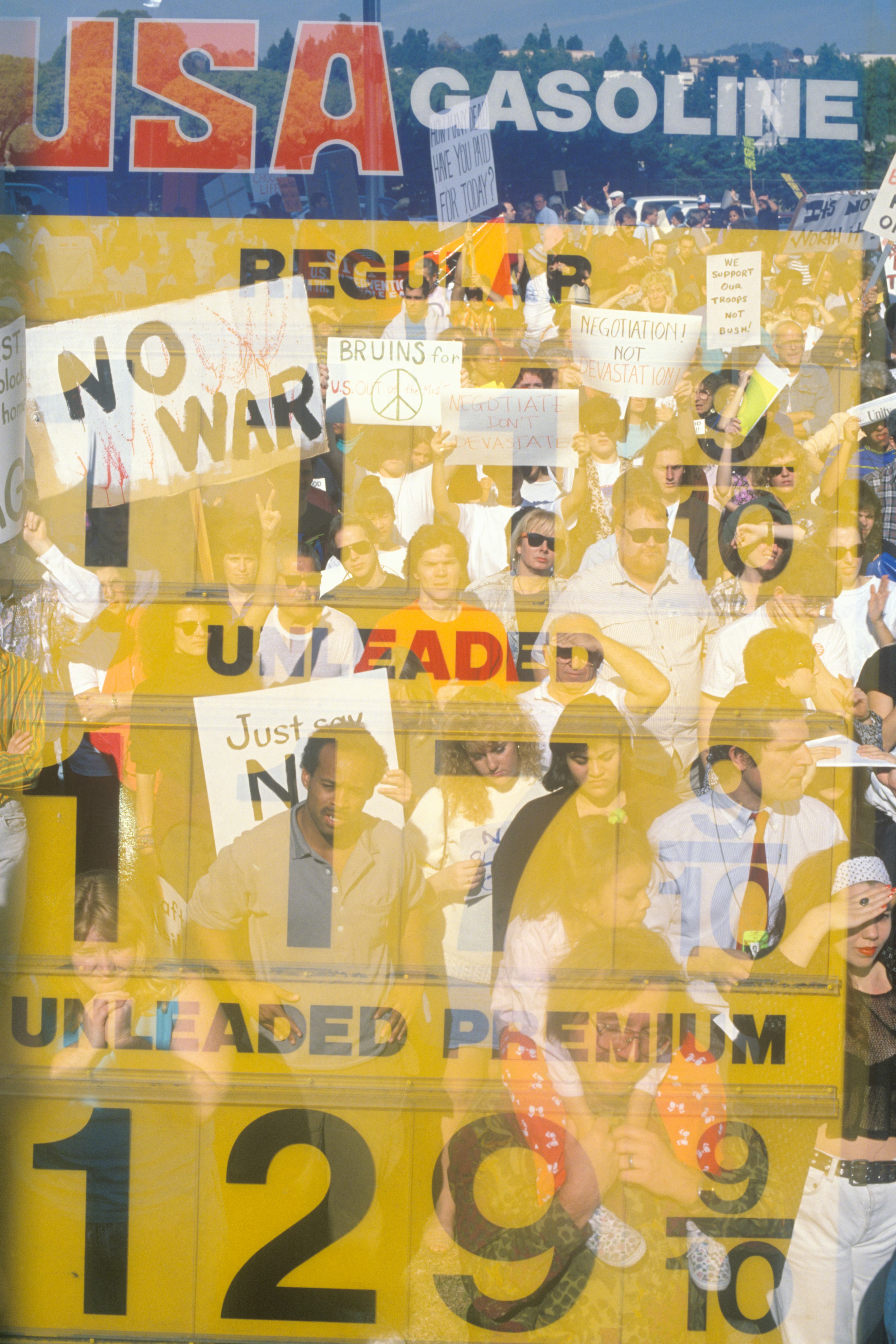
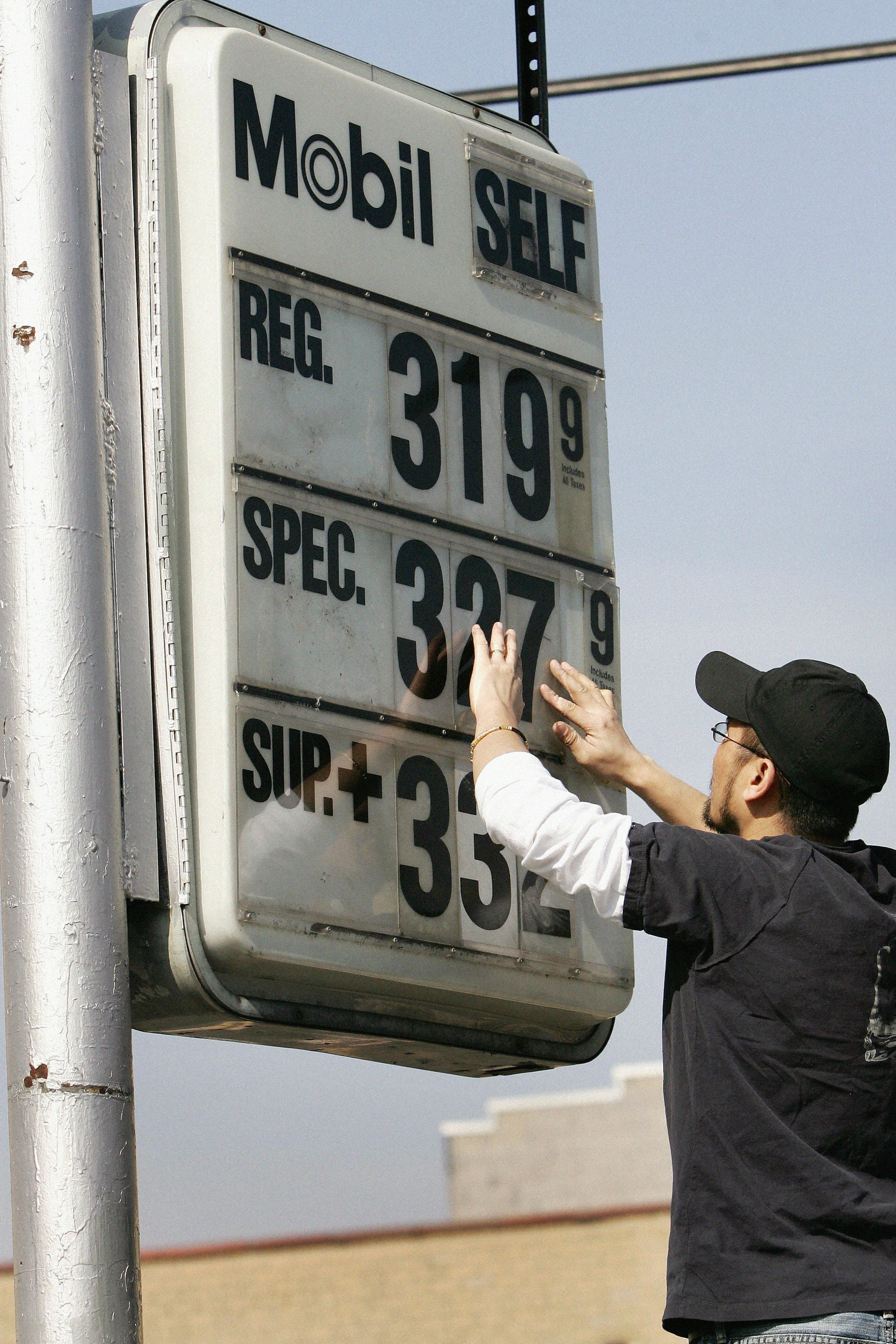
Price competition for gasoline arrived only after enough cars, stations, and brands came on the scene, by the late 1930s. This is when prices started appearing more prominently on signs and station windows. Early gas-station signs were smaller than today’s, and still subordinated to the oil-company name and image. Price signs began doing political work too: The 1932 Revenue Act introduced a one-cent gas tax, and with it the still-universal 9/10-cent price notation that the oil companies used to show that they were passing on almost all of the cost.
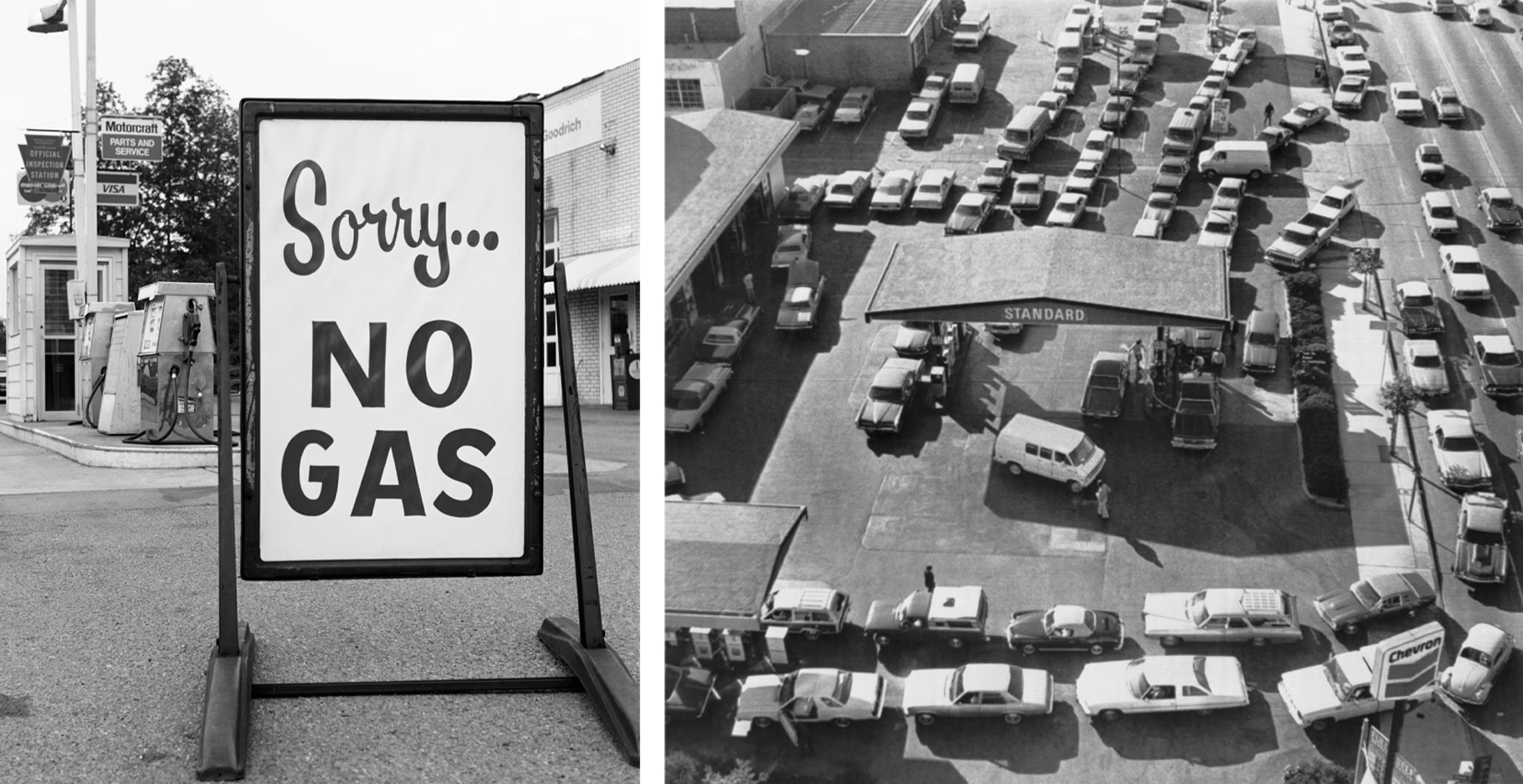
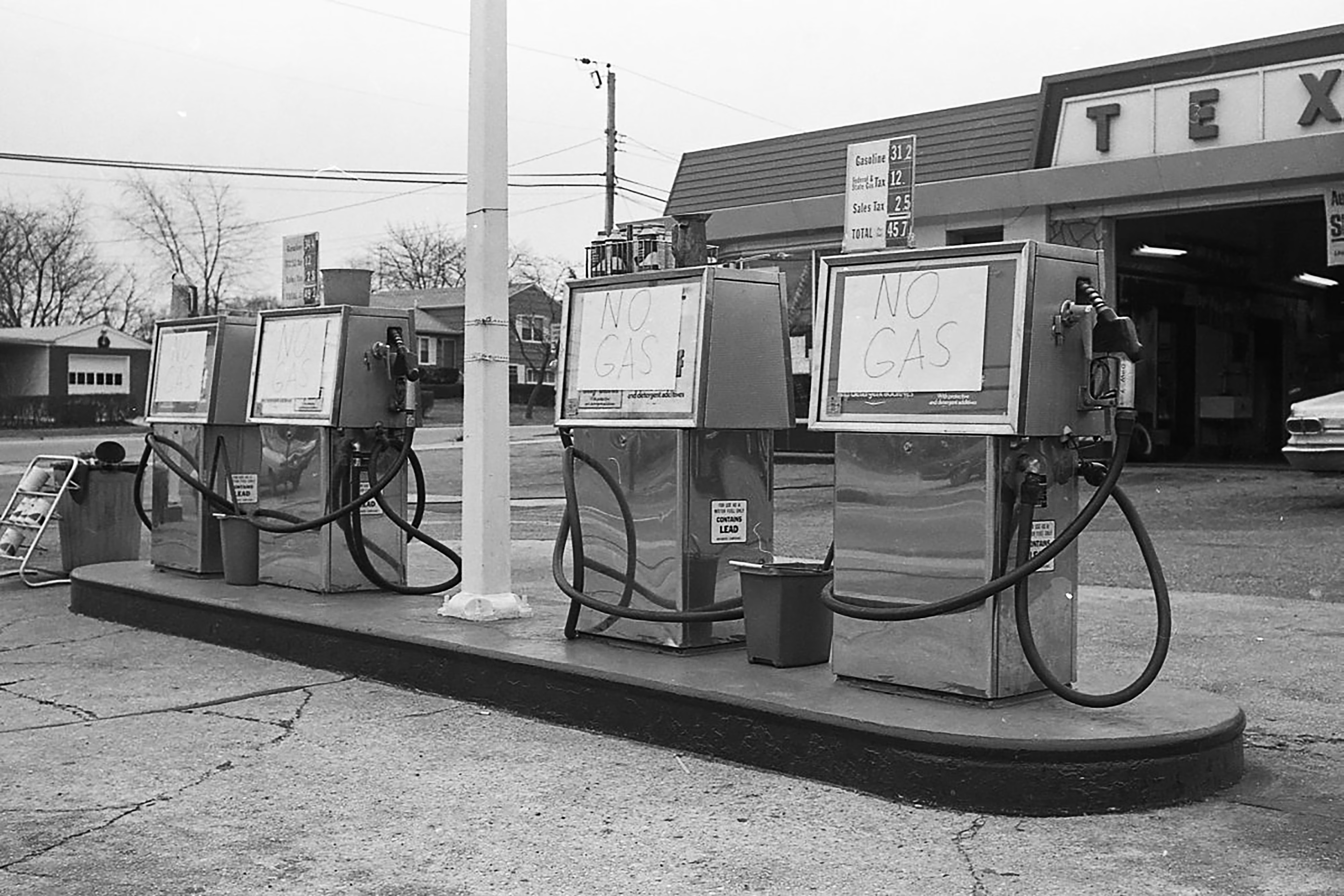
From the ’50s to the ’70s, price displays moved from pumps and windows to roadside signs, which grew larger so drivers in fast-moving vehicles could see them from a distance. But the truly massive gas-station price signs we know today didn’t arrive until after the 1973 oil shock. The price of crude oil quadrupled in the six months after October 1973, when OPEC embargoed sales to countries that supported Israel in the Yom Kippur War. A second shock, in the aftermath of the 1979 Iranian Revolution, sent prices still higher. In photographs of the era, you see lots of gas-station signs announcing no gas, but few that look like today’s signs. Throughout the 1970s, prices remained mostly mounted atop pumps or in modular boards located at ground level.
That changed by the early ’80s. Thanks to the two oil shocks of the previous decade, gasoline became cemented in the American mind as an essential commodity subject to enormous volatility, not a component of automobile maintenance. Gas stations shifted from selling a trusted service to a price-indexed commodity, barely distinguishable from the crude oil from which it is made.
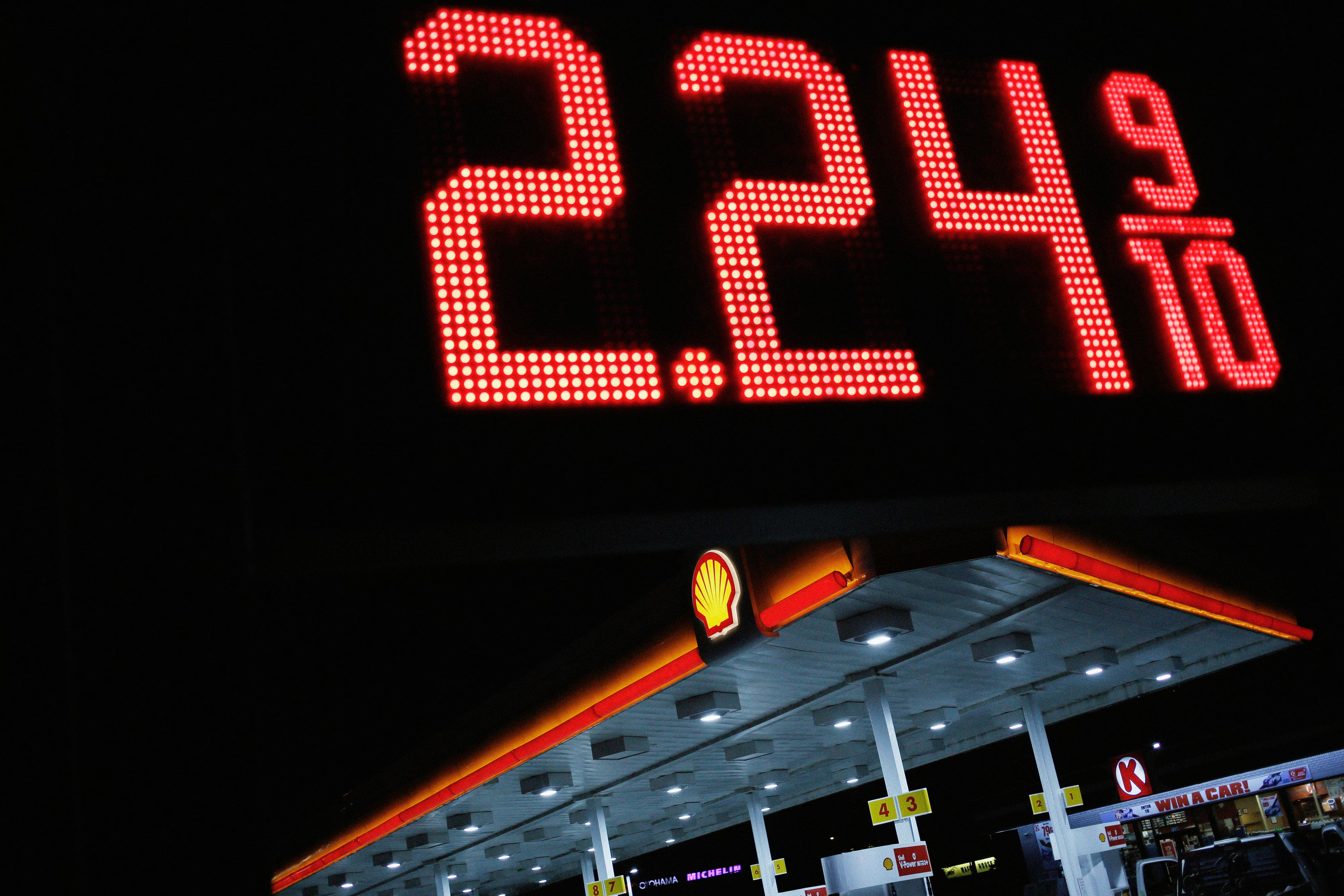
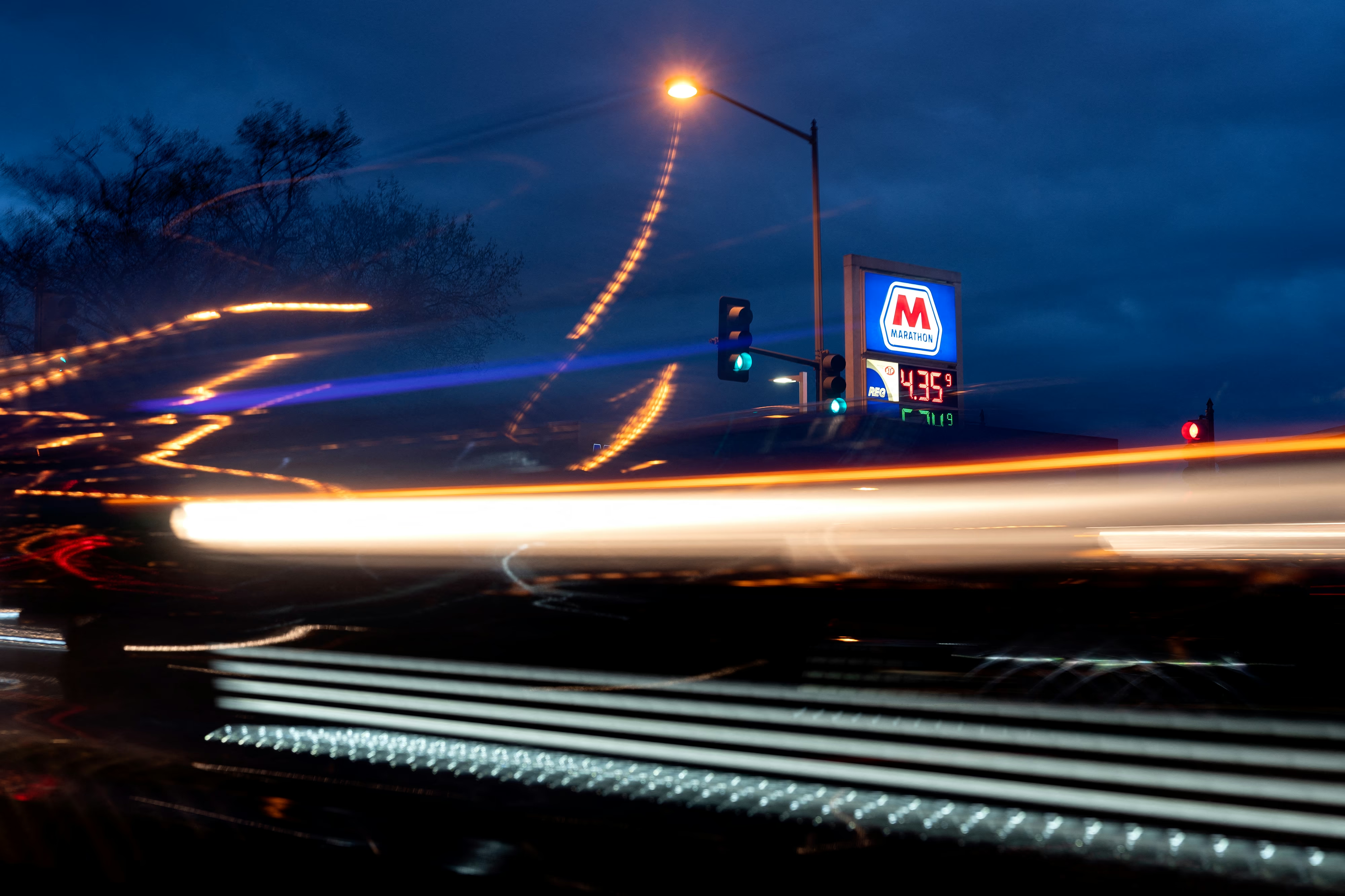
Gas, once cheap and easy to get, was now regarded as scarce, unstable, and politically charged. The largest, most visible part of the sign that advertised where to buy gas was no longer a company logo but the current price per gallon.
Gasoline’s status as the observable, contentious price of transportation freedom has been universal for 45 years. Despite its many downsides, gasoline unites Americans in a common plight. It gives us a local window into global affairs. It offers a common thread for pocketbook discourse, the economic equivalent to the weather. It provides a convenient touchstone for politics, because someone in charge can be blamed for bringing about or failing to prevent conditions that caused life to become—obviously and on display—more expensive.
[From the May 2020 issue: An ode to driving in America]
But gasoline’s role in this dance is on the wane. Electric vehicles don’t require fill-ups, and they create far fewer emissions. So EVs also signify the end of the gas-station sign’s universal meaning. Almost nobody knows what rate they pay for electricity—or even what a kilowatt-hour of the stuff is. They certainly don’t hang a sign advertising the cost on their driveway.
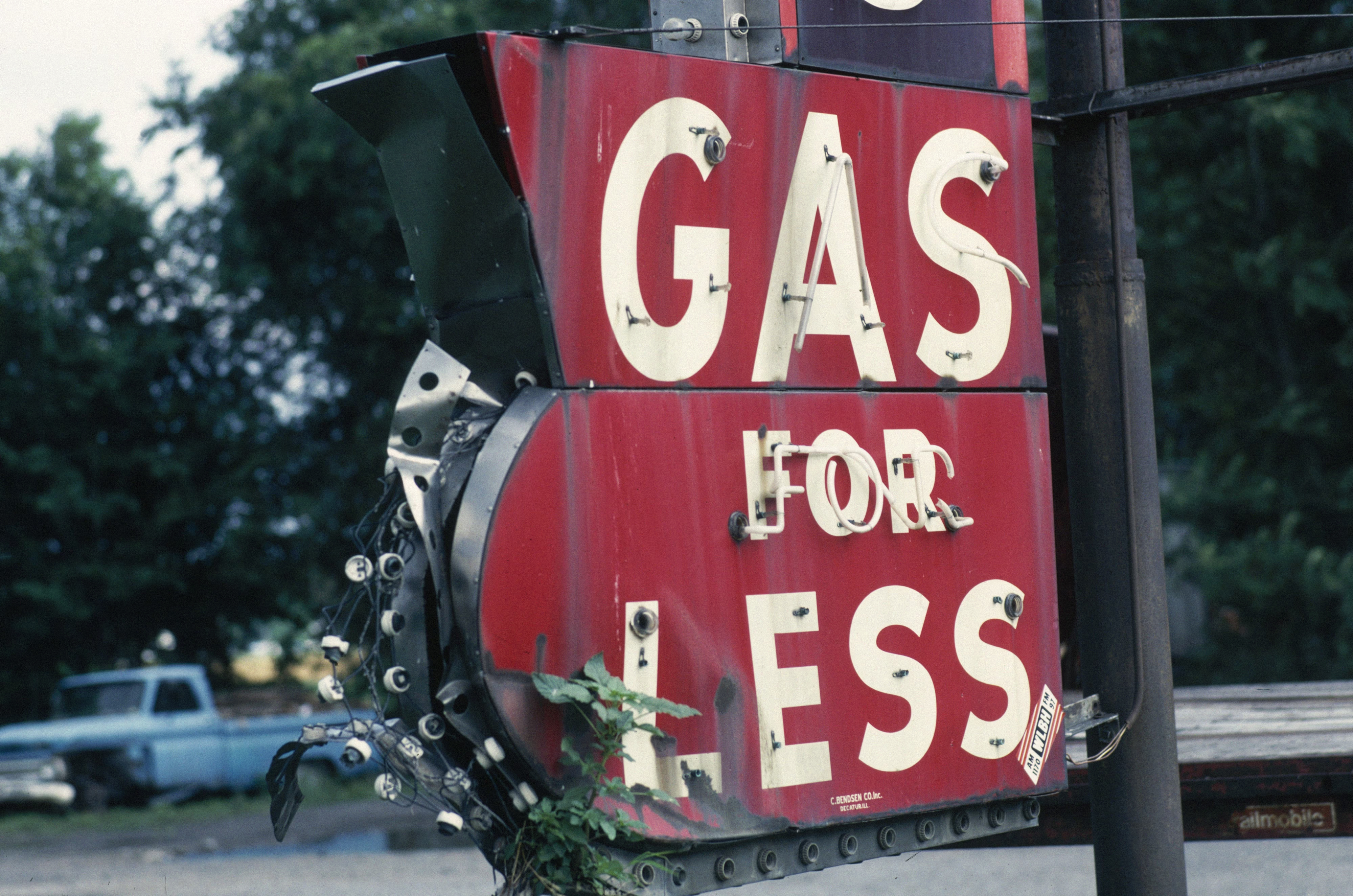
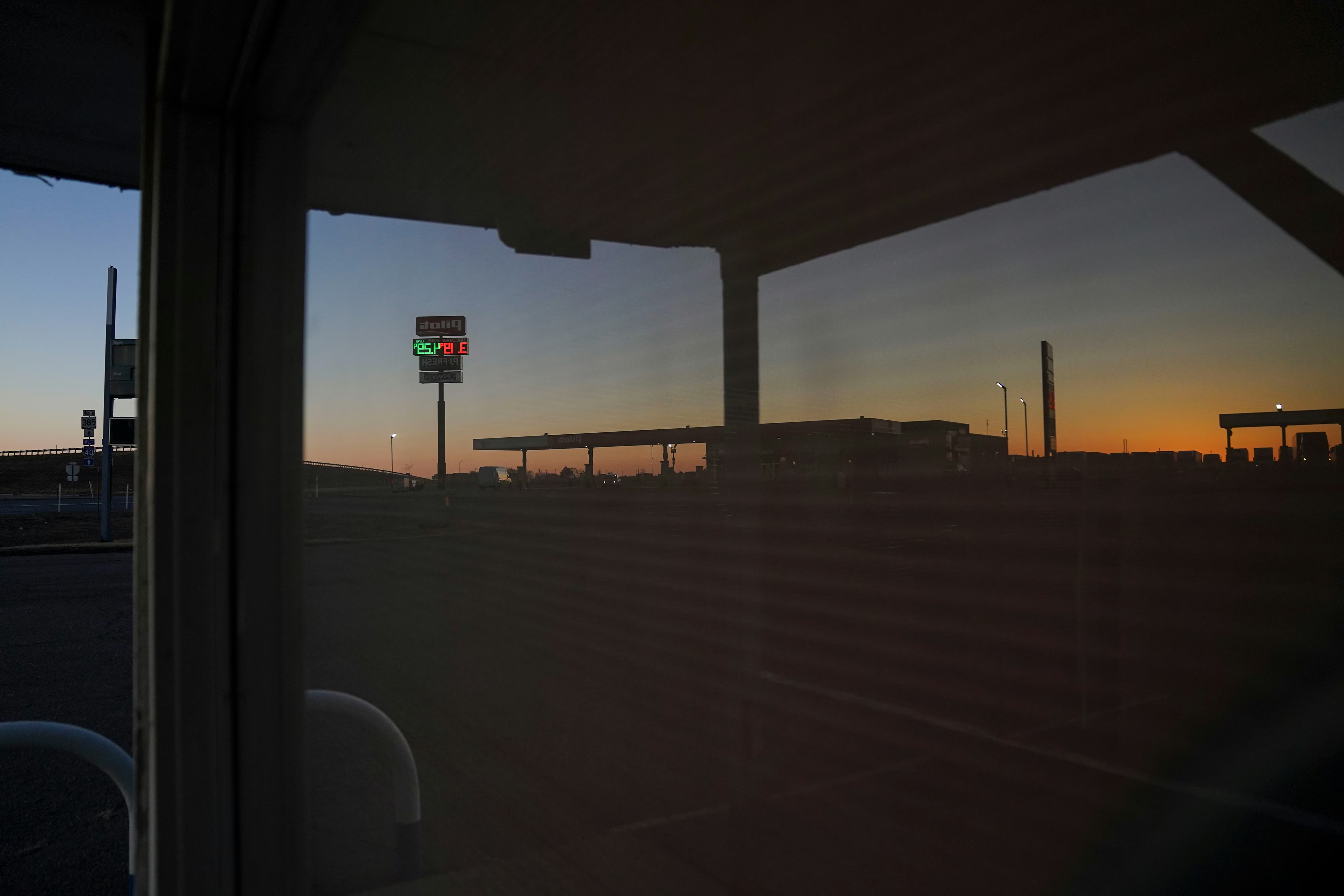
EVs allow the drivers who can afford a costly car ($11,000 more on average up front than a traditional vehicle, though lifetime operating costs are lower) to no longer concern themselves with the geography, politics, and common culture of gas stations. A culture with no consumer worry about gas prices cannot gripe about them in solidarity at breakfast. A society of EV drivers doesn’t need Big Gulps or Buc-ee’s. Where will we buy our processed dessert hand pies?
Because the current oil shock is the first one to take place since EVs became widely available, the energy crisis caused by the Iran war marks the first time that a gas-price spike cannot be construed as a universal condition. Gasoline is dirty, smelly, toxic, and environmentally reprobate. But it is also strangely romantic. Even though we must give it up—even though there has never been a better time to buy an electric car—gas has long connected our automobile-dependent nation. Now the gas-station sign no longer represents a shared life and its laments.
Perhaps it can absorb a new meaning, just as its placards expressed earlier changes. Once a symbol of the everyperson’s fraught but common relationship with a commodity and the global economy it rests atop, the gas-station sign now also represents the capacity to opt out of that economy, speeding past unfazed by everything it stands for.
The post The Romance of the Gas-Station Sign appeared first on The Atlantic.