This is an edition of The Atlantic Daily, a newsletter that guides you through the biggest stories of the day, helps you discover new ideas, and recommends the best in culture. Sign up for it here.
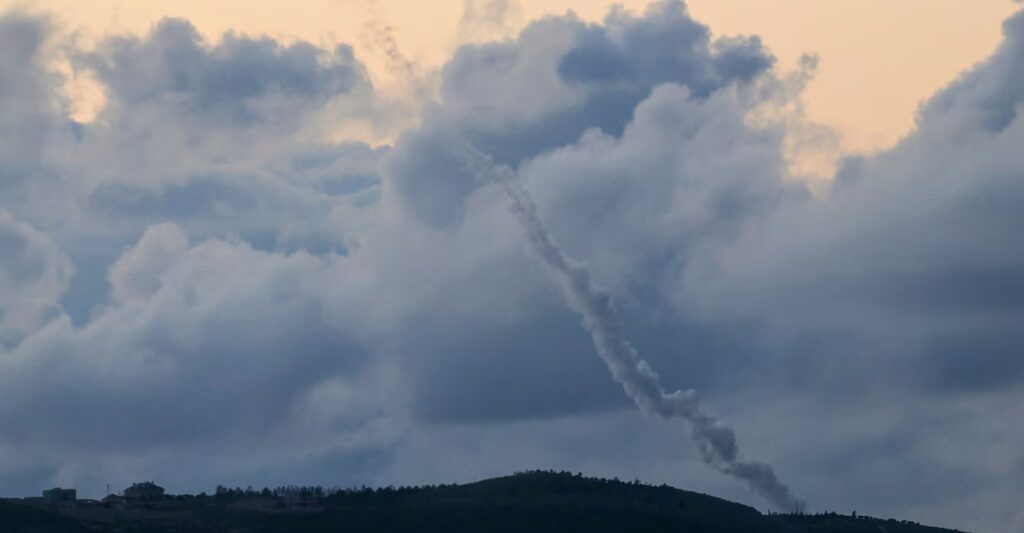
This morning, as the United States and Israel’s war with Iran neared the end of its sixth week, Vice President Vance headed for Pakistan, where he plans to sit down with Iranian officials. With a precarious two-week cease-fire in place since Tuesday, both parties are at least potentially open to a resolution—but we shouldn’t expect any immediate results.
That temporary cease-fire is already fracturing: On Wednesday, Israel conducted mass strikes on Lebanon, killing more than 300 people and wounding more than 1,000. Iran says that Lebanon was part of the deal; the U.S. and Israel disagree. In Pakistan, Vance will likely push for an outright end to Iran’s nuclear program. The Iranians want to end the strikes, to affirm their right to nuclear enrichment, to continue asserting control over the all-important Strait of Hormuz, and to collect reparations for war damages, among other concessions. Today, one Iranian official suggested that the government would delay talks until two new requests are met: an end to Israel’s assault on Lebanon, and the release of unspecified “blocked assets.” “If the Iranians are willing to negotiate in good faith, we’re certainly willing to extend the open hand,” Vance told reporters as he prepared to board Air Force Two. “If they’re gonna try to play us, then they’re gonna find that the negotiating team is not that receptive.”
When the U.S. sat down with Iran in February to negotiate an end to the country’s nuclear program, it didn’t go well: At the end of the month, the U.S. and Israel bombed Iran and killed its supreme leader, Ayatollah Ali Khamenei. My colleague Nancy Youssef, a staff writer who covers the Pentagon and has been reporting on the negotiations, told me that this time, Iran has a clear upper hand. Despite President Trump’s repeated claims of victory in the war, Iran is entering the negotiations with a new measure of control over global energy markets, thanks to its blocking of ship traffic through the Strait of Hormuz and thanks to the country’s apparent resilience. “They were able to launch ballistic missiles despite persistent U.S. strikes,” Nancy said. “They have shown that they can endure a campaign, even one that decapitated their leadership.” Despite sustaining serious casualties, the regime remains intact.
Israel’s belligerence is another complicating factor. The country’s prime minister, Benjamin Netanyahu, has continued to order strikes on Lebanon throughout the week; this morning, Lebanese President Joseph Aoun said that an Israeli attack on a government building killed 13 people. Meanwhile, some U.S. officials have started to act like the war is essentially over. At a press event on Wednesday, General Dan Caine, the chairman of the Joint Chiefs of Staff, delivered a complete readout of the targets hit during the war, alongside other relevant operation stats (among them: gallons of coffee consumed). The briefing had a sense of finality, Nancy said: You’re more likely to get a full statistical count at the end of a military operation than in the middle.
The Israelis may not share that perspective, because their interests in the region are ultimately different from those of the United States. “For Israel, a spike in gas prices was a small price to pay for the elimination of what it saw as an existential threat,” Nancy explained—whereas, as nebulous as the White House’s declared aims are, we do know that “the changing price of gas was a threat to U.S. interests, and a state collapse could lead to regional instability that could threaten its allies in the region.” Israel’s goals for the war go beyond the destruction of Iran’s nuclear program—they’re also about the collapse of the Islamic Republic. Netanyahu has said that the attacks on Lebanon are aimed at Hezbollah, one of the Iranian government’s proxies. It’s precisely because the war with Iran hasn’t actually ended the regime that Israel continues its assault.
Nancy said that because the U.S. and Iran have such radically different perspectives on what might bring an end to the war, the negotiations may not wrap up this weekend. Trump has said that American military assets will stay in the Middle East until a deal is reached, but he’s also starting to think more broadly about cooperation. Earlier this week, he told ABC that he is considering a kind of “joint venture” with Iran: a toll system to charge ships passing through the Strait of Hormuz. “I think he was bringing sort of a transactional approach to it, in that the war is over in his mind, and now there’s an opportunity to make deals,” Nancy said. “I don’t know that the Iranians are coming at it that way.”
What would it take for a cease-fire to last? The tension between the U.S. and Israeli perspectives on the war has already in some sense jeopardized this temporary peace. Even if America and Iran somehow find a way to work out their incompatible demands, the real obstacle, as Arash Azizi wrote yesterday, is “less in the practical details than in whether the two sides have enough political will to reconcile.” Both parties have reasons to come to the table, but a long-lasting resolution is far from guaranteed.
Related:
Here are four new stories from The Atlantic:
- Viktor Orbán could actually lose.
- How did Samuel Alito become this angry?
- The banality of MAGA-fication
- The great travel meltdown of 2026
Today’s News
- According to the latest consumer-price-index report, the annual-inflation rate soared to 3.3 percent last month, largely because of the Iran war’s effect on energy costs.
- At a gathering of the National Action Network, Kamala Harris said that she is “thinking about” running for president again in 2028.
- The U.S. Commission on Fine Arts released a 12-page plan for President Trump’s new triumphal arch, in Washington, D.C. The arch is set to be 250 feet tall.
Dispatches
- The Books Briefing: Emma Sarappo explores the work of writers who can’t let go of the South.
Explore all of our newsletters here.
Evening Read
Is Schoolwork Optional Now?
By Lila Shroff
William Liu is grateful that he finished high school when he did. If the latest AI tools had been around then, he told me, he might have been tempted to use them to do his homework. Liu, now a sophomore at Stanford, finished high school all the way back in 2024. “I have a younger sibling who is just graduating high school,” he said. “Our educational experience has been vastly different, even though we’re just two years apart.”
By the time Liu graduated, ChatGPT was already causing chaos in the classroom. But the automation of school is intensifying. If at first teachers worried about students using chatbots to write essays, now new agentic tools such as Claude Code are allowing students to outsource even more of their work to the machines. Need to take an online math quiz? Write a biology-lab report? Create a PowerPoint presentation for history class? AI can do all of this and more. One high schooler recently told me that he struggles to think of a single assignment that AI wouldn’t be able to do for him.
More From The Atlantic
- The Iran war showed a new side of Pope Leo.
- A different moon from the one we’ve known
- Ye wants your forgiveness. So what?
- Iran out-trolled the troller in chief.
Culture Break

Read. Here are six books you’ll want to take with you outdoors.
Listen. On the podcast Galaxy Brain, Charlie Warzel explores how fake people became real influencers.
Isabel Fattal contributed to this newsletter.
When you buy a book using a link in this newsletter, we receive a commission. Thank you for supporting The Atlantic.
The post Iran Has the Upper Hand in the Upcoming Negotiations appeared first on The Atlantic.