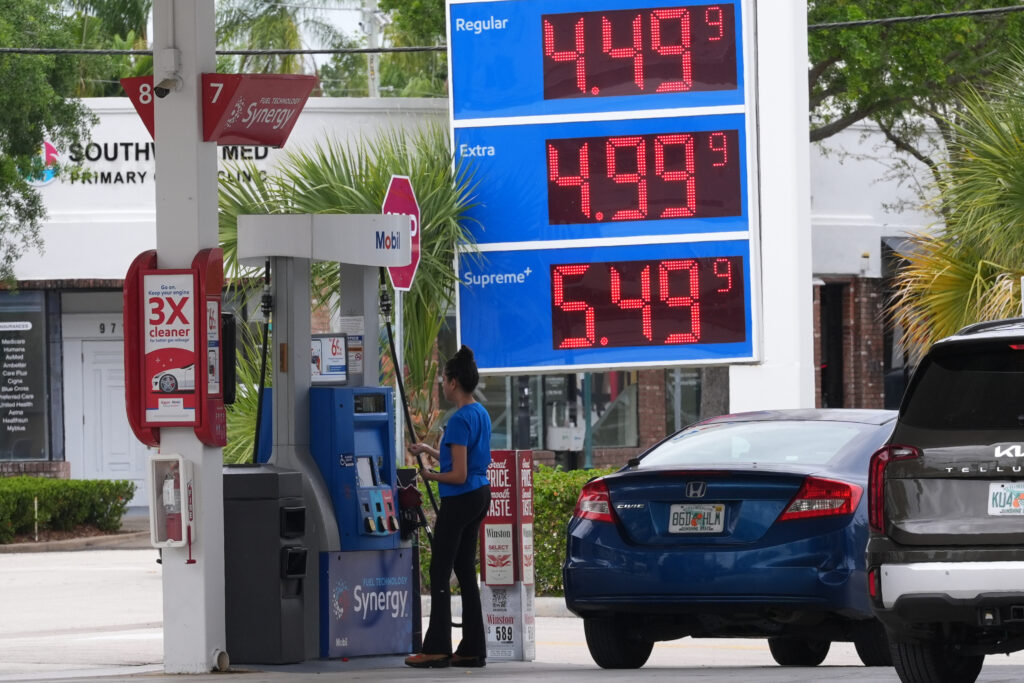
The war in Iran has reignited inflation, pushing monthly prices back toward levels not seen since Americans were last grappling with a full-blown price crisis, as the economy was emerging from the pandemic.
Consumer prices are expected to have posted their biggest monthly gain in about four years in March, rising 1 percent from February, according to economists surveyed ahead of Friday’s release from the Bureau of Labor Statistics. On an annualized basis, prices are expected to have risen 3.4 percent, up sharply from 2.4 percent the month before.
The last time consumer price index (CPI) rose as high on a monthly basis was in June 2022, when inflation ran 1.3 percent hotter than the prior month.
As with nearly four years ago, the primary driver is energy. The conflict in Iran has fueled a rapid rise in the cost of oil and refined petroleum products, including gasoline and diesel, with ripple effects spreading into fertilizers and other goods whose production or transport depends on fossil fuels. Even if the ceasefire that was announced this week holds, economists caution that the relief is unlikely to reach consumers quickly. Negotiations in Pakistan are expected to begin Saturday with Vice President JD Vance leading the U.S. delegation.
“Even if the negotiators in Pakistan stick the landing and the ceasefire turns into a durable period of non-conflict, the lagged impact of the oil and energy shock will impact consumers in a variety of ways through the remainder of 2026,” said Joe Brusuelas, chief economist at RSM.
Private-sector data suggests the surge is already well underway. The State Street PriceStats index, which tracks retail prices in near-real time, recorded a 1.5 percent monthly increase in March — the largest single-month jump since the series began in July 2008. On an annual basis, the index put inflation at 4 percent, a level not seen since early 2023.
“This means that in just one month, the inflation picture has shifted materially,” said Michael Metcalfe, head of macro strategy at State Street Markets.
The March report arrives as inflation completes five consecutive years above the Federal Reserve’s 2 percent target — and as hopes of a final push back to normal appear to be fading. After cooling markedly from its 2022 peak, price growth had appeared to stall at around 3 percent, about a percentage point above where the Fed wants it, even before the Iran conflict added fresh fuel.
The renewed inflation surge will intensify pressure on the Trump administration, which has made tackling high prices and affordability a central political promise. Rising consumer costs threaten to undercut White House messaging that the economy is stabilizing and are likely to draw fresh scrutiny from voters and lawmakers alike.
The report will land at a complicated moment for the Fed, which has been holding interest rates steady as it waits for clearer signals on both inflation and growth.
A reading as hot as economists expect would likely harden the case for keeping borrowing costs elevated well into the year. A hot inflation report could force policymakers to revisit assumptions about when and whether rate cuts might resume. Fed officials have long flagged the Iran conflict as an upside risk to inflation; Friday’s figures may show that risk has materialized.
The post Inflation likely picked up in March, fueled by Iran conflict appeared first on Washington Post.