The Irish government said it had called in the army to help clear blockades of crucial roads, after days of protests over the surging price of fuel, driven by the war in the Middle East, brought highways and streets to a standstill.
The government said in a statement that it had held an emergency meeting on Thursday night to discuss the effects of the protests, which it said were causing “significant disruption for the public, to supply chains and vital services.” It added that the blockades had restricted access to a number of ports, preventing fuel from being distributed to service stations in some parts of Ireland and causing concern that emergency vehicles could run out of fuel.
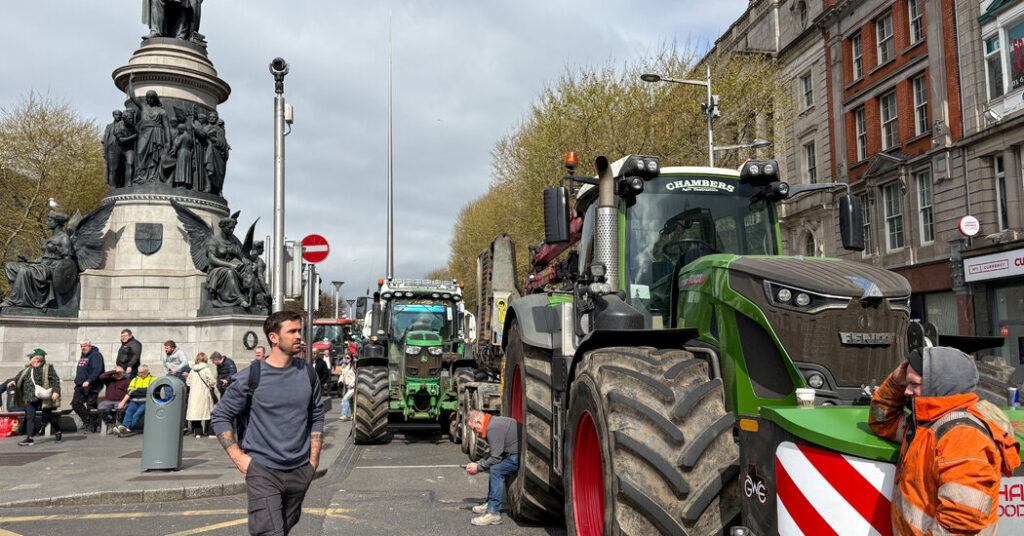
Groups of protesters began blocking roads on Tuesday with trucks and tractors, demanding the government do more to ease the burden of fuel costs, which have jumped in price around the world since the start of the U.S.-Israeli war with Iran. The protests appear to have been organized largely in messaging groups and on social media, with truckers, farmers and others reliant on fuel for their businesses taking part.
Last month, the Irish government cut taxes on gasoline and diesel fuel and suspended a tax on home heating oil. But many protesters said the actions did not go far enough, with some demanding a cap on the cost of diesel and gasoline, while others want the tax cuts to be extended.
On Friday, trucks and buses blocked O’Connell Street Bridge in Dublin, a main artery connecting the north and south of the capital, while other protesters blocked roads connecting key ports and the country’s only oil refinery in Cork.
Micheál Martin, the Irish prime minister, said in an interview with The Irish Times published on Friday morning that the government was open to engaging with the protesters but only “through established negotiating channels.”
He said that further measures to ease costs could be possible through negotiations, but added, “the strikes will have to end first.”
The Irish government met with a number of unions this week, including on Monday, the day before the protests began. Representatives from a variety of unions, including the Irish Farmers’ Association, are set to meet with the government on Friday afternoon.
Some of the most disruptive actions have taken place on the M50, the highway that encircles Dublin. It is also the main route to the country’s busiest flight hub, Dublin Airport. Some travelers stuck in traffic abandoned their taxis and buses and walked to the airport, rolling their bags along the shoulder, in an effort to make it to their flights after dozens of trucks parked on the roadway on Thursday evening.
But the protests were not just focused on the capital, with demonstrations in towns and villages across the country also causing standstills on local roads.
In the small village of Inch in County Wexford, dozens of cars lined an overpass, with protesters waving an Irish flag and cheering. Tractors blocked the on ramp to the highway, forcing frustrated motorists to turn back and find alternative routes.
Megan Specia reports on Britain, Ireland and the Ukraine war for The Times. She is based in London.
The post Fuel Protests Cause Transport Chaos in Ireland as Iran War Spikes Prices appeared first on New York Times.