The threat of higher inflation has recently gripped Europe, with a spike in prices and other economic effects of the war in Iran expected to hit the region.
Already, natural gas prices in Europe, a major fuel importer, are around 40 percent higher than they were at the end of February, before the U.S.-Israeli strikes on Iran.
The annual inflation rate for the 21 countries that use the euro jumped to 2.5 percent in March, from 1.9 percent in February.
Investors are now betting that the European Central Bank and the Bank of England will raise interest rates this year, a marked turnaround from prewar expectations that they would hold or cut rates. Both central banks aim to keep inflation at 2 percent.
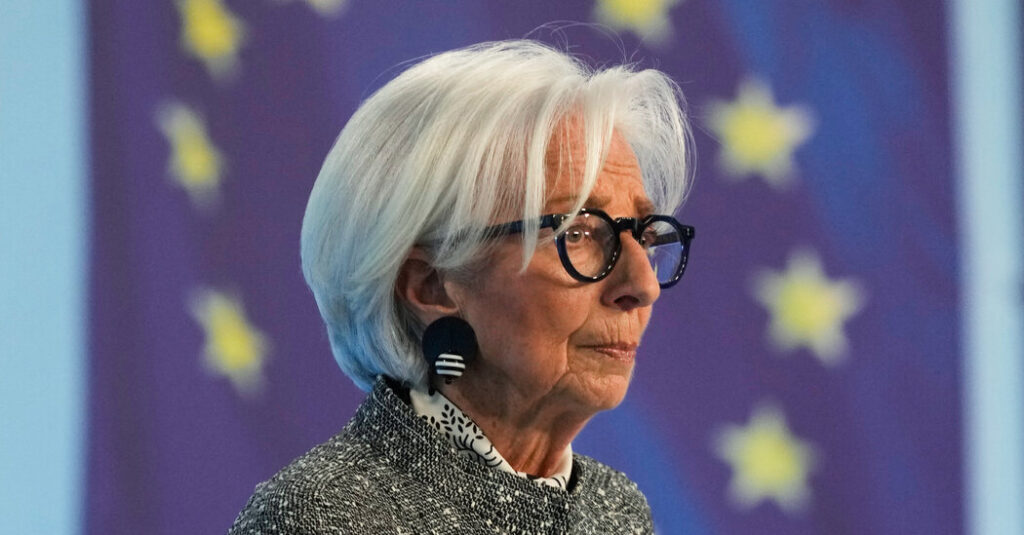
Christine Lagarde, the president of the E.C.B., has warned that the economic impact of the fighting will linger because it takes time to restore energy production in the Persian Gulf and for global supply pressures to ease. She has emphasized that the central bank would not hesitate to act to ensure that inflation returned to the central bank’s 2 percent target.
Traders are betting on at least two quarter-point rate increases by the E.C.B. this year, the first one possibly this month, according to futures markets.
Traders are expecting one or two rate increases by the Bank of England this year. Inflation in Britain was already above 3 percent before the conflict.
The Bank of England had expected inflation to drop substantially this month, in part because of government measures to lower household energy bills. But because of the effects of the war, the central bank has projected inflation to have been about 3.5 percent in March, half a percentage point higher than it had forecast last month, and to stay around 3 percent in the third quarter.
Eshe Nelson is a Times reporter based in London, covering economics and business news.
The post Europe Braces for a Spike in Inflation appeared first on New York Times.