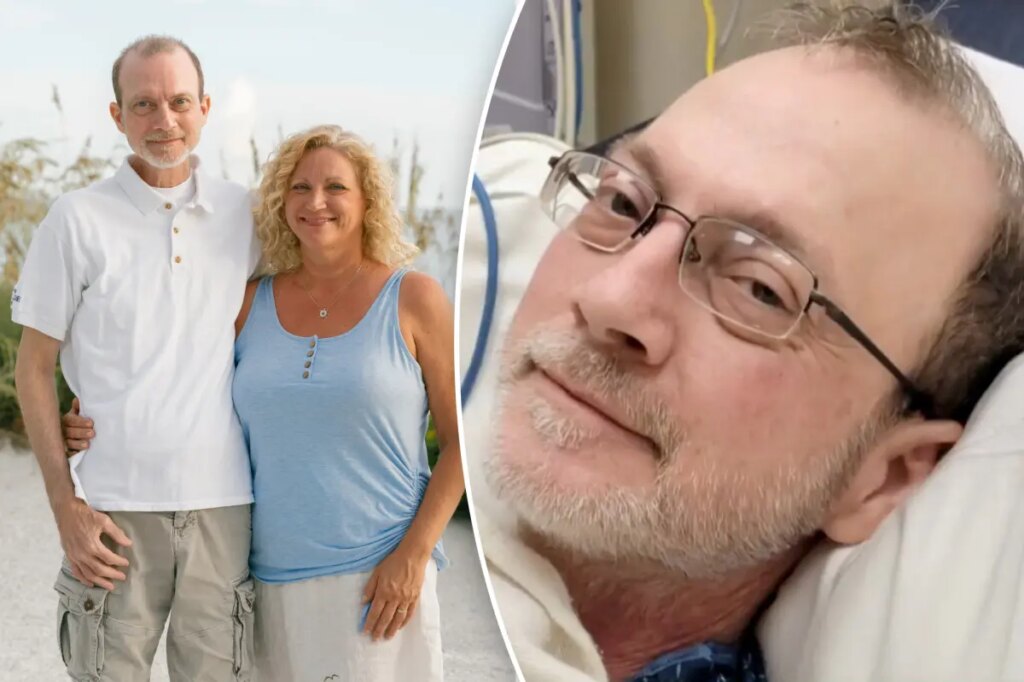
It didn’t matter that Eric Tennant’s oncologist had recommended the medication to shrink his tumors.
The patient’s health insurance allegedly stood in the way — until it was too late.
In early 2025, after more than two years of chemotherapy that hollowed him out from the inside, the frail 58-year-old was deemed a good candidate for histotripsy, a new treatment that could target the tumors in his liver with ultrasound waves instead of surgery.
Tennant’s wife, Rebecca, had heard of histotripsy and brought the idea to her husband’s doctor. There was a relatively narrow window in which he could receive the treatment, and his medical team was ready to start.

But suddenly Tennant’s doctors were handicapped: His insurance had denied the request, noting in the paperwork that the potentially life-saving treatment was “not medically necessary,” per NBC News and KFF Health News.
Multiple rounds of appeals were unsuccessful. Out-of-pocket costs for the Tennant family — which included Eric, his wife and their two grown children — would have been around $50,000.
Tennant, a mining safety instructor from Bridgeport, West Virginia, was put on hospice last year and died in September.
“He wasn’t afraid to die, but he didn’t want to die,” Rebecca told KFF. “And you could tell the last day that he was fighting it big time.”
Tennant had been diagnosed with stage 4 cholangiocarcinoma, a rare cancer that attacked his bile ducts before spreading to other parts of his body. By the time Rebecca discovered histotripsy, his largest tumor was in his liver.
It was unlikely that the proposed treatment would have sent Tennant into full remission, but the family believed it could have bought him some more time.
This tragic turn of events is not uncommon.
Prior authorization — a bureaucratic headache for patients, their families and their doctors — is a widely unpopular quirk of the healthcare system that can keep sick people languishing without proper treatment indefinitely.

According to a recent report from KFF, delaying or denying care in some cases actually drives profits for health insurance companies.
The health news outlet added that more than a quarter of US physicians surveyed by the American Medical Association in December said “prior authorization had led to a serious adverse event for a patient in their care.”
And 8% of respondents said prior authorization “led to a disability, birth defect or death.”
The main justification for prior authorization is that it “acts as a guardrail” against the irresponsible administration of certain medicines, a spokesperson for a health insurance industry trade group told KFF.
But for families like the Tennants, the only outcome is heartbreak.
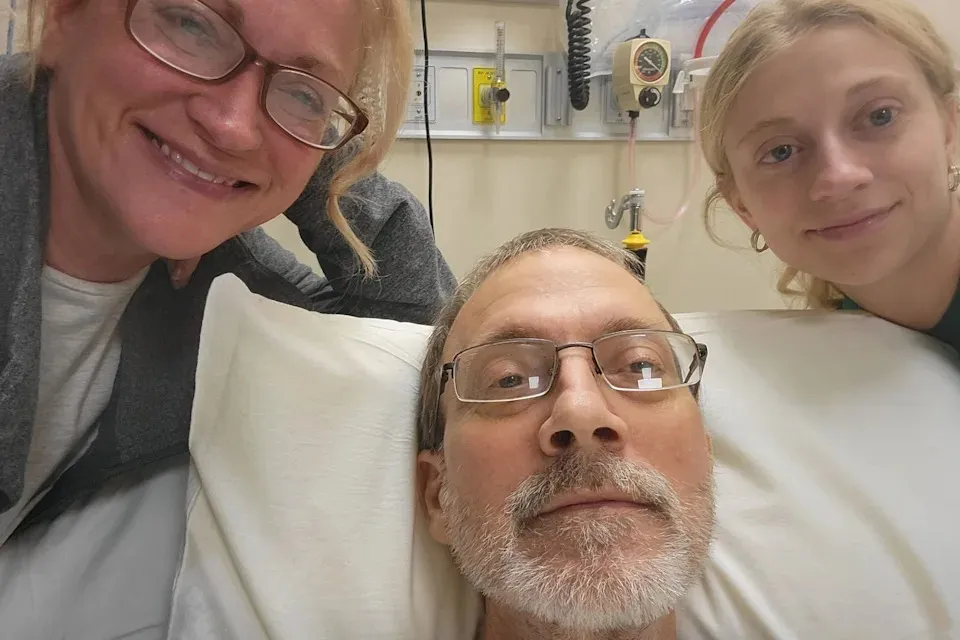
Per KFF, the late Tennant was insured by the Public Employees Insurance Agency of West Virginia, which partners with UnitedHealthcare. (The Post reached out to both agencies for comment.)
Early last year, when those two agencies and an outside reviewer deemed histotripsy was not medically necessary for Eric and denied coverage, the family briefly considered tapping their retirement savings to cover the out-of-pocket cost.
But a few months later — notably after KFF and NBC News contacted the health insurance agencies with questions about the denial — the decision was reversed.
At that point, however, it was too late. Eric’s condition had worsened, and he was no longer a candidate for histotripsy.
Last fall, after her husband’s death, Rebecca told KFF that if he had undergone histotripsy when his doctor ordered it, the lethal tumor in his liver might have been neutralized.
But no one can say for sure.
“We’ll never know. That’s the thing,” the widow said at the time. “Any lawyer for the insurance will say, ‘Well, you don’t know it would have helped.’ No. You took that chance away from us.”
The post Dad with stage 4 cancer dies after insurance company said tumor-shrinking treatment was ‘not medically necessary’ appeared first on New York Post.