Netflix’s Trust Me: The False Prophet is structured less as a conventional true crime retelling and more as a primary source reconstruction. Built around hundreds of hours of footage, recorded conversations, and firsthand testimony, the four-part series documents how self-proclaimed “religious prophet” Samuel Rappylee Bateman established control over members of the Fundamentalist Church of Jesus Christ of Latter-Day Saints in a community called Short Creek, and traces a federal investigationthat uncovered how Bateman was running a multi-state child sexual abuse conspiracy.
The series relies heavily on material captured in real time by cult researcher Christine Marie and her husband, the videographer Tolga Katas, whose close proximity to Bateman’s inner circle provided federal investigators with direct evidence of his activities.
A leadership vacuum in Short Creek
The context for Bateman’s rise is tied directly to FLDS’ fragmentation after its former leader Warren Jeffs was convicted in 2011 for sexually assaulting two girls and sentenced to life in prison. While Short Creek—spanning Hildale, Utah, and Colorado City, Arizona—remained a community shaped by FLDS beliefs, including plural marriage, there was no unified leadership structure. According to accounts presented in the documentary, that absence created competing factions and opened space for new figures to assert control.
Bateman emerged within this environment. Former members say in the documentary that he positioned himself as a continuation of Jeffs’ authority, claiming that Jeffs was either dead or “translated,” and that any communication from him would now come through Bateman. This framing allowed him to establish legitimacy without formal succession.
Consolidation of control
By 2019, Bateman had formed a smaller sect within FLDS, sometimes referred to by followers as “Samuelites.” The documentary outlines how he used a combination of religious language, isolation, and financial pressure to consolidate authority.
Followers were encouraged—or required—to demonstrate loyalty through testimony, financial contributions, and, in some cases, by giving Bateman their daughters to be one of his plural “wives.” Some of the victims were as young as nine-years-old.
The series also shows how Bateman enforced compliance by separating or relocating families, limiting their communication with outsiders, and framing dissent as spiritual failure. Women and girls lived under constant oversight, often in shared housing arrangements controlled by Bateman.
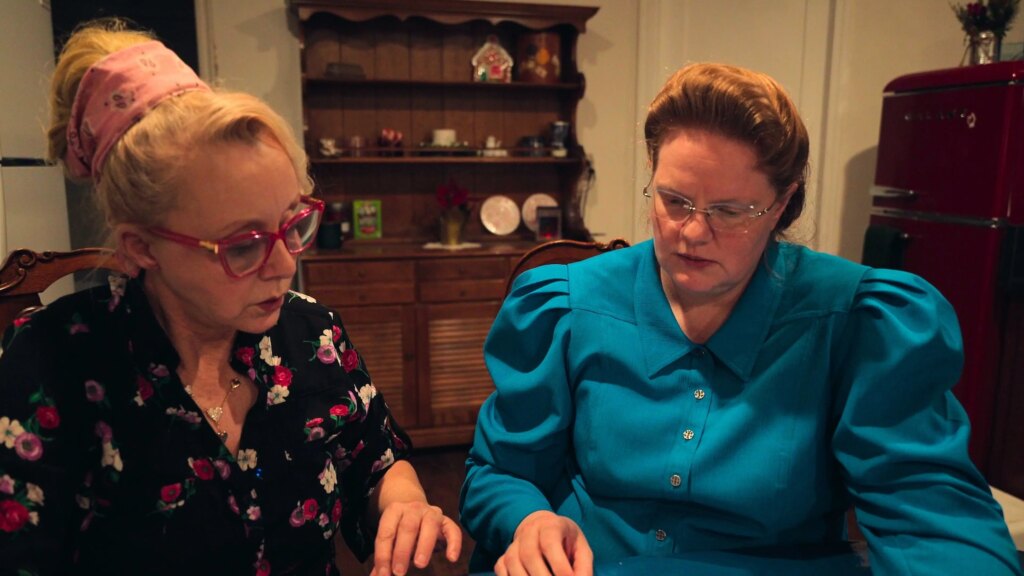
Two primary locations in Short Creek appear repeatedly in the footage: a larger residence known within the group as the “Blue House,” where Bateman stayed with select wives, and a second, more crowded property referred to as the “Green House.” It is in the latter that the filmmakers Marie and Katas began identifying consistent patterns of distress among the women and girls living there.
Christine Marie and Tolga Katas’ access
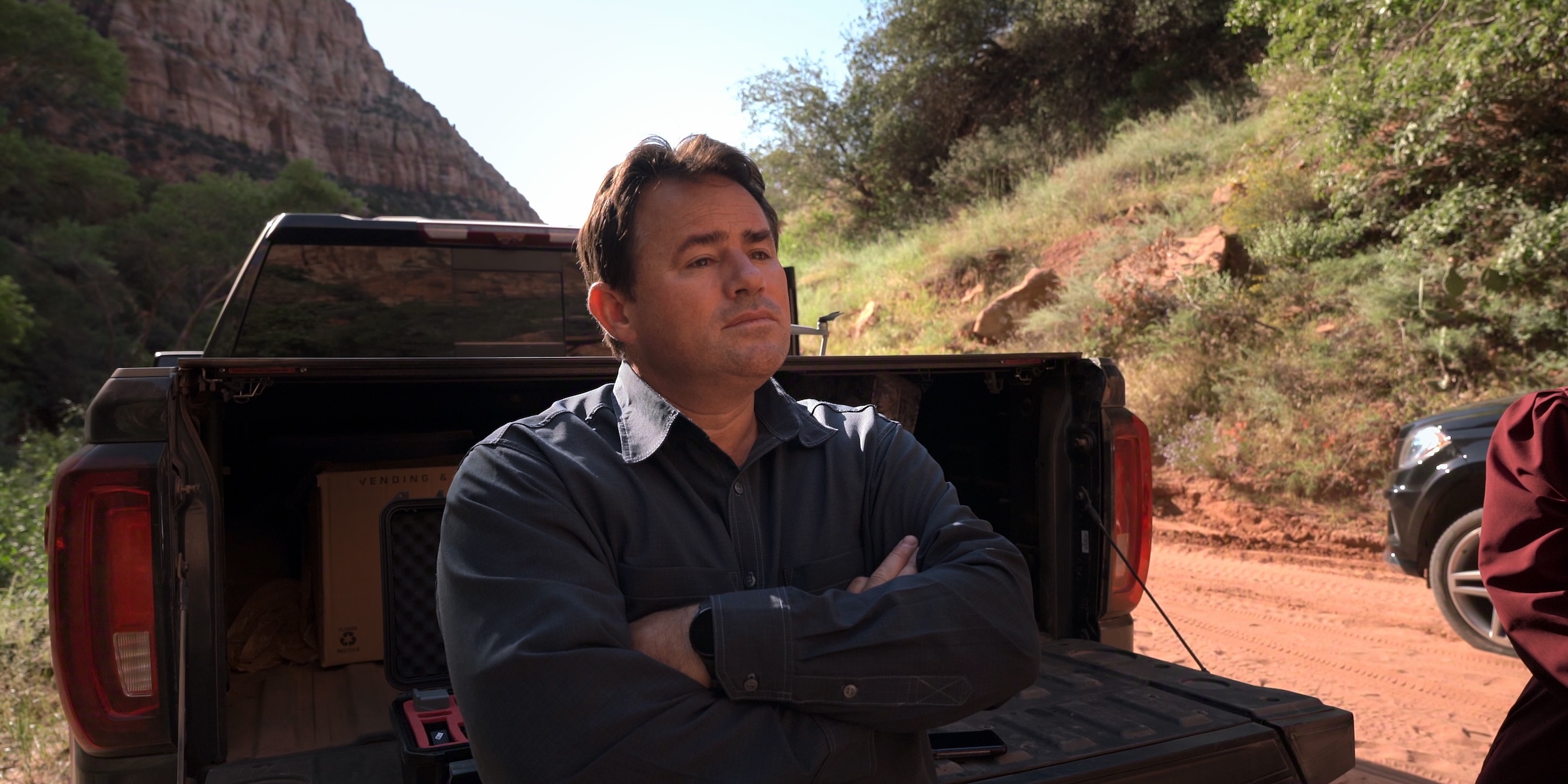
Marie first arrived in Short Creek in 2015 to help with relief efforts after a deadly flash flood hit the area and later founded a nonprofit to support people affected by human trafficking called Voices for Dignity. She eventually permanently relocated to Short Creek to the area with Katas to continue supporting the FLDS members. Their initial involvement was not investigative; however, their continued presence allowed them to build relationships within the community.
Katas had already been working on a documentary about life in the FLDS community, which provided a plausible reason to film. According to the series, Bateman was aware of the project and expressed interest in being included, which facilitated access.
The couple began visiting Bateman’s properties in 2021. Early footage shows routine gatherings, including meals and informal events. Over time, their recordings captured more structured aspects of the group’s internal dynamics, including how Bateman interacted with his wives and followers.
In the series, Marie describes the position she occupied in the group: “I was so trusted. I wanted to help them before they found out I was a mole. I’m not betraying them—I’m helping them, right?”
Documenting abuse
As their access deepened, Marie and Katas began recording material that would later become central to the federal investigation into Bateman. Katas accumulated extensive video footage, while Marie recorded conversations that, according to the documentary, included direct references to sexual practices involving minors. In late 2021, Marie recorded what would become one of the turning points in the case when Bateman described what he called an “Atonement” ceremony, which he said involved “giving away” his “wives” to his followers and ordering them to have sex while he watched. Marie subsequently turned this material over to local law enforcement.
Due to limited resources at the municipal level, the case was referred to federal authorities. Marie worked with the FBI as an informant, while Katas provided video evidence and assisted with logistical details, including mapping the properties associated with the group in Short Creek.
Trust Me emphasizes the scale of their involvement during this period. What began as periodic visits expanded into near full-time engagement, with Katas prioritizing documentation over other professional work.
The 2022 arrests
Bateman’s initial arrest in August 2022 followed a traffic stop in Arizona. According to the case details presented in the documentary, law enforcement acted after receiving reports from drivers who noticed children inside an enclosed trailer he was towing. Three girls were recovered from the trailer.
The arrest led to additional scrutiny but did not immediately end Bateman’s activities. He was released on bail shortly afterward, and footage included in the documentary shows him discussing the deletion of digital evidence.
Within weeks, federal authorities obtained warrants for Bateman’s arrest connected to suspected child sexual abuse and kidnapping and to search his properties in Short Creek. The FBI coordinated a larger operation targeting multiple locations, including the Blue House, the Green House, and a warehouse used by Bateman.
The series details how Katas participated in the lead-up to the raid by providing aerial footage of one of the properties using a drone. On Sept. 13, 2022, he arranged a meeting with Bateman at the warehouse under the pretense of filming an interview. Shortly after Bateman arrived, FBI agents entered and arrested him.
Federal agents carried out similar operations at other properties linked to the group at the same time, leading to the arrests of some of Bateman’s followers.
Federal charges and sentencing
In April 2024, Bateman pleaded guilty to conspiracy to transport a minor for criminal sexual activity and conspiracy to commit kidnapping. The case established that his activities spanned multiple states, including Arizona, Utah, Colorado, and Nebraska.
According to federal prosecutors, Bateman’s followers facilitated the abuse by transporting minors, arranging access, and, in some cases, participating directly. After his arrest, members of the group also attempted to remove several victims from state custody, taking them across state lines before they were located and returned, as the documentary shows.
On Dec. 9, 2024, Bateman was sentenced to 50 years in prison, followed by lifetime supervised release. Multiple co-defendants have also been convicted, either through guilty pleas or trial verdicts, with additional sentencing proceedings continuing.
What happened to Bateman’s victims?
After Bateman’s arrest, the identified minors were removed from his group and placed in the custody of the Arizona Department of Child Safety, separating them from the environment where the abuse had taken place.
In November 2022, several of Bateman’s followers, who still believed in him, organized an effort to take the girls from those placements. Eight were transported out of Arizona, moving through California and into Washington before being located by law enforcement and returned to state custody. Investigators determined that the abuse involved coordinated actions across multiple states and the participation of several adult members within the group, who were later charged in connection with the case.
The girls remained under state protection as legal proceedings continued, with their statements and recovered evidence forming a key part of the case.
The post The True Story Behind Trust Me: The False Prophet appeared first on TIME.