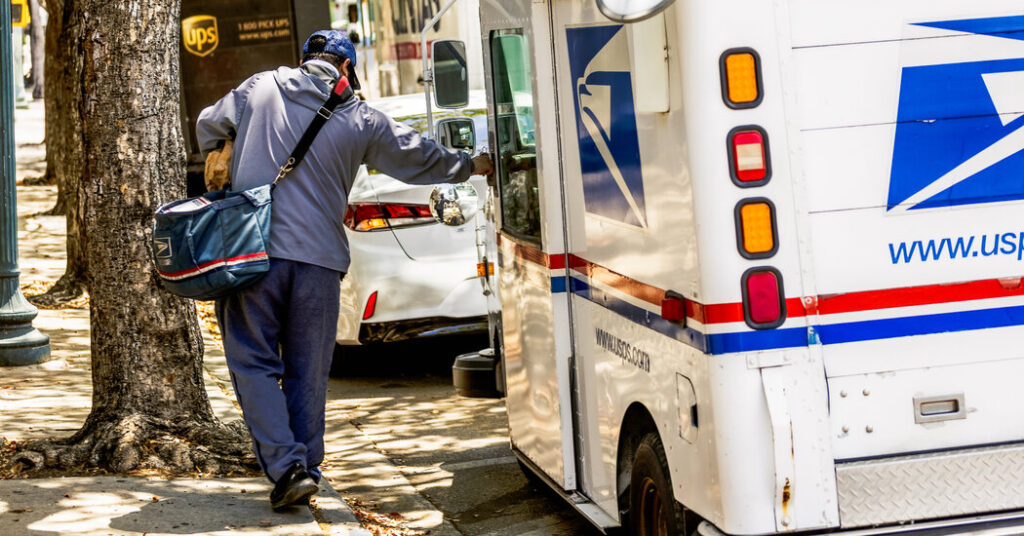
The U.S. Postal Service on Thursday proposed increasing prices and said that it would temporarily suspend some payments to a governmentwide retirement fund as it faces growing financial pressure.
If approved by the Postal Regulatory Commission, an independent agency that oversees the Postal Service, postage would rise about 5 percent starting July 12. That means first-class mail “forever” stamps would increase from 78 cents to 82 cents.
The moves are the latest attempts to stave off a looming financial crisis after David Steiner, the postmaster general, warned Congress last month that the Postal Service could run out of cash in less than a year without significant regulatory changes. Financial problems at the self-funded government agency have grown acute in recent years despite rounds of price increases and service cuts, and a 10-year plan meant to stabilize the situation.
The price increases come on top of an 8 percent package surcharge that will take effect later this month, which could offset rising transportation costs.
On Thursday, the Postal Service also said it would pause its contributions of about $400 million a month to the Federal Employees Retirement System, which provides retirement funds for Postal Service and other government employees.
The Postal Service estimated the move would free up about $2.5 billion this fiscal year. In the first quarter of fiscal year 2026 alone, it lost nearly $1.3 billion.
Postal officials have defended the moves as necessary for an agency with a unique mandate — it is required to deliver to everyone in the United States at a reasonable price — but facing a long decline in its core product, mail.
A 4-cent increase in postage is well below the approximately 20-cent increase Mr. Steiner promoted during a congressional hearing last month. Even if first-class postage reached $1, he said, the United States would still have one of the lowest rates among industrialized countries.
But the idea of more price increases received a less-than-warm welcome at the hearing from lawmakers, who do not have direct authority over the Postal Service’s pricing decisions. Representative Pete Sessions, Republican of Texas and a champion of Postal Service reforms, said during the hearing that he did not want to raise the price of stamps.
In a financial report in February, the Postal Service described suspending the retirement contributions as one step in a series of “contingency plans” to ensure the service had enough cash to continue operating at least through February.
“The risk to the Postal Service and the American public from insufficient liquidity for postal operations dramatically outweighs any longer-term risk to the pension funds from not making the currently due payments,” Luke Grossmann, the Postal Service’s chief financial officer, said in a statement on Thursday announcing the decision to suspend the retirement funding. He added that the contribution pause would not lead to an “immediate detrimental impact” on retirees.
Brian L. Renfroe, the president of the National Association of Letter Carriers, lent his support. “This move is necessitated by the Postal Service’s current financial situation, and is a direct result of continued inaction by Congress,” he said in a statement.
He added: “It is time for Congress to act on these common-sense policy changes to protect our jobs, retirements and the essential and reliable service we provide to every American.”
In 2021, the Postal Service instituted a decade-long plan to shore up its finances. So far, the plan has been unable to lift the agency out of its financial crisis. In fiscal years 2024 and 2025, the agency incurred net losses of $9.5 billion and $9 billion.
Adam Sella covers breaking news for The Times in Washington.
The post Strained Postal Service Proposes Price Increases and Delays Retirement Funds appeared first on New York Times.