The Environmental Protection Agency announced on Thursday it would weaken cleanup requirements for hundreds of sites that contain waste from burning coal, a move that environmental groups said threatens drinking water for millions of people.
The move is a victory for the coal industry, which had chafed at a regulation imposed during the Biden administration that required companies to examine the condition of coal ash sites at inactive power plants, calling it overly burdensome. The E.P.A. said it would repeal that 2024 rule, as well as modify other cleanup requirements that have been in place for more than a decade.
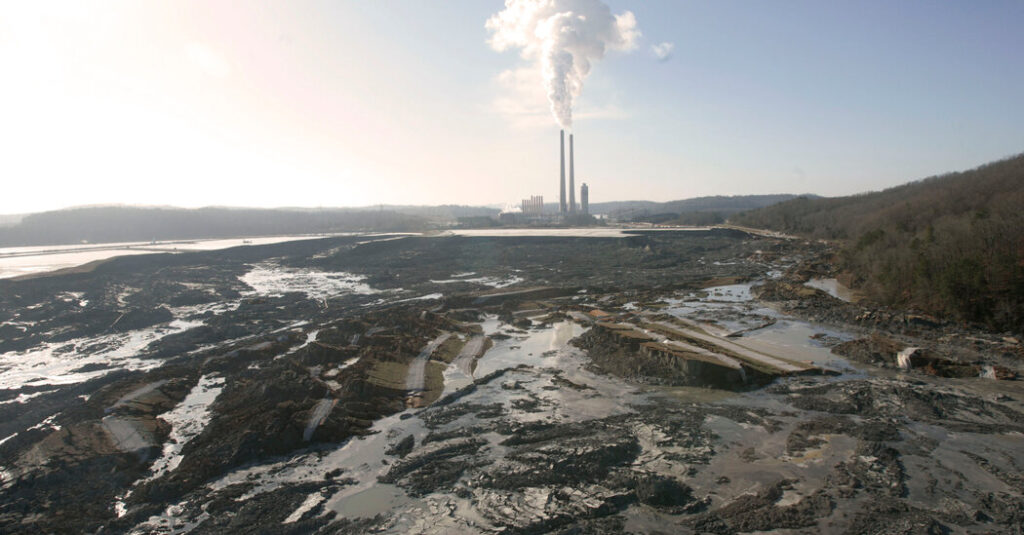
Coal ash is the waste left behind after coal is burned for electricity. It contains a toxic mix of metals and other pollutants, including lead, arsenic, cadmium, chromium and mercury, which can contaminate groundwater if not properly stored.
Lee Zeldin, the E.P.A. administrator, called the changes “commmonsense” and said the rule would improve the way companies comply with groundwater monitoring and cleanup. He said the changes reflect a commitment to “energy dominance,” President Trump’s shorthand for producing more fossil fuels in the United States, including coal, oil and natural gas.
“Our proposed changes will increase transparency and promote resource recovery while continuing to protect human health and the environment for all Americans now and into the future,” Mr. Zeldin said in a statement.
Mr. Trump has launched a major effort to revive the struggling coal industry. He has ordered the Energy Department to prevent closures of power plants, moved to open 13.1 million acres of federal land for coal mining, and directed hundreds of millions of dollars to upgrade plants to extend their life spans. The E.P.A. under Mr. Zeldin has already proposed erasing greenhouse gas limits on coal-fired power plants and weakening restrictions on the industry’s emissions of mercury, a powerful neurotoxin that can impair babies’ brain development.
In December, the E.P.A. delayed the enforcement of coal ash standards. But Thursday’s move would scrap many of them altogether. The proposal would loosen standards for monitoring and protecting groundwater near some coal ash sites. It also would allow companies to assess groundwater contamination 150 or more meters from a coal ash dump, rather than at the dump’s edge, creating what environmental groups dubbed a “zone of contamination.”
“E.P.A. is turning its back on communities that live near hundreds of toxic waste dumps,” said Lisa Evans, a senior counsel at Earthjustice, an environmental group. She said the changes would weaken the cleanup and closure standards of toxic dumps that are contaminating water supplies.
“It’s walking away from science by capitulating to industry’s bottom lines,” Ms. Evans said.
A report issued by Earthjustice and other watchdog groups in 2022 found that more than 90 percent of the country’s coal plants are contaminating water across 43 states. The study examined 292 sites, which were first ordered to report contamination levels in 2015 under the Obama administration.
That was when the federal government began to tighten regulations, after disastrous spills sent mercury, cadmium, arsenic and other heavy metals from the ash into water supplies. In 2008, a six-story-tall dike holding back a massive pond of coal waste at a plant in Kingston, Tenn., collapsed, releasing more than a billion gallons of ash and slurry into the surrounding community.
The rules imposed stringent inspection and monitoring requirements at coal plants and mandated that plants install technology to protect water supplies from contamination.
The Biden administration tightened those rules, and in 2022, for the first time, the government required coal plant owners to clean coal ash sites at shuttered and dormant power plants.
The new E.P.A. plan would return much of the decision making to states. The proposal on Thursday would let local permitting agencies bypass national standards on a case-by-case basis.
Michelle Bloodworth, the president of America’s Power, a coal industry trade group, said she was still reviewing the proposal but said “we appreciate EPA’s efforts to address many of the problems and challenges” with the government’s coal ash program.
Lisa Friedman is a Times reporter who writes about how governments are addressing climate change and the effects of those policies on communities.
The post In a Boost to Coal, E.P.A. Moves to End Biden’s Toxic Ash Disposal Rules appeared first on New York Times.