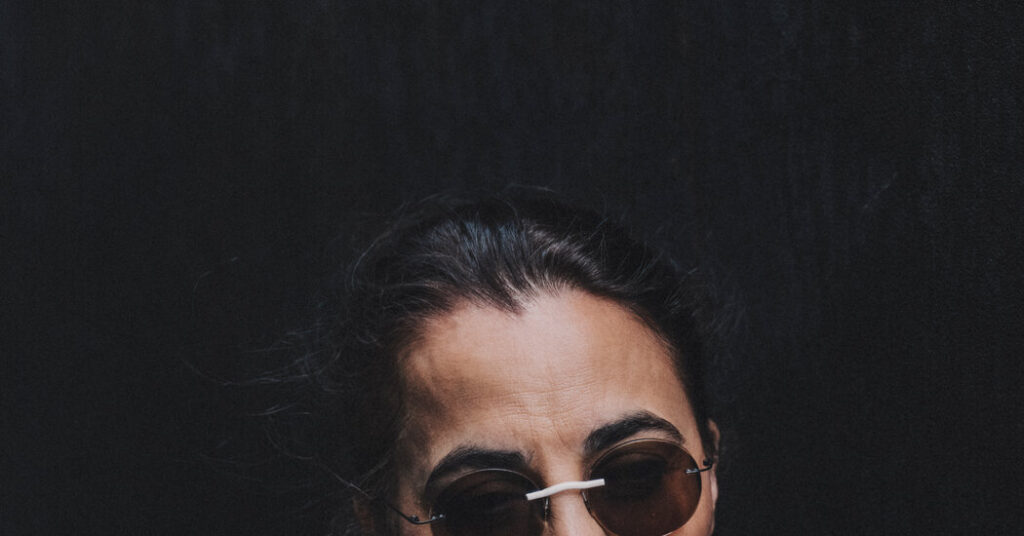
By late 2024, Nailya Allakhverdiyeva had received plenty of signs that it might be time to quit her job running the only major contemporary art museum in Russia outside Moscow and flee the country.
Law enforcement officers had searched her apartment twice and interrogated her. Conservative activists were trying to intimidate her. And the Federal Security Service planted a fake explosive device in her museum. (The agency said it was testing for security lapses.)
Yet each time, Allakhverdiyeva chose to stay. After all, she had turned her institution, the Permm Museum of Contemporary Art in the industrial city of Perm, about 700 miles east of Moscow, into one of Russia’s most revered cultural institutions.
“I felt a hyper-responsibility toward the museum as a phenomenon for promoting creative freedom and toward contemporary art in general,” Allakhverdiyeva, 54, said in a phone interview from Berlin, where she settled after finally fleeing Russia at the end of 2024.
It was “almost like a mission,” she added. “I owed it to the artists.”
Allakhverdiyeva said she had decided to leave only after receiving a blunt ultimatum from Alla Platonova, the regional culture minister: “Either you quit, or you will have more serious problems.” (A ministry spokesperson did not reply to a request for comment for this article.) With a 16-year-old son and an 88-year-old mother dependent on her, Allakhverdiyeva saw no other choice.
Her situation highlights a common dilemma in Russia. Many leading cultural figures fled shortly after the full-scale invasion of Ukraine in 2022, or even before, as the Kremlin tightened the screws on creative expression. But others stayed and tried to continue their work within the narrowing confines of state censorship.
Those who left argue that they can now work freely, even as they struggle to find new audiences outside Russia. Those who stayed maintain that they are still laboring to improve Russia and its culture, however burdened by state control. But the survival of these ambitions depends on a precarious and ever-shifting compromise.
At first, Allakhverdiyeva seemed to be managing. In many ways, she managed to turn the Permm Museum into one of the few remaining islands of forward-thinking contemporary art in Russia.
Shortly after the start of the war, she exhibited works that resonated deeply with the fears and frustrations of some Russians, such as a large-scale textile work by the artist Vadim Mikhailov, a repurposed Soviet-era carpet inscribed with the word “Darkness” in looming letters.
In 2023, she moved the museum into a sleek new glass building and secured the support of Cosmoscow, Russia’s pre-eminent art fair, to buy works by young female Russian artists, who were underrepresented in the collection. The museum won Russia’s prestigious Museum of the Year award in 2024 — even as attacks on its director were escalating.
As long as she could continue producing art shows and events that created a sense of community in Perm and elevated people’s understanding of the world, the risks seemed acceptable, Allakhverdiyeva said.
Compromise was key. In 2024, for instance, she removed a work by two Russian artists from a show because she worried that the installation, depicting the Last Supper onboard a submarine, could be read as a comment on the 2000 Kursk disaster, the sinking of a nuclear-powered vessel that was a defining crisis of Vladimir V. Putin’s early presidency.
“Officially, there was no censorship in Perm,” Allakhverdiyeva said. “But because there are constant outbursts of criticism directed at contemporary art, you start looking at every work through that lens yourself, trying to anticipate the opinions of the disgruntled. It was a constant process of managing your own fears.”
For some Russian cultural figures now operating outside the country, such compromises were unacceptable. In a heated discussion on Facebook about Allakhverdiyeva’s time at the museum, Marat Guelman, a Permm Museum founder who left Russia in 2014, said that “censorship in a museum is a great sin” and dismissed Allakhverdiyeva as “subservient.”
Dmitri Pilikin, a Russian artist and curator who lectures at St. Petersburg State University, challenged Guelman’s view in a phone interview. As he sees it, he said, “there were no contradictions about whether or not to work with the state.”
“After all, the state is not Putin. We are the state,” Pilikin said. “And in that sense, we have been working for ourselves, trying through our activities to reorganize life in the direction — European, global — that we believed was necessary.”
Even when Allakhverdiyeva left Russia, her troubles did not end. In March 2025, prosecutors opened a criminal case against her: They said she had insulted religious believers with works shown on the Permm Museum’s website, including a sculpture featuring rubber enema bulbs arranged to look like the onion domes of some Russian churches. If she returns to Russia, she will likely be arrested and face up to a year in a penal colony.
Her story also underscores how contemporary art went from a favorite ideological tool of the Kremlin to a problem that must be controlled or shut down.
After the Soviet collapse and during the early years of Putin’s presidency, the Kremlin supported contemporary art to project an image of a modern Russia. In 2007, Vladislav Surkov — a chief Kremlin ideologist at the time — framed contemporary art as a pillar of the state’s identity, calling the 2007 Moscow Biennale of Contemporary Art “an essential component of the cultural policy of a democratic Russia.”
In 2008, the tycoon Roman Abramovich and his wife at the time, Dasha Zhukova, opened the Garage Center for Contemporary Culture in Moscow, which later transformed into a world-class museum in a building designed by Rem Koolhaas. In 2013, Russia commissioned Irish architects to build a giant state contemporary arts museum in Moscow. And just weeks before the 2022 invasion of Ukraine, Leonid Mikhelson, a gas mogul, gave Putin a tour of his new shining GES-2 House of Culture.
The Permm Museum was a product of these ambitions. In 2008, it was born out of the “Perm cultural revolution,” an effort pushed by Guelman and local lawmakers. They sought to use culture to transform a city defined by its industrial past into a world-class cultural powerhouse that would rival St. Petersburg and Moscow.
But the arts boom in Russia was short-lived. The national contemporary art museum was never built. The Garage is shadow of its former self, staging small-scale, locally focused shows, while GES-2 churns out exhibitions that eschew Western contemporary stars in favor of academic explorations of the Russian avant-garde. The idea of a “cultural revolution” in Perm now feels like a legend from a distant past.
In January, Yelena Novikova, who used to work in a folk arts center, was appointed as Allakhverdiyeva’s replacement at the Permm Museum. Its latest major exhibition is dedicated to the military helmet used by Soviet soldiers during World War II.
From her base in Berlin, Allakhverdiyeva said she didn’t regret trying to do something different at the Permm Museum, even if her work had demanded compromises.
“Ultimately, being the director of a contemporary art museum in Russia is somewhat like being a ship’s captain,” Allakhverdiyeva said. “You cannot abandon the ship during a storm because you are afraid — if that’s the case, choose another profession,” she said. “I believed in that until my very last day on the job.”
Ivan Nechepurenko covers Russia, Ukraine, Belarus, the countries of the Caucasus, and Central Asia.
The post Her Museum Was Surviving in Russia. Then the Threats Became Too Much. appeared first on New York Times.