New restrictions on how much parents can borrow for their children’s higher education are putting pressure on colleges and universities to help families cover more of the cost. Some schools are fundraising or cutting expenses to provide more scholarships. Others are considering creating their own loan programs or turning to state-based lenders for support.
But the need may be far greater than most colleges can handle.
“A lot of institutions are stepping up and helping,” said Barbara K. Mistick, president of the National Association of Independent Colleges and Universities, which represents private schools. “Can they cover this whole gap? I mean, that’s really going to be difficult.”
Parent Plus loans typically come into play when scholarships, grants and student loans are not enough to pay for college. They can be a key component of financial aid, especially at high-priced schools. The new limits mean students whose families can’t afford to pay out of pocket or easily access private loans may be forced to find less-expensive options or forgo college.
President Donald Trump’s signature law, the One Big Beautiful Bill, will no longer allow parents to borrow up to the cost of attendance through the Parent Plus loan program. The government will cap the loan amount at $20,000 per year, or $65,000 in total per student, starting July 1. With the average net cost of attendance — what students pay after federal, state and institutional grant aid is applied — at $21,340 for one year at public four-year colleges and $37,380 at private nonprofit institutions, the new caps are bound to leave some students short of the money they need.
The average loan amount at some historically Black colleges and universities, and at 37 out of 50 public flagships in 2024, exceeded the looming $20,000 annual cap, according to a Washington Post analysis of Education Department data.
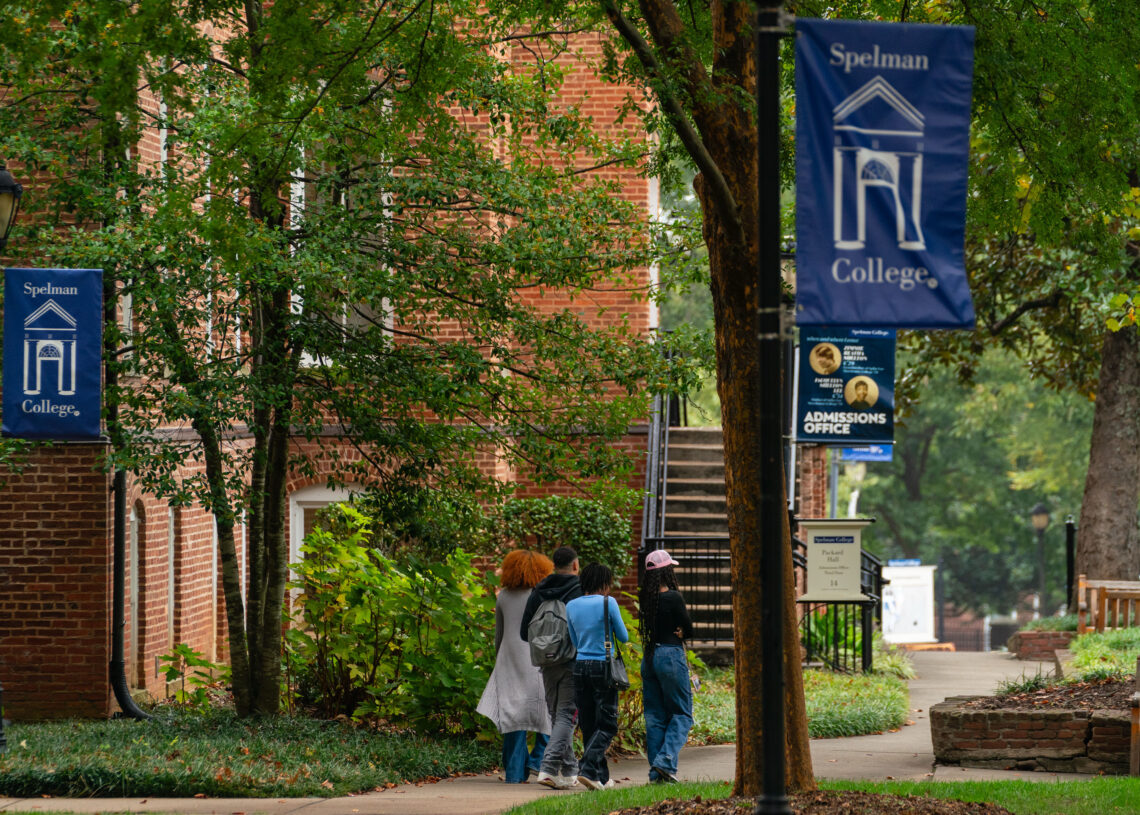
At Spelman College, a historically Black women’s college, about 60 percent of undergraduates relied on Parent Plus loans to help finance their education this academic year, according to the school. Spelman’s total annual cost of attendance before aid is applied is more than $58,000 for the 2025-26 academic year. In 2024, the average amount borrowed was $33,920, according to the Post analysis, which also found that the college had one of the highest average shares of parent loan recipients between 2007 and 2024.
The new loan limits will not allow that level of federal borrowing for incoming freshmen, which could place Spelman out of reach for some families.
Spelman President Rosalind Brewer is trying to prevent that. The college is trimming its operational budget, streamlining academic majors and sharing services with neighboring Morehouse College and Clark Atlanta University to bring down costs. It has also embarked on a $500 million fundraising campaign, with 65 percent of proceeds earmarked for scholarships to reduce the need to borrow.
Brewer said the college has already raised 50 percent of the half-billion-dollar goal. Recent donations from the philanthropist MacKenzie Scott and the Arthur M. Blank Family Foundation are being used to fund scholarships for juniors and seniors.
“We want our young women to be less dependent on loans,” said Brewer, a Spelman alum. “What I am enjoying about this moment is that it is causing all of us to innovate, and we probably needed to do that anyway.”
For the Trump administration, the effort from colleges and universities to increase affordability is validation that its financial aid policies are effective. The Education Department has touted recent scholarship announcements from some colleges as examples of Trump’s reforms successfully pressuring schools to act.
“Fiscal responsibility is a top priority for the Trump Administration, which is why the One Big Beautiful Bill Act put commonsense caps on federal loans for graduate programs to drive down bloated tuition costs and help reduce student loan debt,” said Liz Huston, a spokesperson for the White House.
But it is hard for many schools to provide more institutional grants and scholarships. Public colleges often need more state support to increase the flow of financial aid, and all types of colleges need flexibility in their endowments to withdraw more money for scholarships, said Emmanual Guillory, senior director of government relations at the American Council on Education.
Many endowments — a collection of tax-exempt donations and investments to pay for salaries, research, financial aid and other expenses — have large portions of funds restricted to uses that donors stipulate. And many colleges have relatively small endowments. While fundraising and cutting expenses can yield more dollars for scholarships, the strategy is not a panacea.
“Not every institution has the same level of resources,” Guillory said. “A college’s perceived credibility and name recognition impact their ability to secure funding — there are so many elements to it.”
The new Parent Plus loan limits pose other challenges.
Under the revised terms, parents will reach the aggregate cap by the time their children are juniors if they take out the $20,000 annual maximum every year. That means families must carefully plan or risk not having enough money for their children to complete a degree.
Current college students are exempt from the caps for three years, but incoming freshmen will contend with the restrictions. Colleges worry that incoming freshmen and their families don’t see the fiscal cliff that could be ahead.
“Colleges are really struggling with this,” said Jill Desjean, a senior policy analyst at the National Association of Student Financial Aid Administrators. “They’re trying to make sure families understand the implications of these limits.”
Parent Plus loans are not as widely used as the federal loans that students take out, but they have been a critical lifeline, albeit a risky one. The government charges a 4.2 percent fee for making loans to parents, on top of the nearly 9 percent interest rate on the debt. The origination fee alone is four times higher than what students are charged, and parents have fewer repayment options.
Still, federal parent loans are more appealing and accessible than private loans because the government requires only a basic credit check. About 3.6 million people held a total of nearly $115 billion in Parent Plus loans at the end of the fourth quarter of 2025, an outstanding balance that is 62 percent higher than the same period in 2016, according to data from the Education Department.
While the number of recipients has remained roughly the same in the last decade, how much people borrow has climbed, leading policymakers to push for limits.
Parent loans have become a staple for families at not only private nonprofit colleges but also some public flagships.
The Post analysis found that public flagship universities consistently had high numbers of Parent Plus recipients from 2007 to 2024. That’s probably because flagships have large undergraduate populations and because their out-of-state students pay more than their in-state counterparts.
The portion of undergraduates receiving Parent Plus loans has been higher at flagships than at some other institutions, but not as high as the share at historically Black colleges and universities since 2007.
The impact of the new parent loan limits could be worst at private HBCUs, which have smaller endowments and admit more students with financial need than comparable colleges and universities.
After the Obama administration tightened credit standards for Parent Plus in 2011, HBCUs saw the largest decline in enrollment — down 3.4 percent — compared with other institutions, according to the Education Department’s Institute of Education Sciences. The administration later relaxed the standards, leading to a resurgence in the share of families with parent loans at historically Black schools.
Still, policymakers across the political spectrum remained concerned about saddling parents nearing retirement with loads of debt, especially as more low-income families rely on parent loans. The new limits are designed to rein in borrowing and force colleges to rein in costs.
Johnson & Wales University, a private school in Providence, Rhode Island, is using a mix of recent initiatives to reduce the need to borrow. Last fall the university began covering the entire cost of tuition for students whose families earn $80,000 or less and a minimum of 70 percent of tuition for students with household incomes between $80,000 and $200,000.
Johnson & Wales is also offering three-year bachelor’s degrees in computer science, graphic design, criminal justice and hospitality management, some of its most popular majors. The shorter degree programs, introduced in 2024, amount to a 25 percent reduction in the net cost, said Meredith Twombly, vice president of enrollment management at Johnson & Wales. She said the university hopes to roll out more three-year degrees in the coming years with the approval of its accreditor.
More than a quarter of students at Johnson & Wales received Parent Plus loans between 2007 and 2024, according to the Post analysis. And the average loan size of $21,490 in 2024 was a hair above the new limit. Twombly said the tuition pledge and three-year degrees will improve affordability and persistence to graduation.
“Given the things that we’ve put in place, I think we’re on a good path,” Twombly said.
The post Colleges scramble to help students with tuition ahead of loan limits for parents appeared first on Washington Post.