The Trump administration in recent months has made far-left groups a target of its global counterterrorism machine.
The effort is a shift in U.S. counterterrorism strategy. Trump appointees have argued the move is overdue, even as they have presented little evidence that left-wing movements like antifa target Americans. Some U.S. officials told The New York Times that they are worried the focus on the far left is politicizing counterterrorism, just as more dangerous threats are increasing amid the U.S. and Israeli war in Iran.
The State Department said in a statement that it was working with international partners to counter “antifa-aligned terrorism,” including by targeting the finances and travel of violent leftist groups. It added that many European nations shared its concerns, though it did not name the countries.
Previously undisclosed details of the initiative show how the Trump administration has pushed ahead, even in the face of hesitation from U.S. allies.
Here are five takeaways.
U.S. officials are pressing allies to target far-left groups
Monica A. Jacobsen, a top State Department counterterrorism official, called on her counterparts from Europe, Canada and Australia last month to join the U.S. fight against far-left groups.
A copy of her prepared remarks reviewed by The New York Times described how the focus on jihadist groups had “narrowed how governments understood terrorism” and that “far-left political violence” was a serious threat that required more cooperation from Western governments.
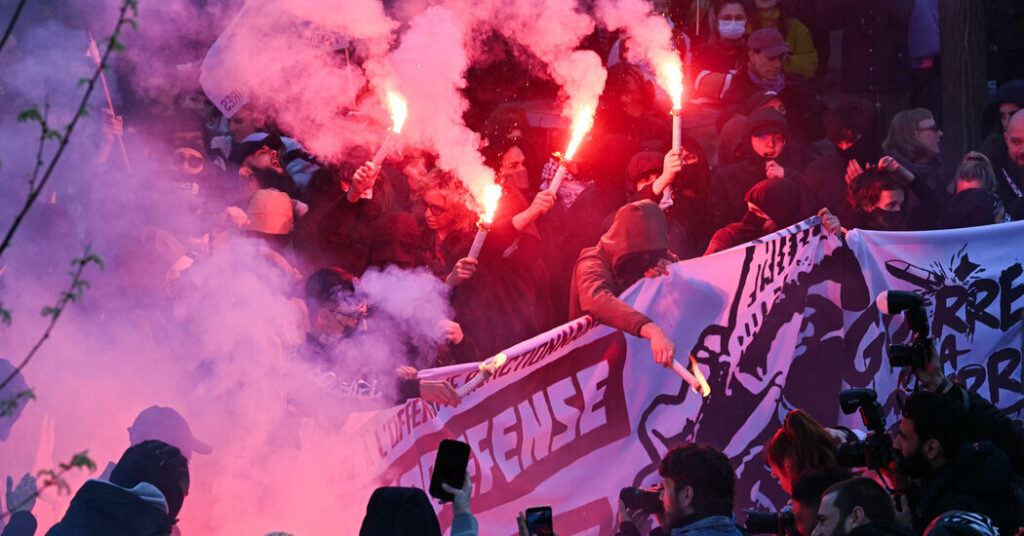
Last November, the State Department designated four far-left groups in Europe as terrorist organizations, puzzling some officials in those countries who said the groups were small, disorganized and weak. U.S. diplomats have met with counterparts in Europe to push for more cooperation pursuing such groups.
The State Department is organizing summits about the far-left threat
The State Department wants to bring foreign law enforcement officials from at least 17 countries to The Hague in May for a workshop on how to fight far-left groups like antifa.
The department is also aiming to convene a similar July summit in Washington for foreign government officials.
Formal invitations had not been sent as of last week, in part because Congress had to approve funding. U.S. officials told The Times that foreign governments had expressed less interest in the events than the State Department had hoped.
The events are intended to attract attention and support for the Trump administration’s push against antifa. They resemble a strategy the Biden administration used to persuade allies to investigate right-wing extremists.
Antifa is the primary target, but various left-wing ideologies are in the cross hairs
Ms. Jacobsen’s prepared remarks to foreign counterterrorism officials showed that the United States was taking a broad view of who counted as a left-wing terrorist.
The prepared remarks outlined how the Trump administration was targeting far-left extremists who “encompass a range of ideological motivations, including anarchist, Marxist-Leninist, autonomous Marxist, Maoist, communist, extreme socialist, eco-extremist, anticapitalist and other self-identified antifascist ideologies.”
That broad definition echoed a national security memo about domestic terrorism that was signed by President Trump last September.
Despite casting such a wide net, antifa is the administration’s main target. Mr. Trump signed an order last year declaring the group a domestic terrorist organization. Trump administration officials have added antifa as a national security priority in an influential classified document that U.S. agencies use to decide how to distribute resources.
And Thomas G. DiNanno, a senior State Department official, applauded Hungary last year for its fight against antifa and suggested that the European Union should designate the movement as a terrorist organization.
Antifa is a loosely organized protest movement with no clear membership or hierarchy.
Labeling far-left groups as terrorists could enable surveillance of Americans
Current and former U.S. officials told The Times that they worried the designation of far-left groups as foreign terrorist organizations could enable the U.S. government to surveil, investigate and prosecute left-wing activists on American soil.
Even loose links between a foreign terrorist organization and an American can be enough for the administration to claim that it has the legal authority to surveil a U.S. citizen.
As part of the push against far-left groups, Trump administration officials have called on U.S. investigators and foreign allies to find connections between the groups and Americans.
The hunt for far-left groups could distract from critical counterterrorism priorities
The four far-left groups in Europe that the State Department designated as terrorist organizations have not plotted attacks on Americans in at least a decade. Officials in the countries where the groups are based also downplayed the threat they posed.
At the same time, intelligence is showing that the U.S.-Israeli war in Iran is increasing potential terrorist threats to Americans. Teams at the F.B.I. and Justice Department partly focused on countering such threats from Iran have thinned after many key officials were fired, reassigned or left.
That has worried some U.S. officials that the focus on the far left is costing precious counterterrorism resources just when they are most needed elsewhere.
Jack Nicas is The Times’s Mexico City bureau chief, leading coverage of Mexico, Central America and the Caribbean.
The post 5 Takeaways From the U.S. Push Against the Far Left appeared first on New York Times.