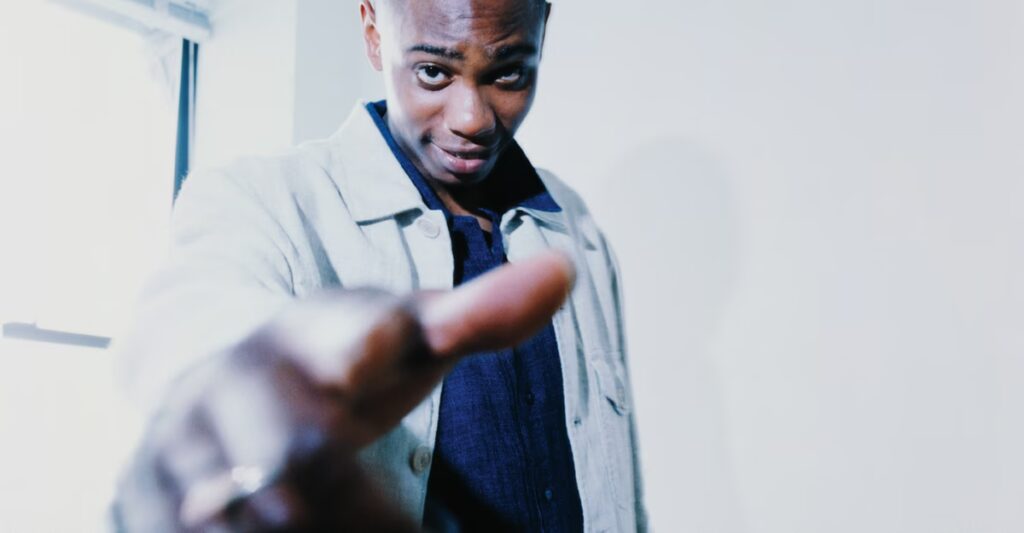
Early in his career, before he became a household name, Dave Chappelle attempted to get a series off the ground at Fox. It was 1998, and the network had already welcomed Black comedies such as Living Single, Martin, and In Living Color—shows that implied a vested interest in Black taste. Chappelle might have expected to find a receptive audience when he presented the pilot for Dave Chappelle, a sitcom based on his life as a young Black comedian. What he reportedly got instead was a roomful of white executives with a familiar set of complaints. There were not enough white people on his proposed show. It was not “universal” enough—meaning it was too Black. Swap out the Black female lead for a white one and add an additional white character, he was advised. All of this despite Fox being, as Chappelle put it at the time, a network that had “built itself on black viewers.” He refused to cooperate, remarking that the incident “tells every black artist no matter what you do, you need whites to succeed.”
Chappelle was caught up in a whirlwind of change in the TV landscape. The successes of Black sitcoms in the 1980s and ’90s had made new shows marketable for mainstream (read: not just Black) audiences, but that marketability had come with a catch. In the late ’90s, there was a broader push for multiculturalism, which came to be defined, in a great many cases, as whiteness-plus: white protagonists with their Black, Asian, and Latino friends; Blackness not as a set of experiences in itself, but as proof positive of the white hero’s ability to learn. Jokes that might offend or even just confuse white audiences became harder sells, and safe crossover appeal became the norm. A few years prior to Chappelle’s pitch, Keenen Ivory Wayans, the creative force behind In Living Color, had left his show, over issues that reportedly included censorship from Fox.
[From the October 2021 issue: Hannah Giorgis on the unwritten rules of Black TV]
Fast-forward half a decade to the now-famous story of Chappelle’s Show, the sketch series that began in 2003 on Comedy Central. We live in the comedy world that Chappelle conquered, through the Miss Cleo parody, the racial draft, and “I’m Rick James, bitch!” He mastered a comic style that highlighted the absurdity of racism by taking it to its extremes, while also leaning on and exploring Black in-jokes without translating them for white viewers. His bits became memes before most of us knew what a meme was, and—taking advantage of Comedy Central’s comparatively lax rules—he insisted on using the N-word liberally.
This Chappelle show was everything that the 1998 concept couldn’t be. And ironically, though the show made no effort whatsoever to be “universal,” it nevertheless won a rabid and diverse audience. In 2005, Chappelle walked away from a reported $50 million contract he’d signed with Comedy Central the previous year. Most people were baffled by his decision, but in interviews, he explained that the fame and pressure had weighed on him, and that the show’s popularity—especially among people who were ostensibly the butt of the jokes—indicated that his work had not been received as he’d intended. In the end, Chappelle followed the logic he set for himself early on in his career: Mainstream approval was never more important than the integrity of the material, or of its maker.
Chappelle’s era of comedic dominance is the denouement of Black Out Loud: The Revolutionary History of Black Comedy From Vaudeville to ’90s Sitcoms, a new book by Geoff Bennett. A PBS News Hour anchor, Bennett traces the trajectory of Black comedy, beginning with the long backstory of its arrival in the network-TV mainstream. The first of the book’s two sections is a series of historical profiles of Black comics, from the minstrel-era performer Billy Kersands through Eddie Murphy. Bennett then turns to several landmark Black television shows of the ’80s and ’90s—series in which, as a youth, he could “see Blackness represented in a way that felt real and expansive.” The book concludes with Chappelle’s Show.
In Bennett’s resolutely progressive view, the story of Black comedy in America is of “a steady march toward fearlessness.” But Bennett measures progress mostly by the ability of Black comedy to break barriers and achieve crossover appeal. The effect is to render Black comedy that doesn’t go mainstream—that remains just “Black,” and thrives not in scripted shows on network television but on tours and in comedy clubs, specials, films, TikToks, and Instagram Reels—less relevant. This framing casts the grand lineage of Black comedy as a vehicle for racial reconciliation.
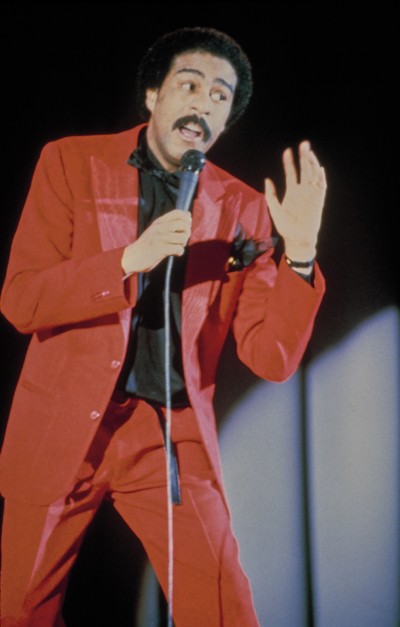
As Bennett tells it, the struggle that persists down the “ancestral line” of Black comics is to courageously and cannily resist stereotypes, each generation less fettered than the one that came before it. That process begins with blackface, mammies, and Stepin Fetchits. Next come the winking subversions of those archetypes by the likes of Moms Mabley and Hattie McDaniel. They in turn lay the groundwork for the later, far more brash subversions of Redd Foxx, Dick Gregory, and in particular Richard Pryor, who perfected a singular brand of self-dissolving, linguistically nimble storytelling.
Black Out Loud is an account of successive generations of Black comics gradually persuading white audiences to see beyond caricature and accept Black characters as people whose stories are worth paying attention to. In the ’90s era of peak Black sitcom, Bennett sees, on the one hand, a reflection of America’s begrudging acceptance of Black culture, and on the other, the realization of Black viewers’ demand for sitcoms that offered authentic representation. Sitcoms made for Black audiences prior to the 1990s were rarely under Black creative control, and even 1970s-era classics such as Good Times and The Jeffersons offered up imperfect or stereotypical simulacra of Black life. With more Black creative input shaping successors such as The Cosby Show; its spin-off, A Different World, set at a historically Black college; and The Fresh Prince of Bel-Air, however, the stories subtly poked at the rhythms that had been familiar to Black TV. For example, when, on The Fresh Prince, Will and Carlton are detained by racist cops while driving a Mercedes, the officers’ presumption that the car must be stolen doubles as commentary on the show’s popularity and on Black upward mobility generally: We’re not supposed to be here.
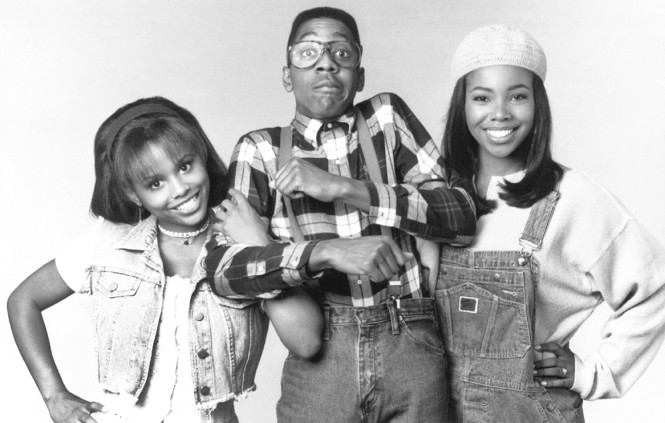
It’s a little strange, though, to lurch, as the book does, from the bawdy confrontations of Pryor—who tested his audience’s comfort with brash profanity and jokes about racial violence and graphic sex, including gay sex—to the wholesome fare of Family Matters, in which someone spray-painting the N-word on Laura Winslow’s locker and telling her to go back to Africa was the subject of a Very Special Episode. Strange, that is, to fashion the era of Urkel as proof of a clear advancement from the era of Pryor. Progressive views of 20th-century America are right, in many ways, to give us a sense of the cultural politics that were pushing the country forward: more rights, more opportunity, more representation. But the approach stumbles when it too eagerly smooths over the equally characteristic setbacks, divots, and reversals.
Still, Bennett is compelling in his insistence that what unites the various threads of Black comedic genius is an overarching trend toward Black comics getting to be themselves. His reporting on Wayans’s self-described “dictatorship” as In Living Color’s creator, for example, highlights how, even at the risk of seeming irreverent or disrespectful, Wayans tried to fend off network meddling in achieving his singular vision. That doggedness helped chart a path for many of Bennett’s subjects, including the rest of the Wayanses. This book is a genealogy, yes, but also a relay, stretching from performers hiding—literally—beneath layers of burnt cork to, a century later, Chappelle donning a blond wig and beige makeup to play a delectably too-white news anchor who’s even funnier for looking not quite right (or white).
[Read: Geoff Bennett on the In Living Color effect]
The satire cannot exist without the real. The history of blackface is what makes the cutting humor of Chappelle’s whiteface possible. In that respect, Bennett’s vision of Black comedy’s evolution as “a steady march toward fearlessness” makes undeniable sense. How did we get from Bert Williams and George Walker—two extraordinary comic talents whose artistic legacy is complicated by their association with blackface—to Black comedians being afforded the leverage to turn that shameful history into an epic in-joke? Part of the answer is the work of people like Hattie McDaniel, who is said to have quipped that she’d rather play a maid than be one. Bennett’s effort to track this history incrementally, through heroes whose symbolic cultural wins had measurable impact on what came after, makes for a buoyant and agreeable book.
Where he errs, however, is in holding up the era of crossover appeal as the apex of Black comic achievement. To dwell on ’90s network sitcoms—on Black television playing on white networks in general—is to gauge the progress of Black comedy in terms that are not always those of Black comedians themselves. We can see the success of shows such as In Living Color and Family Matters as proof that the American experiment, with its promises of integration and acceptance, has finally worked. Or we can acknowledge that the promise has always been contingent: You can tell jokes about race, but …
Late in his life, the great Dick Gregory argued that Black people should never turn to entertainment expecting liberation, and that white comedians were not burdened by these unrealistic hopes. “Bob Hope ain’t never changed nothing,” he said. “Fred Astaire ain’t never fixed it so little children could eat.” But, as Black Out Loud makes clear, Black popular entertainers are charged with needing to stand for something: Liberation by way of representation has long been a demand. Chappelle put it plainly. “White people, white artists, are allowed to be individuals,” he told Esquire in 2006, defending his choice to leave his show. “But we always have this greater struggle that we at least have to keep in mind somewhere.”
Of course, Chappelle did return after his hiatus, and the trajectory of his comeback is one of quite a few inconvenient truths that Bennett’s book, interesting as it is, cannot account for. His relentlessly progressive arc struggles to explain the present: when Chappelle is controversial for jokes not about white people but about trans people and Jews; when networks seem to have short leashes for the few Black shows they do green-light; when audiences are atomized and moving away from television altogether, and toward comedians who make their bones on self-produced short-form videos; and when jokes about race land differently, given an openly white-supremacist administration in the White House.
[Read: Does Dave Chappelle find anything funnier than being canceled?]
Bennett scopes his inquiry to focus on the form that most interests him—and, likely, that makes for a manageable book—but the choice constrains his vision of fearlessness to one that mostly involved speaking to white audiences in a decade of multicultural awareness, and through a network-dominated medium that would soon be on its way out. What if fearlessness, though, has nothing to do with white audiences or gatekeepers? If Chappelle himself represents the pinnacle of Black comedic courage, then maybe his most important contribution to the canon isn’t the Netflix specials or the Prince sketch, but the famous moment when he turned to a camera—and implicitly to Black viewers—and cried: “This racism is killing me inside!”
Whether or not you subscribe to the idea that a Black artist’s job is to change the world, a history of that responsibility that sticks to the mainstream hardly paints a full picture. The real legacy of revolutionary Black comedy might lead us not just to Family Matters and Chappelle’s Show, but also to the terrain claimed by Black comedy that primarily serves Black audiences—the way things were for the likes of Gregory and Flip Wilson, and for comedians such as the late Paul Mooney and Patrice O’Neal and the still-kicking, still-hilarious Katt Williams.
As much as I’ve missed Chappelle’s Show since it went kaput, I’ve missed shows such as Def Comedy Jam and BET’s Comic View—the latter of which launched the careers of D. L. Hughley and Cedric the Entertainer—even more. These shows produced a generation of comics, actors, and presenters who are famous among Black audiences but relatively unknown in white pop culture. Wary as I am of calling the often-aggravating work of Tyler Perry “revolutionary,” the bulk of it, by and large, still appeals to Black audiences. And only to Black audiences. The longest-lived Black sitcom, by episode count, is not The Jeffersons, The Cosby Show, or Family Matters, but Tyler Perry’s House of Payne, which aired its 400th show this year. The aspirations of Payne and its ilk are not to cross over, nor to reify the values of the Black middle class, but simply to be funny. And Black. All on their own terms. What’s a revolutionary history without that?
This article appears in the May 2026 print edition with the headline “Who Is Black Comedy For?”
The post Who Is Black Comedy For? appeared first on The Atlantic.