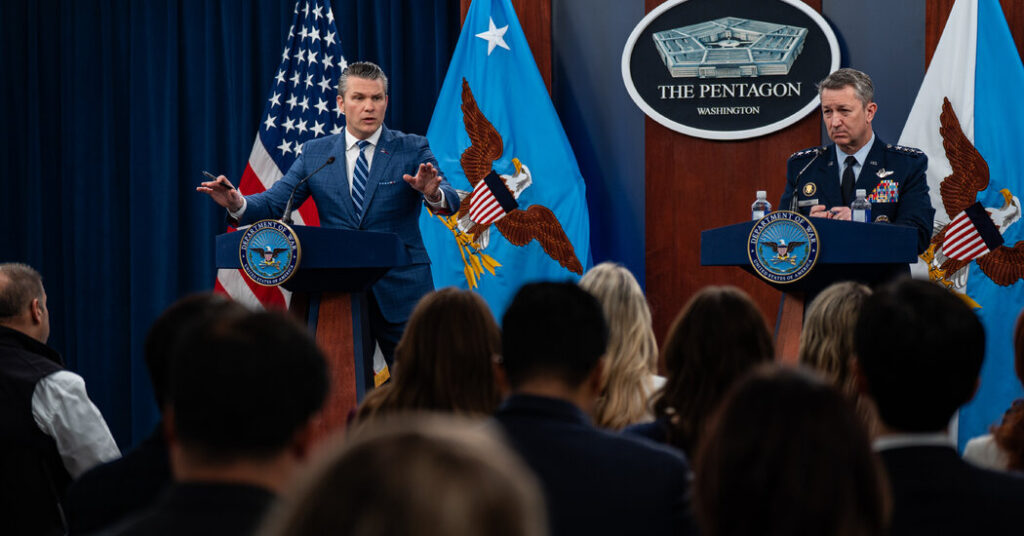
At the Pentagon on Wednesday morning, Defense Secretary Pete Hegseth declared that the Iranians had been “humiliated and demoralized” over the past five weeks, and that the United States would get ahold of the country’s nuclear stockpiles — by persuasion or by force.
The more soft-spoken chairman of the Joint Chiefs of Staff, Gen. Dan Caine, told reporters that U.S. forces would remain in the Middle East and were “ready if ordered, or called upon, to resume combat operations with the same speed and precision as we’ve demonstrated over the past 38 days.”
But just a few hours into the fragile cease-fire that President Trump announced on Tuesday, it was clear that while resuming combat operations may be a viable military option if negotiations go nowhere, it is not a particularly viable political choice for Mr. Trump. And, with talks scheduled to start in Islamabad on Friday, the Iranians know it.
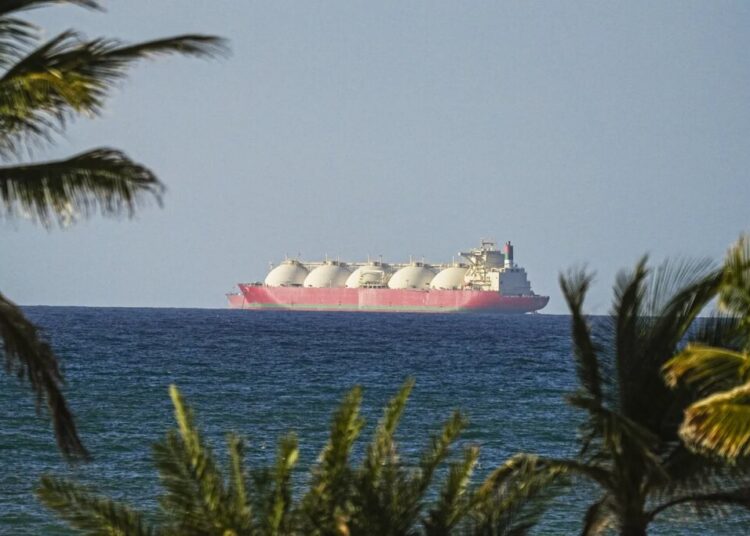
If shipments actually resume through the Strait of Hormuz, the price of Brent crude oil, which has already dropped about 14 percent, hovering around $95 a barrel, could keep falling. Gas prices should follow, even if no one is expecting them to go back to where they were before the war broke out. Major stock indexes rose over 2 percent.
These are the measures of instant success that register with Mr. Trump. And he knows that even if the two-week cease-fire runs out on April 21 with no final agreement on the long list of issues that have divided Washington and Tehran for decades, the political risk of renewing hostilities is high — particularly with the midterm elections looming and an upcoming summit with China’s leader, Xi Jinping.
“The feature of these negotiations that may extend the cease-fire is that there is a bit of mutually assured destruction between the U.S. and Iran right now,” said Suzanne Maloney, an Iran expert and the vice president of the foreign policy program at the Brookings Institution.
She added: “The U.S. can resume military operations an any moment. But the Iranians have shown they can turn around and threaten attacks on the Strait of Hormuz, with all the predictable effects on the price of oil and fertilizer. And these are all the levers that the president is acutely aware of.”
Most of the big mistakes Mr. Trump made in what he called his “excursion” into Iran he made at the beginning of the operation. He did not consult his closest allies ahead of the Feb. 28 attacks, and then was shocked to discover that they were uninterested in backing him up.
Some of the goals he articulated at the beginning of the conflict — including encouraging the Iranian people to rise up against the clerics and the Islamic Revolutionary Guard Corps — were soon dropped.
The Gulf states had no warning, and found their most valuable facilities, from oil rigs to desalination plans, essentially undefended when the Iranian missiles began to fly. Congress was cut out, the MAGA base was fractured, and even some Iran hawks on Capitol Hill chafed at the $1 billion-a-day price tag and the fact that no administration officials came to testify about the war or the administration’s goals.
That damage is now done. And all of it will weigh on Mr. Trump if he threatens to resume combat operations.
Mr. Hegseth pointed to what could well turn out to be the test of Mr. Trump’s willingness to go back into Iran.
Briefing reporters at the Pentagon on Wednesday, he said that one outcome of the negotiations must include an agreement by Iran to give up the 570 pounds of near-bomb-grade uranium the country has been storing deep underground, mostly at its Isfahan nuclear site.
“They will either give it to us,” Mr. Hegseth said of the enriched material, “or we’ll take it out.” Such a mission would at a minimum involve hundreds of U.S. Special Operations troops and would come with the risk of high casualties, current and former commanders say.
When asked exactly how the enriched uranium would be removed, Mr. Hegseth said: “That’s something the president is going to solve.”
David E. Sanger covers the Trump administration and a range of national security issues. He has been a Times journalist for more than four decades and has written four books on foreign policy and national security challenges.
The post U.S. Forces Stand Ready to Resume Combat. The President May Not Be as Enthused. appeared first on New York Times.