Since the dystopian high school fantasia “Euphoria” premiered on HBO in the summer of 2019, the hit drama has withstood a global pandemic, the real-life deaths of two stars and an executive producer, the writer’s strike and no shortage of external noise.
It’s a torrent of tragedy and spectacle that can sometimes feel like a mirror of the show’s maximalist storytelling and deeply damaged characters.
More than four years after its second season, “Euphoria” returns Sunday for eight new episodes, all created, written, directed and executive produced by Sam Levinson, the kind of auteur who sees the licking flames of chaos and only wants to lean closer.
Levinson’s characters — now in their early 20s — are all deep in the hole that is the modern American nightmare of young adulthood: Rue (Zendaya) owes millions to her old drug dealer against the backdrop of the fentanyl epidemic; Nate (Jacob Elordi) is trying to salvage his sex offender father’s real estate business while planning a lavish wedding to the covetous Cassie (Sydney Sweeney). The others are succumbing to unseemly side hustles, via the influencer economy and sex work, to make dying creative industries work for them.
Levinson, 41, is more than happy to luxuriate in their desperation and despair. Season 3 slows down some and widens the scope, visually and thematically, inspired by classic westerns like “Red River,” “The Searchers” and the midcentury television procedural “Have Gun, Will Travel.”
“You know, the themes of good and evil, freedom, its consequences,” Levinson said in a recent interview on the Warner Bros. lot. “And also this feeling that at any second, you can die.”
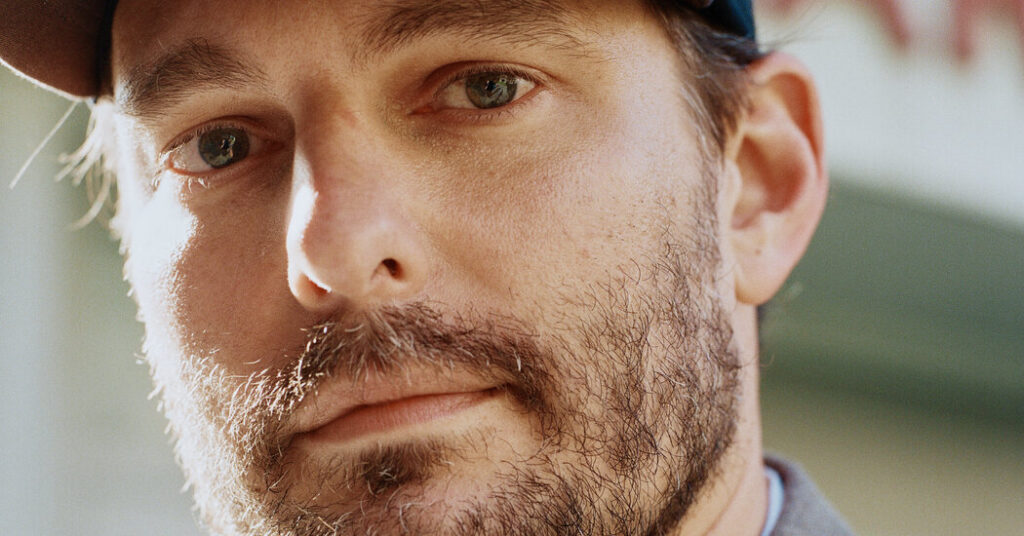
Juggling four tins of Zyn and multiple editing suites, and moored by the presence of his executive-producer wife, Ashley, Levinson was by turns wired, delighted and self-conscious as he showed off his still-in-progress creation. But in discussing the difficult path to this point, his delivery slowed so he could choose his words carefully. These are edited excerpts from the conversation.
Where was your head when Season 2 of “Euphoria” ended?
We were a month away from having our second child, so Ash was very pregnant. At the same time, that was such a tough season to put together for a number of reasons. The main one was that we had originally planned to air in April [2022], but the Discovery merger [with HBO’s parent company, WarnerMedia] was happening in January, so two weeks before we started shooting, I got a call from HBO saying, “What do you mean you’re airing in April? It needs to be January.” We had to switch around our entire schedule, everything, and just put it into overdrive. The blessing of it was that I had an enormous amount of creative freedom.
That says something about you, because most people would have gone in the opposite direction — they’re taking away three months of runway, let’s cut back. You were like, let’s do more!
Of course. That’s what I’ve come to really value in filmmaking is just a certain amount of creative autonomy and freedom to explore and to try things, things that you don’t necessarily know if they’re going to work or not. But physically, I was extremely worn down. I was cutting the episodes as it was airing. And that is a stressful situation.
Did you feel like you’d leveled up?
We leveled up in terms of its look and its storytelling. There were things that were more inventive and unusual about it. It’s not exactly what I wanted or wished it to be, but that was also just the result of some of the things that were going on at the time. Angus [Cloud, who played the sensitive drug dealer Fezco] passed away in 2023, and I really loved him a lot and I fought really hard to keep him clean.
You’d had a sober coach for him on set and were really hands-on, I assume in part because you saw yourself in him as a former addict. Is that fair?
Absolutely. The reason I’m here today is because someone in my life gave me a second chance. I wanted to do that same thing for him and for anyone who was struggling with addiction stuff. Dominic Fike has also talked on the record about the struggles that he had while shooting. It was tough because I’m making a show about addiction. But there’s also financial responsibilities. I have to deliver the show, but I wanted to make sure that the cast was safe and healthy. I think if it were maybe another show, they would’ve said, “You’re fired, we’re just going to move on.” I couldn’t do that. And we were able to get HBO to pay for rehabs.
But you’re obviously drawn to people like that: Ezra Miller stars in your first film.
It’s what makes something electric. But from a logistical standpoint, it became very difficult because I would have five sound stages, a whole crew and no cast that I could shoot with. HBO would say, “Well, should we shut down?” That’s when the vultures come in and, “Well, why don’t we cut this?”
So there’s mornings when I would show up to set and I’d say to the crew, just give me two hours. I’d sit down by myself in Rue’s living room and say, OK, I can’t shoot what I’d intended to shoot, but I know I can count on Z — I’m just going to write her going through withdrawal for 10 minutes. I called her and read the pages — can you be here in an hour and a half? Then we’d just start shooting that.
So when people are saying, oh, Sam’s constantly tearing up scripts and rewriting and changing his mind — there were external factors that weren’t being considered?
One could say. I also like to be open to life, because that’s where I think the most surprising moments come from — when a little bit of life seeps into what you’re shooting.
What did Season 3 look like in your brain at the end of Season 2?
I’ve written every season like it’s the last season, because I was never sure if they were going to pick it up again. So I didn’t get too far into the weeds. I knew I just needed a little bit of downtime. And then like four or five days after the eighth episode aired, we started on “The Idol.”
What did you take from that experience?
I loved making it. I think it’s hysterical. And I’m really proud of it.
It’s the show you wanted to make?
[A long pause] I’m proud of the show we made together and I think it’ll age really well. I mean, it certainly caused a little bit of agita in my life, but there was a lot that I learned just personally as a human being.
Like what?
I got a call from Ari Emanuel at one point and he said, “You’re so lucky.” I said, “Really? I don’t feel lucky.” He said, “How often do you get to learn who your real friends are?”
The show’s original director Amy Seimetz recently gave her first comment on being replaced, paraphrasing from “The Handmaid’s Tale”: “Don’t let the bastards grind you down.” Are you the bastards?
I don’t take that personally. I was making “Euphoria” Season 2 when they were shooting “The Idol.” And I was responding to what HBO needed and what I was hearing from HBO. They needed to do reshoots, and I didn’t want to step on another director’s work. It was, well, how much does it cost to do the reshoots? We’ll take that and we’ll make something new.
When did you recommit to “Euphoria”?
I had a good portion of it done before the strike [began in May 2023]. Angus was the backbone of that season. I used to even talk to him about it because I wanted him to stay clean. So I would invite him over and I’d tell him what the plans were for the character. I’d say, look, he’s been in prison for a few years, so you’ve got to get that yoked prison body. Because I wanted him to start working out and taking care of himself. You know, Season 1 he was supposed to die at the end and I couldn’t do it.
Because of the personal connection?
He needed something to look forward to or else he might get lost in the world. And then when I was writing Season 2 and I got to the end, I thought, OK, I’m gonna have to do it this time: Fezco’s gonna die. And as we got closer, I just couldn’t do it, especially with everything we’d gone through. I wanted him to have something to hold onto, a tangible goal for the future. And then when I heard the news that he had passed away [in July 2023], I was very angry about it, and especially about fentanyl. Losing him made me sit down and think, what story do I really want to tell? What matters in life? And through the soul-searching of that, Season 3 began to crystallize.
One of the big bads in the beginning of Season 3 is the specter of the internet. How has your thinking evolved since the show started about the online world’s effect on the generation in this story?
Look, the internet’s a very big thing in our lives, especially for young people. So I wanted to deal with it. But what I’ve always been interested in is how the internet forces the individual to maintain two different identities — who you are and then your persona — and in how those two identities merge, how they can be separated, how it can change who you are in terms of your integrity and your morals and your principles.
Rue ends up at this homestead with this very religious family who has no connection to the modern world. And as she goes on this journey, she’s constantly thinking about, “What if I was raised that way? Would I have the same problems?” It becomes a central theme and part of her journey.
How much are you engaged with the online chatter?
Uh, very little, because ultimately I care about the work and I love my family and that’s what gives me the most joy in life.
But you’re in this interesting space with the parasocial aspect of “Euphoria” fandom — people who love the show, but are criticizing you for your treatment of characters that you conceived of, wrote, directed, edited. Is that disorienting?
I love that people care so much, and I love that they’re so invested and passionate. That’s what you dream of as a filmmaker, putting something on the page that people are so invested in that they fight with each other.
Some seem to think they’re real people and that you’re doing wrong by them.
Right, that I’m hurting these characters. “Why can’t they just be happy?” “Why can’t wonderful things happen to them?” Because it’s anti-dramatic, first of all.
The one thing that I love doing when the show airs is watching it live. I sit with a group of friends and my family and just look at the tweets. It’s the funniest [expletive] I’ve ever seen. We just show each other the meanest, cruelest tweets about it. So we get a kick out of it, and then I move on with my life and never watch the episode again or think about it.
But I’m very grateful for how invested people are in the show, and I wouldn’t trade that for anything, even if they’re angry at me.
You now have three bona fide young movie stars in your show — some of the most famous people under 30. Is it fun to now be able to play with their public personas and where that meets their characters? Some of the Cassie stuff this season, it’s hard not to read it against what has happened in Sydney Sweeney’s life as a celebrity.
It’s always about what’s best for the character. But we always talk about the layers of irony in the show. I adore Sydney, and she’s so much fun to work with. Before I wrote this season, she called me and she said, “Just do me one favor: Make sure Cassie’s crazy.”
You don’t often see a girl that beautiful be that desperate and I think it’s that combination of her desperation and need for validation that makes the character so brilliant. There’s a moment in Episode 5 where she says “I’m gonna be a household name” that is one of the funniest moments we have.
How has watching them bloom into household names changed your relationship with someone like Zendaya, who’s become one of the biggest stars on Earth while she’s still your Rue?
I can’t help but root for everyone in this cast, especially when you’re working with directors like [Christopher] Nolan and Denis [Villeneuve] and [Guillermo] del Toro. Just across the board, it’s really exciting.
One of the things I’ve always tried to make sure about with our show is I never want to be that story where it’s like, so-and-so was cast as the lead of this movie, but they couldn’t make it work because there was one shooting day that conflicted. There’s those stories of actors missing out on parts. So we’ve always been really accommodating, because their success is our success.
For this season, just because everything that happened and the time between the seasons, we wanted to make sure that everyone had fresh deals, no one was contractually obligated to return. I want to work with people that want to work with me, and I don’t want anyone walking onto set feeling like we owe them something. It messes up the balance of things.
There’s also some ghosts in this season: Eric Dane, who died in February, gives an incredible performance in those first couple of episodes, and the choice to keep Angus alive in the universe of the show.
The real world, I can’t control. “Euphoria” I can. So if I couldn’t keep him alive in real life, at least I can do it on the show.
Is this the final season?
As I said earlier, I write every season like it’s the last. If inspiration strikes and I have an idea, then I’ll talk to HBO. If it makes sense, it makes sense. But it’s such a long shoot and we put so much into it, from every department — costumes, production design, editorial, cinematography. We just want to get this season right. So if this is it, great. If there’s more …
But the door is open?
I don’t know. I mean, I’m not … As of right now, all I want to do is hang out with my wife and kids and read some Elmore Leonard and watch “Mrs. Miniver” again.
Joe Coscarelli is a culture reporter for The Times and a co-host of the Times podcast “Popcast.”
The post Sam Levinson Talks Tragedy, the Internet and the End of ‘Euphoria’ appeared first on New York Times.