When Carson Carpenter saw that a U.S. strike had killed Iran’s supreme leader Ayatollah Ali Khamenei, he did not see it as a show of force. Instead, the 20-year-old Trump supporter saw the start of a conflict with no clear end and a hefty price tag.
“When [President Donald Trump] says that this operation is going to end up like Venezuela, because he compared the two during the address, is just a fallacy. It’s just not going to happen,” Carpenter said, referring to the swift U.S.-backed intervention earlier this year that helped removed President Maduro without a prolonged war.
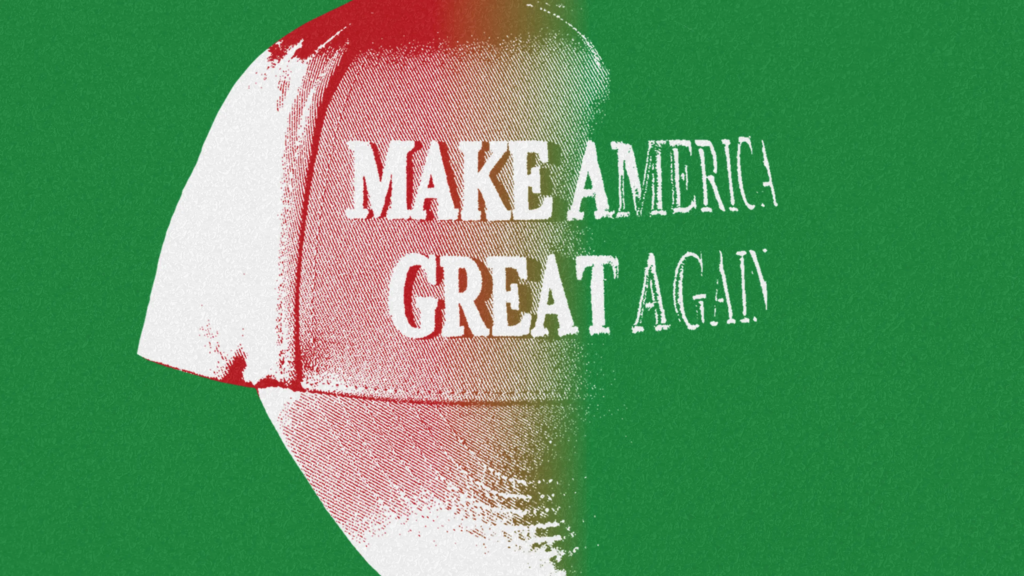
For Carpenter and many other young conservatives, the Iran war has exposed a growing rift within the coalition that helped return Trump to the White House in 2024. A younger generation drawn to Trump’s promises to avoid foreign wars is now confronting a widening conflict with uncertain aims—and questioning what “America First” is meant to deliver.
“It’s going to be a long-term struggle if we continue to drag out this conflict, and we don’t know what the end goal is,” he said.
Carpenter, of Prescott, Ariz., and the co-founder of Off The Record USA, a media company that oversees young conservative content creators, opposes the Iran war, arguing that it evokes the legacy of post 9/11 conflicts, which cost more than 7,000 American lives, hundreds of thousands of Iraqi and Afghan lives, and trillions of dollars.
Similar sentiments are emerging among Gen Z Republicans across the country. James Cox, 20-year-old college student from American University in Washington D.C., and the Chief of Staff of D.C. College Republicans, estimated that about half of his peers would disagree with how Trump has handled the conflict .
“It’s quite the spectrum of different beliefs, and I think it’s captured the party, the, you have, of course, the non-interventionists, the isolationists who are against this conflict, and then you’ve got the folks again who are unsure and the folks who are in support of it,” Cox said. “Among young Republicans and college Republicans, it is a defining issue.”
The unease comes as the Trump administration struggles to clearly define its miltiary objectives amid mounting casualties and declining public support. On Wednesday, Secretary of Defense Pete Hegseth called Trump “a president of peace,” a day after Trump threatened to wipe out Iran’s civilization. The U.S. and Iran have agreed to a two-week ceasefire, but concerns remain over how long the pause in hostilities will hold.
Decline in support among young voters
The latest Economist/YouGov poll shows only 28% of Americans strongly or somewhat approve of Trump’s handling of the Iran conflict, a five-point drop from the same survey question two weeks ago. Among people aged from 18 to 29, 63% of them oppose the war.
This shift carries political risk for the Republican party who compaigned on the promise of “America First.” Alex Tarascio, Principal and Pollster at Cygnal, explains that Republicans relied heavily on young men’s votes to win the 2024 election given the narrow margin of Trump’s victory. As Tarascio points out, men between 18 and 49 favored Trump over Harris by 1 point, compared to a 10-point margin for Biden in 2020.
That same voting bloc that helped Trump last time around is showing far less interest in voting in the midterms. A CNN/SSRS poll showed that just 33% of Republican and Republican-leaning voters younger than 45 say they’re extremely motivated to vote, compared to a majority of older Republicans. Tarascio added that young male voters historically have a low participation rate in the midterm elections, and he expects the same this year, unless the rising cost of living impacts turnout.
“People don’t pick inflation in the economy as their top priority because they feel like the economy’s going well. They usually pick it and it goes up because they feel like things are going poorly,” Tarascio said.
In an effort to reassure the public, Trump last week delivered his first address to the nation since military operations began, insisting that the campaign was “nearing its completion.”
But to Carpenter, the speech signaled the potential for a prolonged conflict: “He said Vietnam lasted 19 years, Iraq, eight years. He listed out every war in modern times that America has been in, and prepped the American public of a longer standing conflict.”
Not all young Trump voters are opposed to the war however. Keiran Laffey, a 20-year-old college student in Washington, D.C., told TIME he believes the intervention is justified from a humanitarian and strategic point of view, and will eventually be a net positive for America, citing Iran’s crackdown against anti-government protesters and its nuclear program.
“They’re enriching uranium inside mountains,” he said. “They’ve killed 40,000 people, they burn the American flag for sport. And if we can really cut that off and deter what they’ve been doing, I think it does mean America first.”
Laffey, who voted for Trump in 2024, said he remembered Trump arguing in a debate in 2016 that George W. Bush should be impeached for leading the country into the Iraq War under false pretenses.
“He stood out. I remember the debate stage. He was really the only one to directly say that, and that’s why he got a lot of support,” Laffey said, adding that having Tulsi Gabbard, a strong advocate against military interventions in foreign countries like Syria, in Trump’s 2024 campaign was a huge part of his coalition.
Still, even within his own organization—the College Republicans at George Washington University—Laffey said debate over the war, now in its second month, is intensifying.
“I am more patient, I don’t want to come to a conclusion,” he said. “Let’s see what happens in the next three weeks. I expect this conflict to come to a close.”
What MAGA now means for young Trump voters
Beneath the debate over Iran lies a more fundamental tension: whether MAGA as a political movement is rooted in a political philosophy that ultimately benefits the American people, or simply a coalition that follows Trump wherever he leads.
“There was a movement, but now there’s no motion when it comes to where it’s going to go for the future [elections],” Carpenter said. He now identifies himself as an “America First” rather than a MAGA supporter.
“I don’t think the Republican party has necessarily even embraced the MAGA movement to the extent that President Trump was aiming for, because he [Trump] wanted it to be more of an ideology instead of a political party,” he explained.
Others see it differently. Laffey, who still identifies himself as a MAGA supporter, insisted the movement was never about a singular issue like isolationism.
“Right now, I think MAGA still stands for the same core idea,” he said. “It’s about common sense leadership. It’s about strength when we need it, like being willing to take decisive action against threats like the IRGC, but also knowing the limits.”
Where that limit ends is being tested as Trump ramps up military actions against Iran.
Cox meanwhile said when it comes to MAGA, it’s a “fool’s errand” to box Trump in a specific set of policies. What the MAGA movement is really about, he said, is power.
“I look at energy as what Hamilton spoke of in the Federalist Papers: a strong, active executive, one that’s able to wield the powers of the executive branch of government, not, as a pen, just signing off on documents, but actually more of like a sword or a hammer enforcing and willing, so that the interest of the United States making people bend to the interests of the United States, whatever they may be, foreign and domestic policy wise.”
The phrase “America First,” which dates to the early 20th century and was later revived by Trump, has traditionally been associated with prioritizing domestic concerns and avoiding foreign entanglements. For a generation that grew up on Trump’s promises to end foreign wars, the reality of a widening military presence across the Middle East and Latin America, along with a record-breaking Pentagon budget request, is proving harder to square with the movement’s founding promise.
Read more: Woodrow Wilson’s Ghost in the Age of Donald Trump
“When I see our politicians advocating for other countries, some people are very pro-Israel, some people are against bombing Iran,” says Stryder Bigler, 21-year-old student at Arizona State University who co-founded Off the Record USA. “All of these people focused on all these conflicts, when we have conflicts that are killing people here in our own country.”
Bigler argued that domestic issues such as homelessness, mental health crisis and birthrate decline should take greater precedence, warning that it could otherwise spell trouble for the administration in the midterms.
“I don’t think you can’t teach an old dog new tricks when it comes to these older conservatives, they don’t tend to learn,” he continued. “With Gen Z, we’ve really seen how bad this can go for us, how many of our men can die, and how little it really does for us as a country.”
Carpenter agrees: “The ‘America First’ vision has been watered down so much, where it’s always been focused into a foreign policy apparatus, which is not America First at all. It’s focusing on other nations over America. How could you even call it America First at that point?”
Others define the concept differently. Aneesh Swaminathan, 20-year-old college student who leads college Republicans at Johns Hopkins University in Baltimore, considers himself an interventionist and believes “America First” means the U.S. taking a leading role on the world stage.
“’America First’ does not mean that, you know, we’re just off on an island and everyone we ignore the entire world,” he said. “It means that we intervene when necessary. It means peace or strength, it means limited military engagement to maintain American privacy in the world, and to preserve American preponderance of power.”
A shifting view on the Israel
The debate over Iran is unfolding alongside a broader shift in attitudes toward Israel among younger Americans, amplified by criticism from high-profile commentators with large followings among young conservatives.
In the first week of the conflict, Secretary of State Marco Rubio sparked backlash among supporters after he claimed that a key reason behind the U.S. conducting strikes in Iran was because of an Israeli preemptive attack. “We knew that there was going to be an Israeli action, we knew that that would precipitate an attack against American forces, and we knew that if we didn’t preemptively go after them before they launched those attacks, we would suffer higher casualties,” he said. He later clarified the comment and said the decision to strike came from Trump, not Israel. The White House has repeatedly denied claims that Israel pushed the U.S. into the war.
The clarification has done little to stem that narrative among some corners of the right. Right-wing podcaster Nick Fuentes, who has more than 1.3 million followers on X, has been highly critical of the war and suggested its ultimate aim is for Israel to “expand its borders.” Tucker Carlson, once a strong supporter of the MAGA movement who retains a signficant online following and has had several meetings with Trump at the White House this year, meanwhile said in an interview with the Economist that the U.S. “put Israel’s interests before ours.”
Polling shows how much of a pronounced shift in attitudes there has been among younger voters towards Israel, one of America’s closest allies. A recent NBC News poll found that almost two-thirds of Americans aged 18—34 had a negative view of Israel, a significant increase from 37% three years ago. According to Tarascio, the latest survey showed that among young Republicans, Israel is “about as well liked to Saudi Arabia by young Republicans.”
“That’s just so, so different from every other older cohort, even Democrats,” Tarascio explained.
On his college campus in Washington, D.C., Laffey said visible support for Israel has declined significantly. “Do I think it’s our responsibility to back Israel at whatever they do? Of course not. 100% no. This war clearly is in Israel’s interest,” Laffey argued.
For Carpenter, the divide reflects what he sees as a generational difference within conservatism.
“You’re just seeing a lot of hypocrisy with a lot of these older conservatives compared to the younger conservatives,” Carpenter said. “We remember what 2022 was like. We had high gas prices. We had the threat of military intervention in a European war [in Ukraine], the largest conflict since World War II. And we’re not falling for the same trap.”
The post “Not Our Responsibility”: How Young MAGA Voters Are Reacting to Trump’s War in Iran appeared first on TIME.