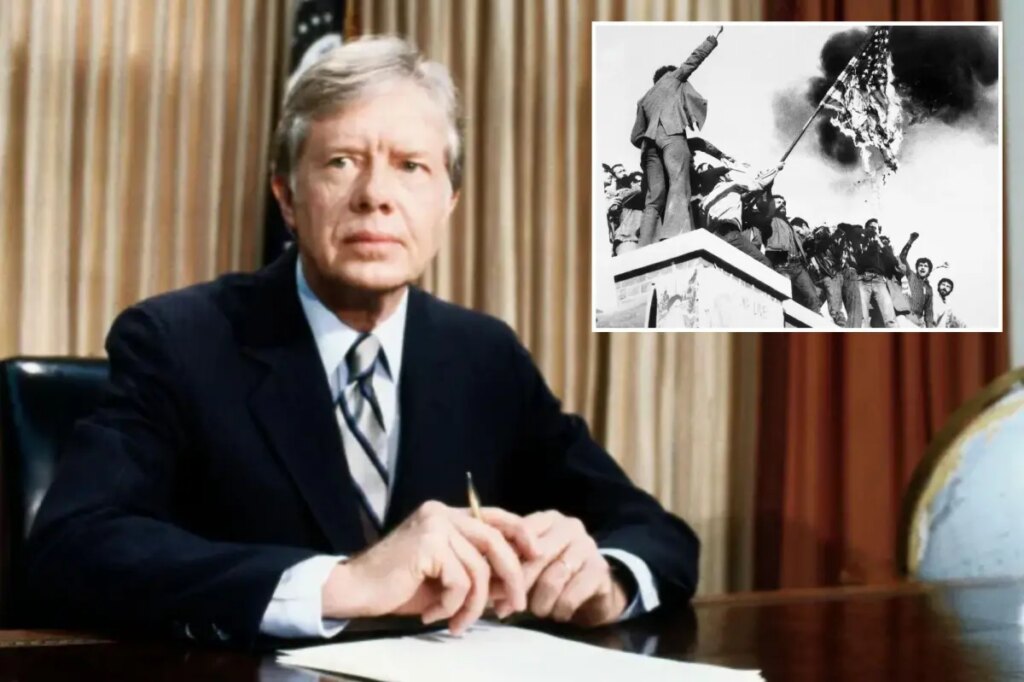
Photographs showing shattered aircraft debris in the Iranian desert after last week’s stunning rescue of two American airmen reminded me of similar photos from the Jimmy Carter era.
But the similarities are only superficial. Indeed, the vastly different outcomes of Carter’s disastrous 1979 bid to free American hostages held in Tehran and the extraordinary rescue of the downed airmen last week under Donald Trump couldn’t be greater.
Although both are, in their own ways, symbolic of the two presidents, the stories the photos tell are polar opposites.
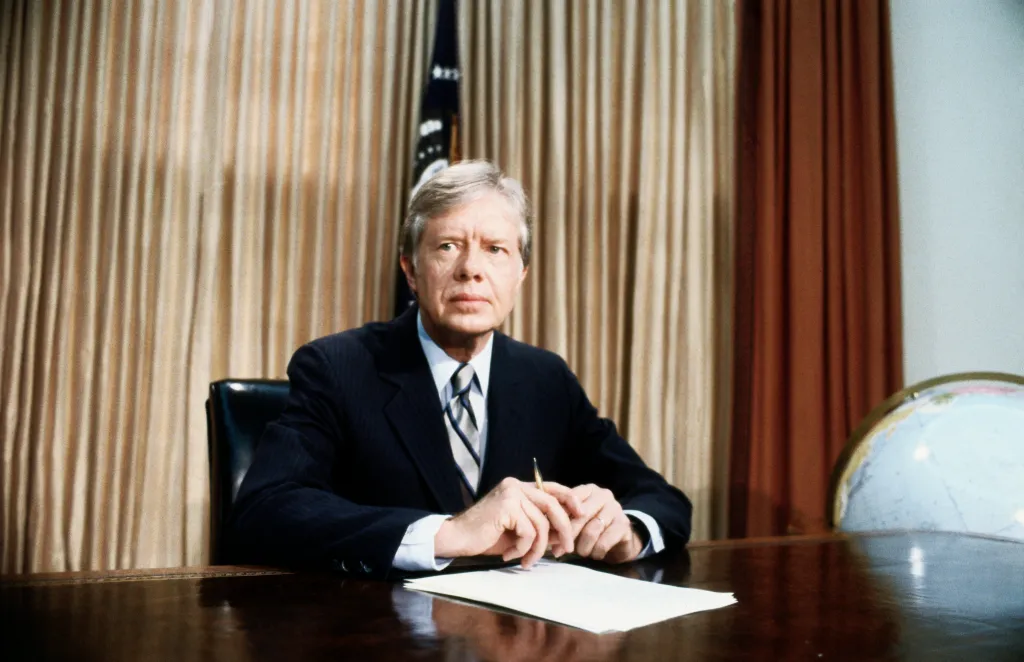
Carter’s botched effort to rescue the embassy hostages led to the deaths of eight American service members. Because only five of eight helicopters dispatched to a desert staging point were capable of carrying out the mission, it was aborted.
But as the copters tried to return to their base, one crashed into a transport plane loaded with fuel, an accident that claimed the lives of the eight service members.
The disaster reflected Carter’s hapless presidency, especially his craven dealings with Iran and other foreign powers. His fatal flaw was that he tried to make weakness a virtue.
‘Easter miracle’
By contrast, the vast rescue operation last week under President Trump was a stunning success from a revitalized and emboldened military, an “Easter miracle,” as the president dubbed it.
The differences in their presidencies are most striking when it comes to their approaches to the Islamist autocrats in Iran, but it is also expressed in their personalities and virtually every aspect of their tenures.
Carter, a pious peanut farmer and a former governor of Georgia, often appeared to be a befuddled bystander as his single term in the White House was engulfed by one crisis after another.
He had offered himself to voters in 1976 as the Democrats’ moral antidote to the Watergate-era corruption of the disgraced Richard Nixon.
He won strong majorities of the popular vote and the Electoral College over Republican incumbent Gerald Ford, but it wasn’t long before much of his own party had doubts.
A crucial moment came in the summer of 1979, when he gave what he called a “Crisis of Confidence” prime-time address, where he claimed America was suffering from a profound moral and spiritual crisis during rampant inflation and serious energy shortages that caused big price hikes.
The tone was that of a scolding lecture that Americans who were sitting in long lines at gas stations where fuel was being rationed were in no mood to hear.
Though he never used the word “malaise,” the word quickly caught on as the essence of the dispiriting speech.
Much of Carter’s failure was connected to his inconsistent dealings with the Shah of Iran, Mohammad Reza Pahlavi, which graphically illustrated the national-security dangers of his uncertain trumpet.
In 1977 Carter had visited Tehran, where he lavishly praised the shah as a staunch ally and called Iran an “island of stability in one of the most troubled areas of the world.”
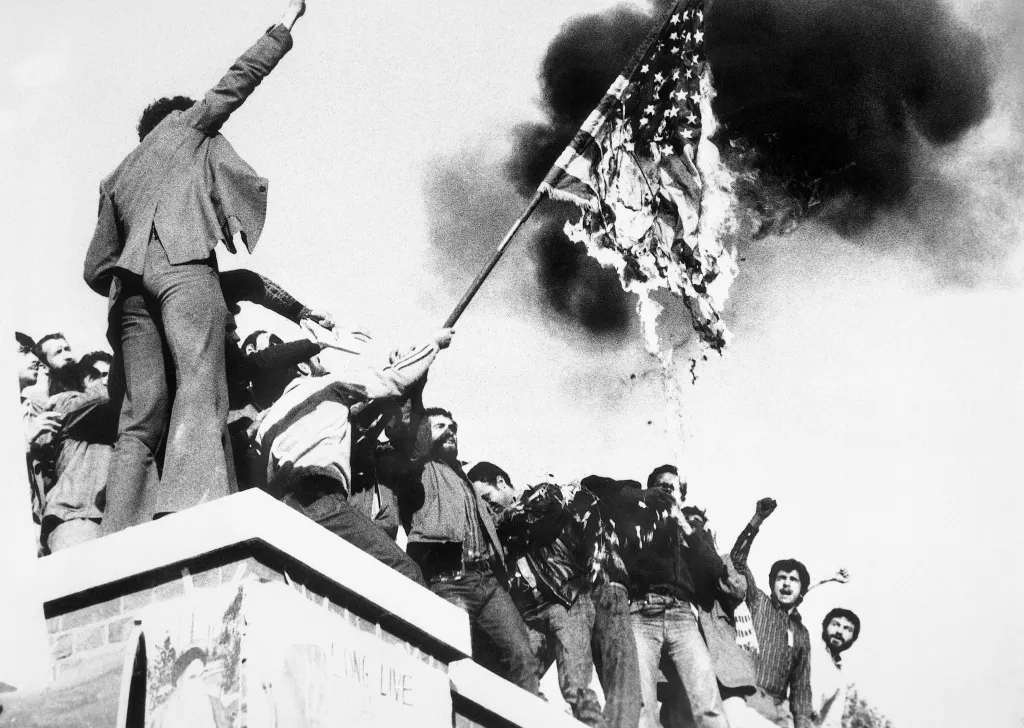
But as the Islamist revolution of 1979 gained steam, Carter sent an aide to encourage the shah, suffering from cancer, to flee the country. When Carter allowed him to enter the US for medical treatment, the Islamists were furious and retaliated by seizing the American Embassy and 66 hostages.
Some Americans, wearing blindfolds, were paraded through angry crowds and heckled.
Fear of public trial
Carter, fearing the hostages would be put on public trial and possibly executed, pressured the shah to leave the US and made arrangements for the government of Panama to receive him.
Months later, the shah was deemed well enough to travel again and moved on to Egypt, where he soon died.
Meanwhile, the theatrics and craven abandonment of an ally helped to convince the Soviet Union that America was a paper tiger.
It responded by supporting Marxist rebels in numerous countries in Asia and Africa. In 1979 the Soviets invaded Afghanistan to prop up its leftist government.
Carter’s response included economic sanctions and trade embargoes against the Soviet Union and a boycott of the 1980 Moscow Olympics.
Although the Ayatollah Khomeini had released 13 of the American hostages — women and black men, whom he believed could not be spies — the remainder were held in captivity for 444 days.
The grave situation served as a constant reminder of our nation’s shaky standing in a dangerous world. ABC News started a nightly update of the crisis called “America Held Hostage,” which later became “Nightline.”
The political stampede against Carter was soon in full swing, and catapulted Ronald Reagan to an enormous landslide victory in 1980 that sent Carter back to Georgia.
No sooner had Reagan taken the oath on Jan. 20, 1981, than Iran released the 52 hostages it was still holding. Secretly, Reagan’s team had held negotiations with Iran that were mediated by Algeria.
Among other concessions, the US agreed to release billions of dollars of Iranian assets that had been frozen by Carter, which allowed the hostages to board planes that took off from Tehran as soon as Reagan finished his inaugural address.
Carter later said he learned while he was still on the inaugural platform that the hostages were on their way home. He flew to West Germany to greet them, reportedly with Reagan’s agreement and support.
In an interview years later, Carter said he always believed that if his rescue plan had succeeded, the election would have gone in his favor. “I would probably have been re-elected, and so that was a bit of a turning point,” he said.
Jimmy’s waning days
Without apparent anger, he related that “in the last three days I was president, I never went to bed at all. I stayed up the whole time in the Oval Office to negotiate this extremely complex arrangement to get the hostages removed and to deal with $12 billion in Iranian cash and gold.”
He continued, saying, “I completed everything by six o’clock on the morning I was supposed to go out of office. All the hostages were transferred to airplanes and they were waiting.”
Minutes after he was no longer president, “the planes took off,” he said. “They could have left three or four hours earlier.”
They could have, but Iran showed its final contempt for him by waiting until Reagan was president.
Carter’s tenure can be rightly summarized as the wages of weakness.
Trump, like Reagan, is a firm believer in peace through strength, an idea on full display in his decision to end the nearly 50 years of appeasement of the mad mullahs.
They could have saved themselves if only they had agreed to give up their nuclear and ballistic-missile programs. Instead they scoffed at Trump’s offers and continued to call for the destruction of Israel and America.
For certain, if any veterans of the Islamist regime are still alive, they are pining for the good old days of Jimmy Carter.
The post Michael Goodwin: Trump’s Iran approach a stark reminder of how hapless Jimmy Carter butchered saving US hostages in Tehran appeared first on New York Post.