In the fall of 1973, when William Acquavella was just 35 years old and working at his father’s art gallery in Manhattan, he remembers looking out the window one rainy morning and seeing a line of people wrapped around the block waiting to see a Matisse exhibition that had just opened there.
“That show attracted lots of artists,” Acquavella recently recalled. “Richard Diebenkorn came every day; Calder was a regular too.’’ When it opened, The New York Times art critic Hilton Kramer wrote that “the exhibition dominating the art calendar this week is, without question, the Henri Matisse show at the Acquavella Galleries,’’ where, he teased, “there are unexpected revelations to be gleaned….’’
More than five decades later the 88-year-old dealer is at it again. For the last two years, working with his three children — Eleanor, Nicholas and Alexander — and Emily Crowley, the gallery’s director and curator — he has been organizing “Matisse: The Pursuit of Harmony,’’ an exhibition opening April 9 that includes more than 50 paintings, sculptures and works-on-paper from public and private collections, many of which have rarely been shown before. “The time just felt right,’’ he said during a recent visit.
James Rondeau, director of the Art Institute of Chicago, agrees. “Matisse once famously said painting is like a good armchair. And in these troubled times that appears to be exactly what the public is craving.’’ Ever since “Matisse’s Jazz: Rhythms in Color,’’ opened at the Art Institute on March 7 visitors have been waiting up to 90 minutes on line to see the show. “That rarely happens here,’’ Rondeau said. That’s likely because this is the first time since the museum acquired the artist’s series of cutouts in 1948 that “Jazz’’ has been on view in its entirety. Call it the Matisse Moment: This spring along with the snowdrops, crocuses and budding trees, have come a global surge of exhibitions highlighting the master of color and pattern.
Most prominently there’s a major show of the artist’s late works currently on view in Paris, a collaboration between the Pompidou Center (whose building is currently under renovation) and the Grand Palais. Closer to home, the Baltimore Museum has an exhibition of about 80 drawings by the artist that inspired his monumental, spiritually expressive mural “Stations of the Cross.’’ And on May 9, the San Francisco Museum of Modern Art is opening “Matisse’s Femme au Chapeaux: From Scandal to Icon,’’ a show exploring the impact of the celebrated painting of Amélie, the artist’s wife.
There are important works by Matisse coming up at auction in May, too. While prices for the artist plummeted a decade ago, in the last year or two they have bounced back. Max Carter, the global chairman of 20th- and 21st-century art at Christie’s, says that collectors “feel more comfortable buying blue-chip artists and Matisse is the pinnacle.’’ Although Carter declined to comment, one of the stars in Christie’s upcoming May sales is said to be “Les Deux Femmes,’’ a 1938 painting depicting two women seated against a colorful wallpaper of foliage, from the collection of the publishing magnate S.I. Newhouse Jr.
Alexander Acquavella, 45 and the younger of two sons, who has worked at the gallery since 2023, said he noticed that collectors in their 40s, rather than buying the work of cutting-edge contemporary artists as they were a few years ago, are often now looking back at historical figures. “It’s a flight to quality,” he said. “Buying a Matisse feels like a sure thing.” (Acquavella Galleries said that none of the works in the exhibition are for sale.)
The artist is also a guaranteed crowd-pleaser. Like the Art Institute, the Acquavellas are bracing for fans. Their exhibition will occupy two floors of its 1918 neo-Classical townhouse at 18 East 79th Street, and they estimate they can handle about 100 visitors at a time. The show’s installation, which is loosely chronological, will include examples of five decades of the artist’s work.
But unlike most Matisse exhibitions which concentrate on the Fauve artist’s extraordinary use of color and pattern, the Acquavellas are taking a somewhat different tack. “It is about the artist’s approach to form and the figure and how it inspired Matisse to evolve as an artist,’’ said Crowley, the curator, which is why there are a good number of sculptures on display in every room.
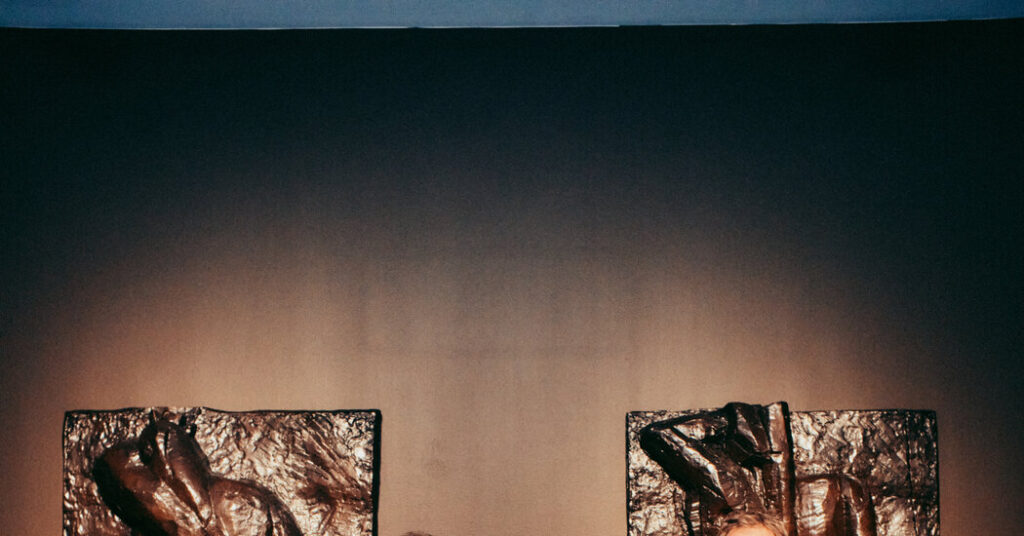
Standing in front of “La Serpentine,’’ a 1909 bronze figure of a woman leaning on a pillar, William Acquavella explained, “Sometimes Matisse would get stuck painting, like a writer having writer’s block, so he would turn to sculpture — but if you look closely there is always a connection.’’ Hanging next to it is “The Geranium,’’ a still life the artist created the following year, in which the stem of the plant echoes the same tilt as the elongated torso of “La Serpentine.’’
Walking through the galleries during the show’s installation, the senior Acquavella recalled, “I knew every picture I wanted. I didn’t get them all, but I got close.’’ (One loan is stuck in the Middle East because of the war with Iran; another, he said, a collector couldn’t part with.)
While all the Acquavellas are tight-lipped when it comes to divulging the name of the lenders, throughout history Matisse collectors have been renowned in their own right: Decades ago John Hay Whitney, Walter P. Chrysler, William S. Paley, Nelson A. Rockefeller, and Otto Preminger were among those who lived with prime examples of Matisse paintings, drawings and sculptures. Today, Steven A. Cohen, the hedge fund billionaire and owner of the New York Mets, the real estate developer Steve Wynn and the investor brothers Steven and Mitchell Rales are said to be Matisse enthusiasts.
There are loans from the Metropolitan Museum of Art, Museum of Modern Art, Philadelphia Museum of Art, Cleveland Museum of Art as well as two Washington institutions: the Phillips Collection and Glenstone.
Acquavella, who guesses he sold dozens of Matisses over the years, has borrowed back many of them for the show. A Fauve canvas with a brilliant orange background called “Woman in Front of a Window’’ from 1905 he sold to an unidentified collector 60 years ago. That same collector lent the canvas and it now hangs in the front gallery next to “The Idyll,’’ another Fauve portrait from 1906, which the dealer says hasn’t been seen since the Museum of Modern Art’s retrospective in 1992.
There are also many works from Acquavella’s personal collection. “I started in 1970,’’ he recalled. His first acquisition was the painting “Odalisque in a Striped Coat’’ (1937), bought from Norton Simon, the California industrialist. “He thought modern pictures had gotten too expensive and there was better value in other things,’’ Acquavella recalled.
Norton Simon is curiously part of the gallery’s history. He owned its 79th Street building, which he sold to Acquavella in 1967 in a deal that netted Simon two paintings as partial payment — Fantin-Latour’s “White and Pink Mallows in a Vase” (now on view at the Norton Simon Museum in Pasadena, Calif.) and “Woman with a Rose,’’ a 1916 Renoir.
When Acquavella began working at the gallery in 1961, he joined his father Nicholas, who started the business in 1921, so now it boasts three generations of Acquavellas, a rarity in today’s fickle art world. “I graduated from Washington and Lee in 1959 and then went into the Army. When I got out, I didn’t have a job, so I joined my father,’’ he recalled.
Back then the gallery specialized primarily in old master paintings. Acquavella began showing Impressionist, post-Impressionist and modern works. In recent years it has mounted major exhibitions focused on artists including Picasso and Braque, along with Wayne Thiebaud and Lucian Freud, whom it represented for 30 years. Now the younger generation of Acquavellas have begun working with contemporary artists, including Tom Sachs, Miquel Barceló, Nicole Wittenberg and Damian Loeb.
But masters like Matisse are the dealer’s true passion. “You can really see the hand of the artist,’’ he said, admiring the decorative canvases being hung and pointing to the seam in a sculpture’s reclining figures to show Matisse’s meticulous casting process.
In the 1960s, when he was a college student, Acquavella remembers taking a painting class with Marion Junkin, Washington and Lee’s famed teacher, who boasted Cy Twombly among his students. “I really liked it,’’ he recalled. “You learn a lot about painting when you try to do it yourself.’’
The post Matisse is a Crowd-Pleaser. Here’s What the Crowds Rarely Get to See appeared first on New York Times.