With a fragile cease-fire announced between the United States and Iran, leaders in Persian Gulf countries are grappling with a troubling new reality.
Politicians, investors and residents in wealthy cities like Dubai and Doha once believed they were essentially immune to the region’s conflicts. The American-Israeli war with Iran has smashed that assumption.
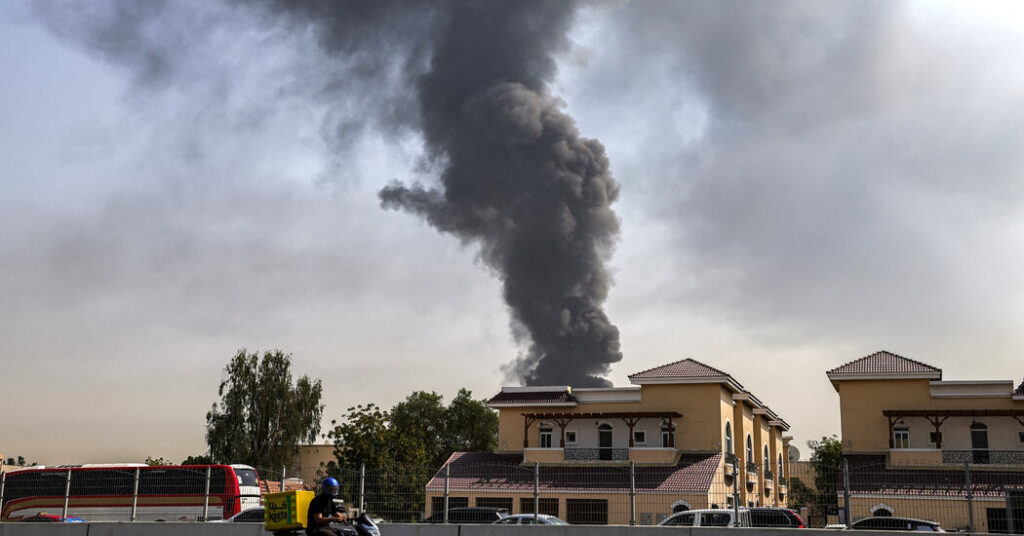
Gulf countries must repair the damage caused by thousands of Iranian missiles and drones. Most expect their economic output to shrink this year because of disruptions to their energy exports.
But they are also being forced to re-evaluate their relationships with Israel, Iran and the United States — their main security guarantor — now that the war has exposed the vulnerability of their oil fields, water desalination plants, hotels and airports.
“All that we have with the U.S. today does not provide the guarantee we need now,” said Abdulaziz Sager, chairman of the Gulf Research Center, a think tank in Saudi Arabia. “Will that stop any attack against us? No.”
Governments wishing for a viable alternative guarantor, however, may find that there is none. And if the cease-fire becomes a more durable end to the war, they could be left to face a weakened Iran that can still periodically attack them.
“This idea that you’re going to be left with a bruised, battered, angry but emboldened Iran — I think that’s a real concern,” said Dina Esfandiary, the Middle East geoeconomics lead for Bloomberg Economics.
Iran’s retaliatory attacks hit Qatar, Bahrain, Kuwait, the United Arab Emirates and Saudi Arabia, all countries that host U.S. military bases or personnel. Executives in those nations are uncertain about the security of their businesses and their employees. Families who left in a rush after the war began on Feb. 28 are considering when, or if, to come back.
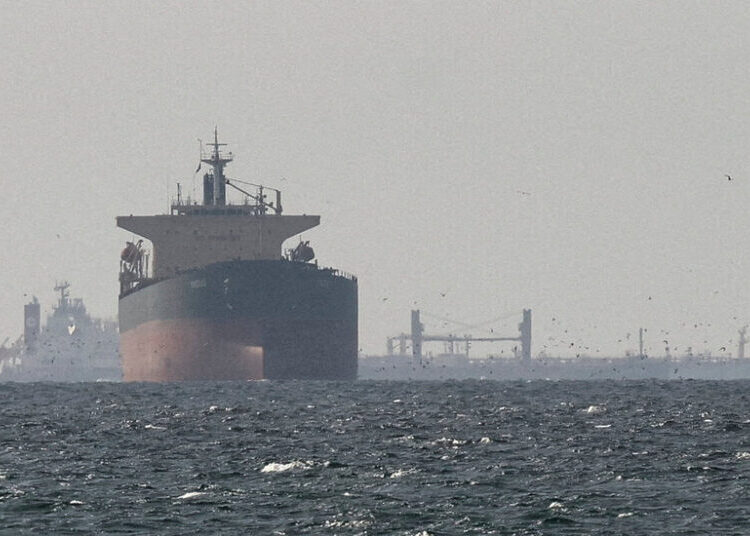
And the fate of the Strait of Hormuz — the waterway, vital to the global economy, that Gulf countries need to export their gas and oil — remains up in the air.
In recent weeks, Iran appeared to be operating a de facto toll system for vessels to pass through the strait, Bloomberg News reported. If that scenario outlasts the war, it will be a nightmare for many Gulf nations, putting their export revenues at the mercy of Iran.
“In truth, one of the most significant outcomes of this war is the shattering of the concept of a regional security system in the Gulf,” Majed al-Ansari, a spokesman for Qatar’s foreign ministry, told reporters on March 24. “The security framework in the Gulf was based on certain axioms. Many of these axioms have been bypassed.”
Oman’s foreign minister, Badr Albusaidi, welcomed the cease-fire announcement on Wednesday, while warning that further work was required to protect the region’s security.
“For now the world has stepped back from disaster,” Mr. Albusaidi wrote on social media. “But there’s no room for complacency. Serious negotiations now required for lasting peace.”
A senior Emirati official, Anwar Gargash, sounded a patriotic and celebratory note, saying that the Emirates had “triumphed in a war we sincerely sought to avoid.”
“Today, we move forward to manage a complex regional landscape with greater leverage, sharper insight and a more solid capacity to influence and shape the future,” Mr. Gargash, a diplomatic adviser to the Emirati president, wrote on social media.
Yet Gulf countries were still sounding scattered alarms warning of incoming attacks early on Wednesday, adding to skepticism about whether the cease-fire would endure. Bahrain’s interior ministry reported a fire caused by “Iranian aggression.” It said the fire had been extinguished without injuries. And Kuwait’s army reported “an intense wave of hostile Iranian attacks,” including 28 drones, that had been intercepted since 8 a.m. local time on Wednesday — hours after the cease-fire.
“This is a cease-fire plan that does not seem to include the Gulf in consultation,” Mahdi Jasim Ghuloom, a Bahrain political analyst, wrote on social media. “Clearly this will make it more fragile, and Iran has continued attacking some Gulf countries this morning despite the announcement.”
Whatever happens, the region’s royal families will have to reckon with newly apparent limits to their ability to steer Washington’s decision-making in the region, despite the personal ties they have cultivated with President Trump and his family.
“We suffer in the Gulf because he started the war,” Mr. Sager of the Gulf Research Center said. “We told him the consequences. We were never consulted.”
The Gulf countries will also have to decide how to deal with Iran. Saudi Arabia and the Emirates had sought warmer ties with the Islamic republic in recent years, trying to reduce the threat it posed them. Some officials look back at that decision with bitterness.
“When this war eventually ends, in order for there to be any rebuilding of trust will take a long time,” Saudi Arabia’s foreign minister, Prince Faisal bin Farhan, told reporters on March 19.
Different Gulf governments are likely to adopt different stances, which could deepen cleavages in the region. The feud between the Emirates and Saudi Arabia, for example, which was interrupted when both were under attack by Iran, could soon pick up where it left off.
Ismaeel Naar contributed reporting from Dubai, United Arab Emirates.
Vivian Nereim is the lead reporter for The Times covering the countries of the Arabian Peninsula. She is based in Riyadh, Saudi Arabia.
The post Gulf Nations Face New Reality, Whether Cease-Fire Holds or Not appeared first on New York Times.