We love to take it easy on vacation. But hear us out: What is more relaxing than a stroll? What better way to discover a new city than by foot, where you can see, smell and feel the destination as you explore?
We’re aware there is this invention called the car. But sometimes we don’t want to be bothered to drive; in some locations, parking is so scarce and expensive that a car is a liability. Constant Ubers can add up.
Clare Coleman, founder of the walking-focused travel planning company Trips to Walkabout, said a great walkable destination should be near a decent-sized airport and fairly effortless to get around. Some of her favorites in North America include Bar Harbor, Maine; Charleston, South Carolina; Annapolis, Maryland; Greenville, South Carolina; and Quebec City.
There “needs to be a tight center where once you’re there, you can easily walk to everything: your lodging, food, things to see and do, without having to use public transit very often,” she said.
The world is full of such places, but here are several cities in the United States — beyond Washington, D.C., which we walk around daily and highly endorse — where you can easily leave the car behind.
San Francisco
Love hills, stairs, parks and views? This is the city for you.
“This is just a fantastic place to walk, just in the standpoint that we’re kind of designed for walking,” said Guy Joaquin, development and event manager at the advocacy organization Walk San Francisco.
Relatively small with a land area of about seven by seven miles, San Francisco can be traversed by bus, light rail, streetcar and cable car, as well as by foot. All residents are within a 10-minute walk of a park or green space.
For first-time visitors who don’t want to overexert themselves, Joaquin recommends staying in the northeast part of the city within easy walking distance of the waterfront Embarcadero and the Fisherman’s Wharf, Telegraph Hill and North Beach neighborhoods. He also recommends walking tours organized by San Francisco City Guides (the tours are free but donations are accepted).
Those who want more of a challenge can explore what Joaquin called “pretty epic trails” put together by the Crosstown Trail Coalition that cross the city from southeast to northwest and southwest to northeast, or that circle the perimeter. While the full trails are many miles long, visitors can break them up into sections and even plan around specific interests.
“Because there are so many great bakeries and pastry shops … you can kind of make a whole trip around the croissants,” Joaquin said.
Don’t miss: The Presidio, a national park site with beaches, trails, art and views of the Golden Gate Bridge.
Chicago
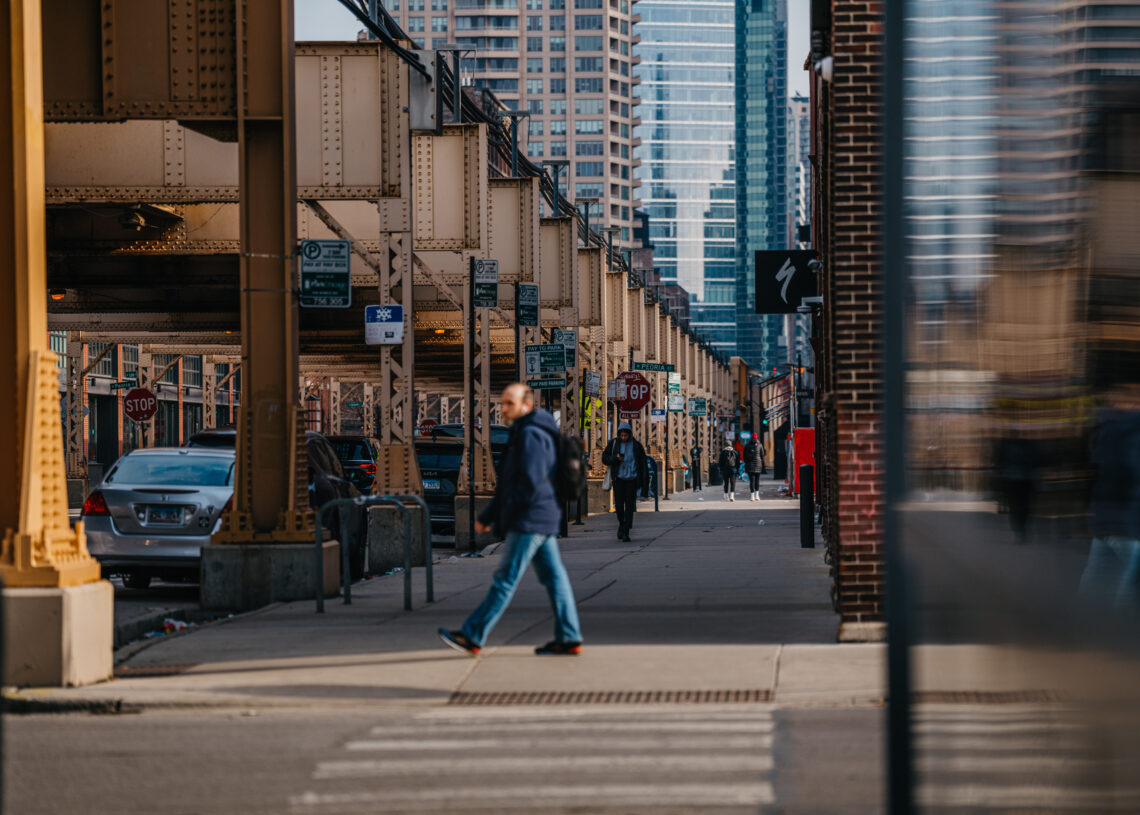
Chicagois a big place, on 234 square miles of land with 2.7 million residents and 77 community areas. But travelers shouldn’t let that scare them away from exploring by foot.
Terry Sullivan, owner and manager of Walk Chicago Tours, said the city has a surprisingly condensed downtown for a place of its size.
“You can easily, in any direction … in an hour’s time hit just about every major landmark walking,” he said.
From a base in the Loop, or downtown area, Sullivan said 45 minutes of walking south will lead to the Museum Campus with the Field Museum, Shedd Aquarium and Adler Planetarium, passing other sites such as Millennium Park and the Art Institute of Chicago. Head north for the Riverwalkand Michigan Avenue shopping.
To explore some of the city’s neighborhoods, take the bus or elevated “L” train, Sullivan said. He recommends Hyde Park anchored by the University of Chicago; Pilsen, which boasts the National Museum of Mexican Art and multiple Mexican restaurants; Wicker Park, stuffed with boutiques, and Lincoln Park, home to a zoo, history museum and miles of parkland.
If the weather cooperates, tackle as much of the 18.5-mile lakefront pedestrian path as you’d like. If the elements are tougher, the climate-controlled Pedway system snakes through about five miles underground.
Don’t miss: Sullivan loves the “spectacular” view of the city skyline from the lakefront near the Adler Planetarium.
New Orleans
If you’re in town for a quick trip, you may not venture outside the historic French Quarter. There’s so much to feast on in those 85 square blocks, including beignets, jambalaya, hurricanes and cafe au lait. And that’s just the food and drink: Don’t forget the art, antiques, architecture and live music.
But David Hedges, owner of walking tour company Nola Tour Guy, recommends venturing farther. Buses and streetcars are other options to explore beyond the quarter, such as the hip Bywaterneighborhood or Garden District. Hedges likes the Faubourg St. John neighborhood along Bayou St. John, home to St. Louis Cemetery No. 3 and City Park.
“It’s an amazing neighborhood just to walk around and look at houses” like the mansions along Esplanade Avenue, he said.
Emilie Bahr, a New Orleans resident and urban planner, also recommends heading down Esplanade Avenue toward the bayou. Bahr said in an email that the gridded streets, neighborhoods with a mix of housing and businesses, live oak canopy and distinct sights and characters all make for “great bones for walking.”
While she calls the city an “accidentally walkable” one, it requires caution on the part of pedestrians.
“We don’t have much awareness as a culture of the rights of people to use the roads, as I’m reminded every time I try to cross the street,” she said.
Don’t miss: Bahr loves the 1,300-acre City Park for its walking and running trails, sculpture garden, lagoons, museum and “century-old-plus live oaks that provide a valuable respite when the temperatures and humidity rise.”
Key West
You can start your day welcoming the sunrise on the Atlantic side of this southernmost Florida island and wrap it up applauding the sunset at festive Mallory Square over the Gulf. In between, there’s plenty to discover.
To get there, either fly into the small airport or drive down the scenic Overseas Highway. If you drive, stash the car once you’ve arrived. Key West is four miles long and between a mile or two wide, depending where you are, but the Old Town area is a good launching point for walking or biking.
Jenny Grace, a local therapist, author and photographer, takes twice-daily “grateful walks” around the island. She recommends visitors make time to explore without a plan so they can go slow and discover “orchids or architecture and how charming everything is here.”
Duval Street is the main drag where you’ll find establishments like Sloppy Joe’s Bar, home of the annual Ernest Hemingway look-alike contest. The Hemingway Home and Museum itself is less than a mile away. Skip around for the Mel Fisher Maritime Museum and Truman Little White House, plus a bevy of bars, restaurants, art galleries and shops. Grace likes the nature trails off Atlantic Avenue, which she calls “secret beach,” and visiting the Edward B. Knight Pier at low tide.
“In Key West you can go from walking to a beach, then go past historic homes and beautiful gardens, then walk past musicians playing your favorite song,” she said. “Before you know it, you’re in the middle of the road singing with random people you’ve never met.”
Don’t miss: Key lime ice cream at Flamingo Crossing, a local favorite for almost 40 years.
Savannah
Choose from a river or squares for your walking adventure in this southern city draped in Spanish moss. Actually, don’t choose; it’s easy enough to do both. Savannah’s historic district boasts 23 squares in easy proximity to each other.
“Spend a day hopping from square to square and see how each is different,” said Coleman, the travel planner.
Forsyth Park is a 30-plus-acre showstopper, with a famous fountain and gorgeous live oaks. Along the historic waterfront, find restaurants, shops, bars, art galleries — and ships floating by on the Savannah River.
“It’s a true joy to walk around in Savannah,” said Coleman.
Don’t miss: ShopSCAD, the boutique in the historic district featuring art and designs by artists from the Savannah College of Art and Design.
New York City
From top to bottom, Manhattanstretches longer than a half marathon at more than 13 miles. That makes the island an admirable feat to cover all at once, but it’s an absolute treasure trove to explore in more manageable sections. (For the sake of this article, we’re excluding the outer boroughs, which can be reached by ferry or subway and could mostly command their own entries.)
Central Park’s gardens, rambles, meadows, slopes and castle can practically fill an entire trip. Or start at the American Museum of Natural History on the west side, cut across the park and end up at the Metropolitan Museum of Art on the east for a museums-plus-park day.
Farther south, take a stroll on the elevated High Line in Chelsea, stop for lunch at Chelsea Market and end at Little Island on the waterfront nearby. Still have energy? Add a stop at the Whitney Museum of American Art.
Taste your way through the East Village and grab pizza in Greenwich Village; save time for an unforgettable pineapple linzer cookie at Té Company; and bookstore browse at Three Lives & Company.
Don’t miss: The Tenement Museum, which offers tours of re-created 19th- and 20th-century apartments and walking tours of the Lower East Side.
Portland, Maine
There will be seafood galore in this working waterfront city on Casco Bay. But even if you don’t partake, there’s plenty more to eat in Portland, named Bon Appétit’s Restaurant City of the Year in 2018.
Stroll from the Old Port area 15 to 20 minutes to Fort Allen Park and see commercial boats, lobstermen, sailing boats, schooners, ferries and freighters, said Eric Pray, a co-owner of Portland Explorer, which offers land, sea and foot tours of the city.
“Basically there’s a lot of vantage points on the peninsula to soak in the coastal views,” he said.
Old Port sits on a peninsula about three miles long and a mile wide, with some streets still laid with cobblestone. The nearly 250-year-old Wadsworth-Longfellow House, where the poet Henry Wadsworth Longfellow lived when he was young, is open seasonally for visits and tours.
Beer enthusiasts can find about a half dozen breweries in Old Port; Portland Beer Hub in the area offers 22 rotating taps with plenty of Maine beers. More breweries await on the other side of the peninsula in a neighborhood called East Bayside — but informally, ‘Yeast’ Bayside.
Want to explore further? Casco Bay Lines ferries travelers to several islands year-round.
Don’t miss: Harbor Fish Market, celebrating 60 years of seafood sales on the historic Custom House Wharf.
The post 7 walkable cities where you don’t need a car to have a great vacation appeared first on Washington Post.