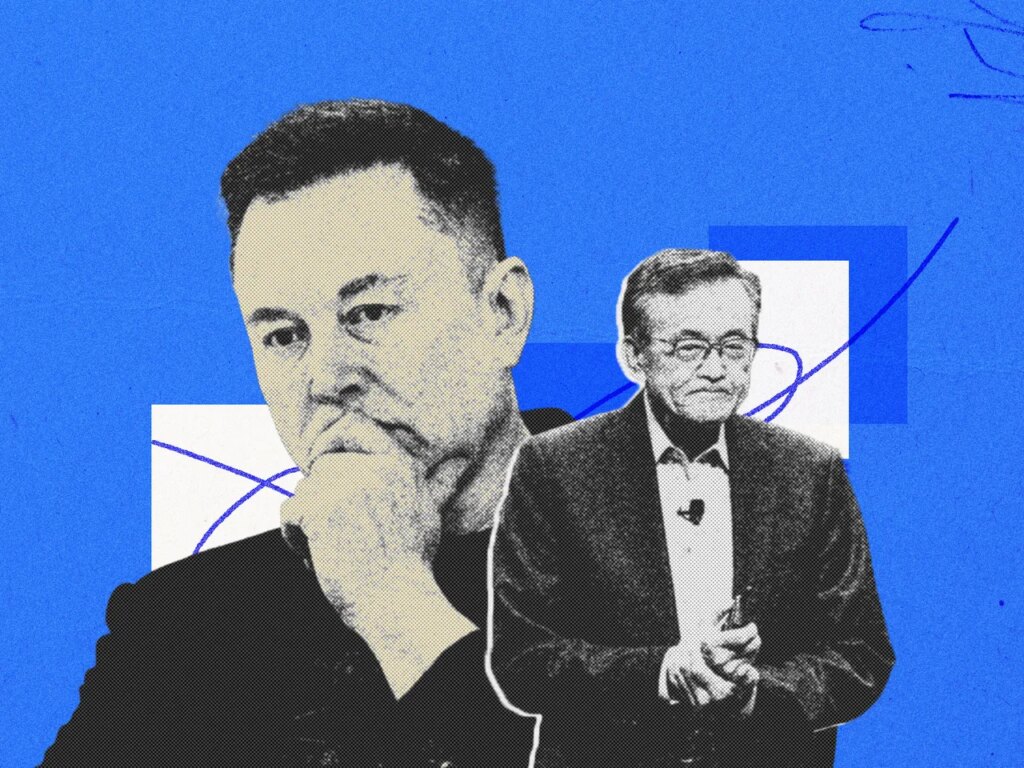
Intel CEO Lip-Bu Tan said Tuesday that the chipmaker will “work closely” with Elon Musk to support the billionaire entrepreneur’s Terafab project, a potentially massive chip development and fabrication operation that will be jointly developed by SpaceX and Tesla. A photo posted by Intel’s official X account shows the two executives shaking hands last weekend in front of a large Intel sign. Musk’s 1-terawatt, ultra-high performance chip fabrication facility, which may span multiple locations, could cost billions of dollars.
“Terafab represents a step change in how silicon logic, memory and packaging will get built in the future,” Tan said in a social media post. “Intel is proud to be a partner and work closely with Elon on this highly strategic project.”
Exactly how Tan and Musk plan to execute such an ambitious venture remains unclear. Musk has been talking about the need to develop a so-called Terafab for months, viewing the endeavor as a way to produce the vast number of chips his companies will need for cars, robots, and data centers. Some chip industry analysts are highly skeptical that Musk can pull off such a complex and capital-intensive venture.
Intel, meanwhile, has been attempting to make a mighty comeback after years of stagnation, and part of its efforts include pitching its capacity to manufacture advanced semiconductors to tech companies hungry for chips to power the AI boom. As WIRED recently reported, Intel’s ability to secure these outside customers is critical to its success. And Musk could be a huge whale of a customer.
Musk did not respond to WIRED’s questions about the partnership. A spokesperson for Intel referred WIRED to the company’s posts about the deal on social media and declined to comment further. For now, here are five outstanding questions about how Intel’s involvement could affect Terafab’s chances of success.
How Big Is The “Deal”?
Hard to say. Neither Intel nor Tesla has filed any paperwork with the US Securities and Exchange Commission, which is typically required if a new partnership or deal materially changes the capital investment or manufacturing capacity of a public company.
For example, when chipmaker AMD and Meta announced a “multi-year, multi-generation” partnership in February to deploy up to 6 gigawatts of AMD GPUs for Meta’s AI services, AMD disclosed the deal in an SEC filing. As of publishing, no such forms have been filed yet by Intel or Tesla. That indicates Tan and Musk’s agreement may be mostly handshakes and vibes at the moment. As one chip industry insider put it, “It makes quite a headline for a couple days, no?”
What Is Intel Actually Contributing?
Intel’s public statement about the mashup with Musk is almost comically vague. The company said that its “ability to design, fabricate, and package ultra-high-performance chips at scale” will help accelerate Terafab’s goal of producing 1 terawatt of computing power a year to support “future advances in AI and robotics.”
Pat Moorhead, a longtime chip industry analyst and founder of Moor Insights & Strategy, predicts that Musk will lean on Intel for its advanced packaging capabilities to start. He notes that Tesla “doesn’t need [chip] design engineering; they’re already very capable of that.” Moorhead adds that Musk may also want to license Intel’s chip architecture, which Terafab could build upon and customize.
Intel handling advanced packaging is a safe bet in the near term, because it gives all of the companies involved a chance to test their partnership without alienating TSMC, which runs the world’s biggest fabs, Moorhead says. “If you do packaging first, you’re not going to infuriate TSMC as much as you would if you used Intel for wafers,” he says. (Tesla has existing chip partnerships with TSMC and Samsung.)
Moorhead says that Musk’s long-term goal is probably still to own as much of the chip-making stack as possible, from design to fabrication, as well as developing new ways to create wafers. But Moorhead and other analysts have expressed skepticism that a brand-new fab that consolidates every stage of the chip development and fabrication process and at massive scale is even a possibility.
How Much Customization Will Musk Want?
Tesla’s track record on chips suggests that the answer will be a lot. Last year, Tesla signed a $16.5 billion deal with Samsung to produce the automaker’s next-generation A16 chip at its factory in Texas. But Tesla designed the chip itself, to ensure it was tailored to the company’s line of autonomous vehicles and humanoid robots, and, according to Musk, “Samsung agreed to allow Tesla to assist in maximizing manufacturing efficiency.”
“This is a critical point, as I will walk the line personally to accelerate the pace of progress. And the fab is conveniently located not far from my house,” Musk posted on X around the time of the deal.
Chip experts say that Intel is likely going to reach a similar customization agreement with Musk. “Technically, as a fabless chip designer, Elon and team could customize their chips to their hearts’ desire,” says Austin Lyons, author of the newsletter Chipstrat and a semiconductor analyst at Creative Strategies. “But the question is whether Elon will want to somehow customize the process itself across wafers and packaging. And, knowing [Musk], I’m sure he’ll be publishing on the end-to-end processes, and surely on aggressive cadences.”
Who Controls the Intellectual Property?
Intel has been struggling in recent years, but it still has a number of fabrication plants around the world and decades of experience. Musk will have to license that manufacturing know-how.
According to Moorhead, that means Intel will likely own the intellectual property produced at the Terafab. Musk would be able to create his own “recipe” for chip manufacturing, but until his companies are in a place to buy up their own chipmaking equipment—such as advanced lithography machines—he will still be licensing a manufacturing process or special process design kit from another foundry.
Who Will Actually Build It?
Worker shortages may add to the challenges Musk faces turning his vision for the Terafab into reality. He has yet to announce where the new plant will be built, but construction is underway on a 2 million square foot chip design lab on the Tesla automotive campus near Austin, Texas, and the state has increasingly become Musk’s home and central to his sprawling corporate universe.
Texas and much of the US are facing a shortage of tradespeople like plumbers and electricians needed to build data centers and semiconductor fabs. The data center industry is proving to have the deepest pockets to recruit workers, says Chap Thornton, business manager at the UA Plumbers & Pipefitters Local 286 union for the Austin, Texas area. They “aren’t afraid to pay for the labor they need to get it done on their timelines,” he says. “Any of this other stuff that pops up is going to be a bidding war.”
Construction that began in 2020 on Tesla’s 10 million square foot so-called Gigafactory required demanding schedules and resulted in numerous injuries and at least one death, according to safety regulators and published worker accounts. It’s possible that workers with plentiful alternatives may not want to suit up for Musk again. “Everybody that wants to work is employed,” Thornton says of his union’s about 2,000 active members.
Intel’s involvement may be a benefit for Musk to counter some of the safety concerns. A few years ago, the chipmaker was one of the first in the state to back away from having construction crews work seven days a week. “Productivity goes to heck in a handbasket when you’re working 7 days a week,” Thornton says. “Intel definitely has that track record of safety on their sites.”
The post 5 Burning Questions About Elon Musk’s Terafab Chip Partnership with Intel appeared first on Wired.