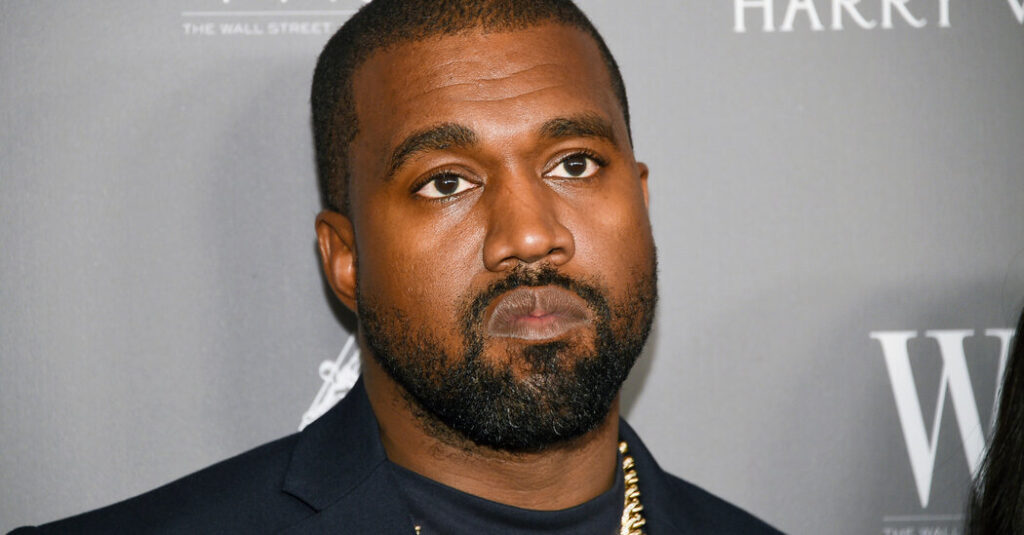
The British government said on Tuesday that it had barred Ye — the rapper formerly known as Kanye West — from entering the country to play a series of concerts because of his history of antisemitism.
A spokesman for the Home Office, the British government department that deals with immigration issues, said in a statement to the BBC that the government had refused the rapper’s application to travel.
The BBC said the decision was made on the grounds “that his presence would not be conducive to the public good.”
The move was the culmination of days of debate over West’s entry into Britain after the musician announced that he was headlining the three-day Wireless festival in London in July. Ye was the only performer announced for the festival, and tickets were scheduled to go on sale this week.
Festival Republic, the concert promoter behind Wireless, said in a statement that as a result of the government’s decision, “Wireless Festival is canceled and refunds will be issued to all ticket holders.”
Earlier Tuesday, the rapper made a last-minute plea to avoid a possible ban, issuing a statement in which he said he wanted to come to London to bring “unity, peace and love through my music” and was happy to meet members of Britain’s Jewish community to hear their concerns.
“I know words aren’t enough,” he said in the statement. “I’ll have to show change through my actions.”
Ye’s statement did not end concerns about his festival appearance. The Board of Deputies of British Jews, one of the British Jewish community’s main representative bodies, said in a statement that its members were willing to meet the rapper “as part of his journey of healing, but only after he agrees not to play the Wireless Festival this year.”
“It has been less than a year since Kanye West released a song entitled ‘Heil Hitler,’ the culmination of three years of appalling antisemitism,” the board’s statement added.
Last year, Australia blocked the rapper from entering over that song.
The Jewish Leadership Council, another British organization, said in a statement on social media that West’s offer was simply a way of trying to save Wireless. “We are not going to meet Kanye West for that purpose,” it added.
Wireless is one of Britain’s major festivals of Black music. Last year, Drake headlined all three days of the event.
On Sunday, Prime Minister Keir Starmer told The Sun newspaper that he was “deeply disturbed” that Ye had been invited to headline the festival given the rapper’s past comments.
On Monday, Melvin Benn, Festival Republic’s managing director, issued a lengthy statement condemning Ye’s past comments and actions. But Benn argued that Ye already had a platform in Britain because his music is widely played on commercial radio and is available to stream.
“Forgiveness and giving people a second chance are becoming a lost virtue in this ever-increasing divisive world,” Benn added.
Some lawmakers also backed Ye’s entry on free speech grounds. Nigel Farage, the leader of the right-wing Reform party, said in a weekend news conference that he considered Ye’s comments “vile,” but “if we start banning people from entering the country because we don’t like what they say, I worry where that ends up.”
In January, Ye took out an ad in The Wall Street Journal in which he said he regretted his antisemitic comments and attributed them to an untreated bipolar disorder. The artist played his first full live show in the United States in five years last week, headlining a sold-out stadium show near Los Angeles. He is scheduled to soon play dates in countries including France, India, Spain and Turkey.
The debate in Britain has played out against a backdrop of rising concern around antisemitism. Prime Minister Keir Starmer told The Sun newspaper on Sunday that he was “deeply concerned” about Ye’s Wireless appearance, and Pepsi was among businesses to withdraw their sponsorship of the festival.
Still, refusing a musician a visa for offensive comments is rare in Britain. In 2015, the American rapper Tyler, the Creator said that the Home Office had barred him from entering the country for three to five years. His manager explained that this was over homophobic lyrics that the rapper had written years earlier. Later visa applications were approved and Tyler, the Creator is now scheduled to headline a night at the All Points East music festival in London in August.
Alex Marshall is a Times reporter covering European culture. He is based in London.
The post U.K. Bars Ye Over Antisemitism, Months Before Major Festival Performances appeared first on New York Times.