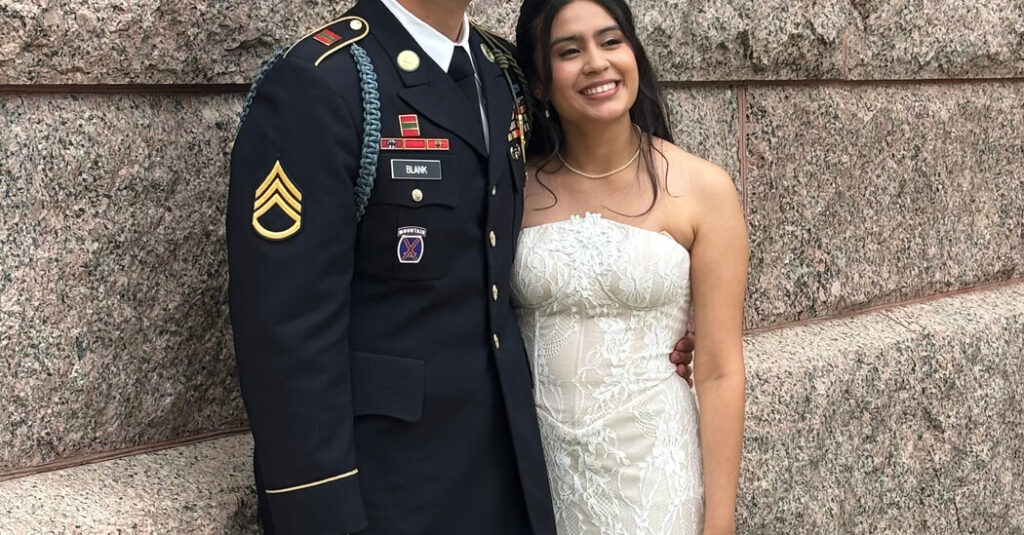
The newlywed wife of a U.S. soldier who was detained last week at her husband’s Army base was released on Tuesday, after spending five days at a detention center with hundreds of other women facing deportation as part of the Trump administration’s immigration crackdown.
The wife, Annie Ramos, 22, an undocumented immigrant who arrived in the United States as a toddler, was taken into custody by Immigration and Customs Enforcement agents at Fort Polk, La., on April 2. She was told she had a final deportation order. It had been issued in April 2005, when she was 22 months old.
The couple had gone to the base to complete paperwork so Ms. Ramos could move in with her husband, Staff Sgt. Matthew Blank, 23, who enlisted more than five years ago and is scheduled to begin training at the end of the month for deployment. But within hours that plan was derailed, and days later an article about the case by The New York Times quickly spread online.
“I feel awesome. I feel awesome. Relieved. Relieved,” Sergeant Blank said. “These have been the worst days of my life.”
The detention came just days after Ms. Ramos, a college student with no criminal record, and Sergeant Blank had celebrated their marriage with family and friends in Houston, where she grew up.
Early Monday, the family and other supporters frantically called ICE offices, trying to ensure that Ms. Ramos would not be deported. They failed to reach anyone who would assist, according to Sergeant Blank.
That afternoon, Senator Mark Kelly of Arizona, where Sergeant Blank’s family is from, called him to say that he would push for Ms. Ramos’s release, according to Sergeant Blank and a spokeswoman for Mr. Kelly. But Mr. Kelly, a retired U.S. Navy captain, cautioned that it could take time.
A few hours later, according to Sergeant Blank, Mr. Kelly called again to say that he had spoken with Markwayne Mullin, the new homeland security secretary, and that Ms. Ramos would be released by Tuesday.
The spokeswoman for Mr. Kelly said he was encouraged to hear that Mr. Mullin had already been aware of the case.
On Monday morning, Ms. Ramos saw herself on the news while in detention. But hours went by before she was able to speak with her husband, who grew increasingly anxious, said Jen Rickling, his mother.
“We did all the right things in the right way,” Ms. Rickling said, “and we had to believe that would work.”
The ordeal began on Thursday afternoon, when the couple arrived at the base for a scheduled appointment so that Ms. Ramos could obtain a military spouse ID and enroll in health and other benefits.
Attendants at the visitor center, where they had to check in, asked about Ms. Ramos’s immigration status. The couple explained they had already hired a lawyer and started the process of adjusting her status.
An officer from the base’s criminal investigations division was called, followed by officials from the Homeland Security Department. Ms. Ramos was handcuffed and driven away in a military police vehicle.
She was held in a room until three I.C.E. agents arrived and transported her in shackles to a privately run detention center in Basile, La., which holds hundreds of women.
When U.S. citizens marry undocumented immigrants, their spouses become eligible for legal permanent residency through marriage, and they can apply for citizenship three years after receiving their green card.
Even those with a prior deportation order, often issued when they are children, are not typically detained and are able to adjust their immigration status, legal experts say, even though the process is complicated.
Special programs exist for military spouses to make it easier for them to adjust their status than it would be for spouses of other U.S. citizens.
Before President Trump started a mass deportation campaign, military couples in the same situation usually would have been allowed to live on base and register for benefits while pursuing legal status, the experts said.
Ms. Ramos was just months away from earning a bachelor’s degree in biochemistry when she was detained. Her education was funded by TheDream.US, which provides scholarships for undocumented students.
She had also applied for the Deferred Action for Childhood Arrivals program, or DACA, which protects from deportation many undocumented children brought to the United States as children. But new applications have not been processed by the Trump administration.
Now reunited, Sergeant Blank said he was focused on his future with Ms. Ramos.
“I can’t wait to carry my wife into our home and start our lives together,” he said, adding: “I’m complete and ready to serve our country. And it’s her country, too. “
Miriam Jordan reports from a grass roots perspective on immigrants and their impact on the demographics, society and economy of the United States.
The post Newlywed Wife of U.S. Soldier Released From Immigration Detention appeared first on New York Times.