Iran on Tuesday called off negotiations with the United States hours before President Trump’s deadline to reach a deal to open the Strait of Hormuz or face widespread attacks on bridges and electric plants, according to three senior Iranian officials.
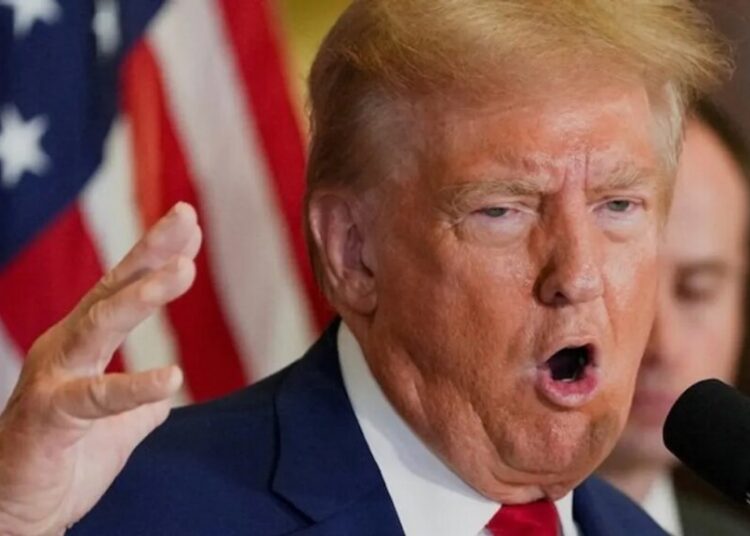
The decision to end indirect talks with the Trump administration, which was being mediated by Pakistan, came after Mr. Trump threatened on social media that a “whole civilization will die tonight,” if a deal to open the strait was not reached by 8 p.m. Eastern time, said the three officials, who requested anonymity to discuss national security.
Still, Iran left open the possibility that Pakistan could serve as a conduit if talks were to resume.
Widespread attacks across Iran on Tuesday targeting railroads, rail stations, airports, bridges and Kharg Island, the country’s energy hub, also factored into the decision to end the talks, the Iranian officials said.
Abdolreza Davari, a former politician and adviser to Iran’s former president, Mahmoud Ahmadinejad, said in a telephone interview from Tehran that President Trump’s threat had hardened Iranian resolve.
“They want to scare us so the Islamic Republic retreats, but we have nothing to lose,” he said. “We will also double down and strike harder.”
On Monday, Tehran had responded to Washington’s initial proposal for ending the conflict with a 10-point counterproposal. Pakistan had called for both sides to accept a 45-day cease-fire to allow space for talks.
Now, the possibility of talks appears slim.
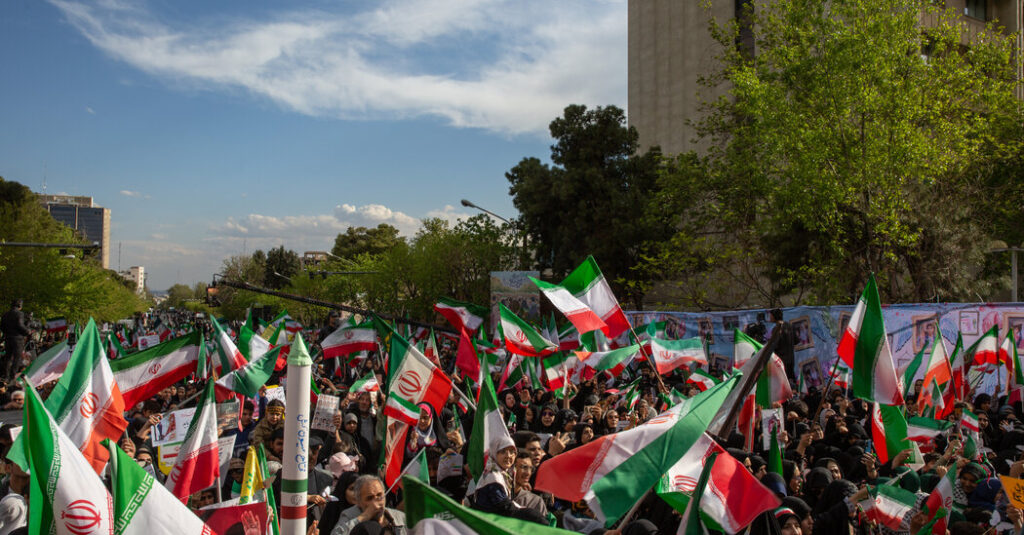
Iranian officials and military commanders reacted publicly to Mr. Trump’s comments, denouncing them as insulting and ignorant of Iran’s pride in its ancient history, which dates back 5,000 years. The Revolutionary Guards Corps, which is leading the war, doubled down, vowing retaliatory strikes across the region if Iran’s power plants were attacked.
“Our response to the enemy’s brutality is to stand firm on our national interests and rely on the inner strength of the great Iranian nation,” said Iran’s first vice president, Mohamad Reza Aref, in a post on social media.
In a symbolic gesture of defiance, Gen. Mohammad Bagher Ghalibaf, a former commander of the Revolutionary Guards and current speaker of the parliament, enlisted in a voluntary defense force, posting his registration form on his social media page. Mr. Ghalibaf, a pragmatic conservative politician and commander, has been designated as the official to negotiate with Vice President JD Vance should talks resume.
Omid Memarian, a senior analyst at DAWN, a nonprofit group in Washington focused on American foreign policy, said that Mr. Trump’s rhetoric was a gift to the Iranian leadership, which will use it to rally the country, including the regime’s opponents.
“What is taking shape is not narrowly focused on regime change,” he said. “It is a broader assault on the material foundations of Iranian society — its economy, its infrastructure, and, increasingly, its sense of collective continuity.”
Inside Iran’s power circles, divisions had emerged over whether or not it was time to engage with the United States and end the war. President Masoud Pezeshkian, a moderate, sent a handwritten letter last week to Gen. Ahmad Vahidi, the commander of the Revolutionary Guards Corps, urging him to consider de-escalation, according to two senior Iranian officials familiar with the deliberations. They said Mr. Pezeshkian had raised concerns over the accumulating economic losses of the war and the damages to critical infrastructure.
But the Guards have been opposed to making concessions, arguing that Iran had the upper hand with the closure of the Strait of Hormuz and that the U.S. could not be trusted again with a temporary cease-fire, the officials said.
On Tuesday, the Guards matched Mr. Trump’s heated threats. “With every dangerous step Washington takes, America will burn in a greater hell in the region,” Gen. Mohsen Rezaei, a Guards commander who has returned from retirement to help manage the war, said on social media.
Farnaz Fassihi is the United Nations bureau chief for The Times, leading coverage of the organization. She also covers Iran and has written about conflict in the Middle East for 15 years.
The post Iran Calls Off Indirect Talks With U.S. After Trump’s Latest Threat appeared first on New York Times.