President Trump said on Monday that a cease-fire proposal put forth by meditators between the United States and Iran was a “significant step,” but he warned that it was “not good enough” as his deadline of Tuesday evening for a deal loomed.
Iran, for its part, rejected any proposal for a cease-fire, mandating that any peace plan included a complete end of hostilities. Diplomatic talks coordinated by Pakistan and other regional countries were continuing, officials said, even as there appeared to be little agreement on what any cessation of hostilities would look like.
If Iran does not agree to reopen the Strait of Hormuz by Tuesday evening, Mr. Trump has threatened to launch a massive attack targeting bridges, power plants and other civilian facilities that would, in his words, send Iran “back to the Stone Ages.” But the president has also extended self-imposed deadlines in recent weeks, and diplomats around the world were asking whether Mr. Trump would find an off-ramp again or if he would follow through this time with what could be a gigantic conflagration.
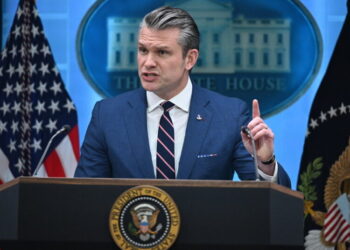
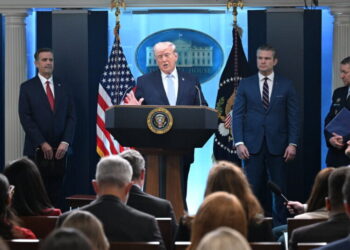
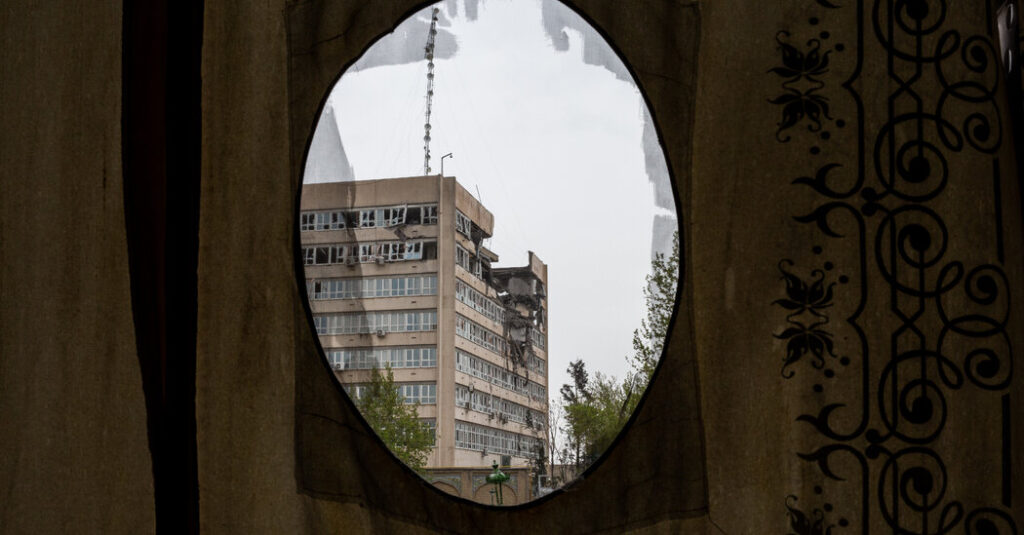
“We have a plan, because of the power of our military, where every bridge in Iran will be decimated by 12 o’clock tomorrow night, where every power plant in Iran will be out of business, burning, exploding and never to be used again,” Mr. Trump told reporters at the White House on Monday afternoon. “I mean complete demolition by 12 o’clock.”
The White House has refused to answer questions about the specifics of the proposals, saying only that Mr. Trump was weighing his options.
The president brushed off a question about the possibility that U.S. attacks on Iran’s civilian infrastructure could amount to war crimes. Iran said it would retaliate forcefully if Mr. Trump carried out his threatened attacks.
“If attacks on civilian targets are repeated, the subsequent phases of our offensive and retaliatory operations will be carried out much more crushingly and extensively,” Ebrahim Zolfaghari, an Iranian military spokesman, said on Monday.
The president said the United States did not want to go down that route and would consider helping to rebuild Iran if they can strike a deal. He said the United States was working with an “active, willing participant on the other side.”
“They have till tomorrow,” he said. “Now we’ll see what happens. I can tell you they’re negotiating we think in good faith. We’re going to find out.”
Mr. Trump said Vice President JD Vance; Steve Witkoff, his special envoy; and Jared Kushner, his son-in-law, were all involved in the negotiations. Mr. Vance, who is expected to participate in any face-to-face talks if they occur, is scheduled to be in Hungary on Tuesday to show support for Prime Minister Viktor Orban. Officials have said he may adjust his trip for negotiations if Iranian officials agreed to meet.
But officials said there was very limited direct contact between the two sides, with Pakistan serving as the key meditator. Mr. Trump lamented that one of the main challenges in the negotiations was Iran’s lack of communication.
Pakistan and other regional allies have put forth a proposal for a 45-day cease-fire, but Iran rejected any temporary pause in fighting and White House officials said Mr. Trump has not signed off on the proposal.
Iran has conveyed to Pakistan its own proposal to end the war consisting of 10 points, according to Iranian state media. The state news agency IRNA indicated the proposal was made after “the developments over Saturday and Sunday in western and central Iran,” which it described as the “catastrophic failure” of a U.S. operation. An Air Force officer whose fighter jet had been shot down by Iran was rescued by U.S. Special Operations forces in a risky mission on Saturday.
Iranian state media has not detailed the entirety of the proposal, but it has noted some conditions or topics that were included. Among them, it said, was a protocol for safe passage through the Strait of Hormuz. It also outlined Iranian demands for lifting sanctions and for reconstruction.
One regional Arab security official involved in the diplomatic exchanges with Iran confirmed that the country was demanding a complete end to hostilities that offered guarantees the war would not be restarted, a complete lifting of sanctions with guarantees ensuring they could not be reinstated and compensation for destruction caused in the war.
Amir Mousawi, a former Iranian diplomat based between Baghdad and Tehran, said Iran also proposed running the Strait of Hormuz “under joint Iranian-Omani administration.”
The Omani Foreign Ministry has confirmed talks with Iran about reopening the strait.
Mr. Mousawi, who was briefed on the plan, added that it called for formally ending the war through an act approved by Congress, and that it called on the United States to offer war compensation that “must be approved by the U.S. Congress and the United Nations.”
“These conditions would have to be approved by Congress, and ensuring their implementation must be guaranteed under an international-American umbrella, because they do not trust Trump and his administration,” he said.
Zolan Kanno-Youngs contributed reporting from Washington, Farnaz Fassihi from New York and Adam Rasgon from Tel Aviv.
Tyler Pager is a White House correspondent for The Times, covering President Trump and his administration.
The post Trump Says Iran Cease-Fire Proposal Is ‘Not Good Enough’ as Deadline Approaches appeared first on New York Times.