Brad Hargreaves is a Manhattan Institute senior fellow and editor in chief of Thesis Driven.
Congress rarely manages to assemble bipartisan housing legislation of any real ambition, which makes the Senate’s recent passage of the 21st Century ROAD to Housing Act a remarkable feat. The legislative package streamlines environmental review, modernizes standards for manufactured housing and creates meaningful incentives for zoning reform — supply-side changes that housing economists have been urging for decades. It attempts to address a crisis that has priced working families out of major metropolitan areas and left younger generations with diminishing options. That makes it all the more frustrating that the bill includes a provision, Section 901, that would hollow out its core promise.
Titled “Homes Are for People, Not Corporations,” the provision requires large investors who build or purchase homes specifically for rental to sell those homes to individuals within seven years, regardless of market conditions at the time. The section’s ostensible goal is to prevent those investors — companies that own at least 350 homes — from competing against individual home buyers. But its end result will be the evisceration of one of the fastest-growing and most promising sources of new family-oriented housing in the United States today: build-to-rent communities.
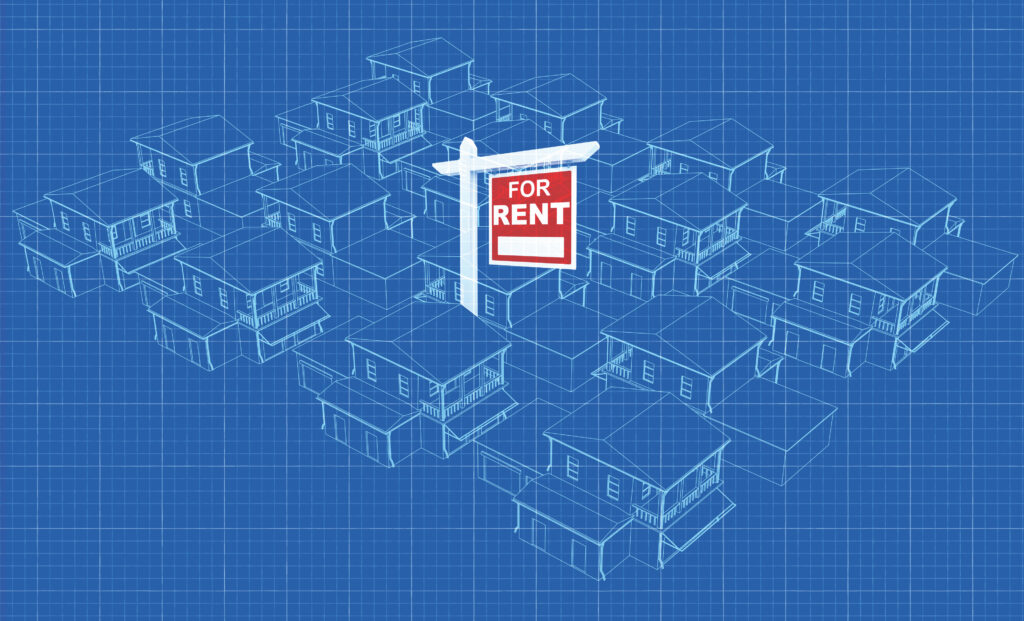
Lumping in build-to-rent development with institutional purchases of existing homes reflects a misunderstanding of what build-to-rent is. These are not scattered single-family homes acquired opportunistically from the for-sale market. They are purpose-built rental neighborhoods, often sharing a single tax lot, functioning in practice like horizontal apartment complexes. They typically have leasing offices, shared amenities and professionally managed common areas. The individual units may look like houses from the street, but the underlying ownership structure is indistinguishable from a conventional apartment building. Requiring these properties to be sold off unit by unit within seven years is mandating the breakup of an asset that was never designed to be divided.
Build-to-rent is growing as a market sector even though it generates some of the lowest returns of any institutional real estate asset class. Investors accept those returns because the demand profile is unusually stable. Once families with children have settled into a neighborhood with good schools and reasonable commute times, they tend to stay. That predictability produces consistent cash flow over long periods, appealing to investors with a long-term mindset. A time-limited, forced-sale mandate eliminates that predictability, exposing investors to liquidation at whatever price the market happens to offer at a legislatively prescribed moment. The National Association of Home Builders, which had been prepared to support the broader legislation, withdrew its backing over this provision alone, warning it would effectively shut down future build-to-rent construction.
That would mean fewer homes. Build-to-rent development is producing between 70,000 and 130,000 new homes in the United States a year, housing that disproportionately serves families who cannot assemble a down payment, who need geographic flexibility or who want access to a good school district without committing to a 30-year mortgage. (It is particularly important in the fast-growing Sun Belt, where roughly 57 percent of all BTRhomes currently under construction are located.) Surveys of build-to-rent residents show that more than one-third actively prefer renting. Among those who say they would eventually like to buy, the most common obstacles specified are a lack of savings and a need to stay mobile, not a shortage of homes for sale.
Preserving build-to-rent is as much about education as it is housing. School quality in the United States has long been one of the most consequential advantages attached to homeownership. Families who can afford to buy in a high-performing district gain access to better resources and measurably better long-run outcomes for their children. Families who cannot afford to buy have historically been limited to whatever schools happen to serve the rental options available to them, which in most markets means older apartment stock in lower-performing districts.
Build-to-rent housing provides a new path to quality schools. Because it is purpose-built for suburban markets and designed for families, it is often built in Zip codes with the schools that working parents are trying to reach. A family earning $80,000 a year that cannot put $60,000 down on a house can, in a functioning build-to-rent market, lease a three-bedroom home in a district with strong public schools. For many families, it is the best option realistically available to them.
The politics behind Section 901 are understandable. Institutional landlords are unpopular, and legislators balk at the image of large investors outcompeting families to buy suburban homes. But industry analysts estimate that institutional investors own less than 1 percent of all single-family homes in the United States, and restricting that small number will not materially change the supply-and-demand dynamics driving prices and rents. What it will do is redirect capital away from new housing construction and into other asset classes, and fewer homes will be built as a result.
The Senate has assembled and passed, overwhelmingly, something genuinely useful in the current package. Its supply-side reforms, its zoning incentives and its support for modern, family-style manufactured houses are worth fighting for. The bill has now moved back to the House, where members have the opportunity to fix what the Senate got wrong, as well as consider other issues. Stripping Section 901’s disposal requirement should be a condition of passage, not an afterthought. The families this legislation claims to champion deserve better than a bill that offers housing options with one hand while taking them away with the other.
The post This great, bipartisan housing bill has a major flaw appeared first on Washington Post.