As liquid rock spewed from Kilauea in Hawaii in February, five musicians huddled in the small Lava Club in Brooklyn, cracking beers and listening on a boombox to “Gargantua,” an album of bombarding and demonic, but at times fragile and beautiful music they had recorded in honor of the volcano.
On the boombox, three drummers and three bassists kept a heavy-metal-funk rhythm. Six horns layered snippets over the beat: John Williams’s “Indiana Jones,” a pop-punk lick from the band Sum 41, a bit of Mozart, a bar of Stravinsky’s “Rite of Spring” played forward, then in reverse — then the ensemble of 15 musicians repeated all of the above, backward.
This movement, the seven-minute “Submit to the Fabulosity,” reflects the complexity and unlikely coherence of the hourlong “Gargantua,” a piece that contains some of the most original and playful classical music of this decade. “Gargantua” premiered in New York in 2024, and was released last month on Pyroclastic Records, under the name of its composer and conductor, Simon Hanes.
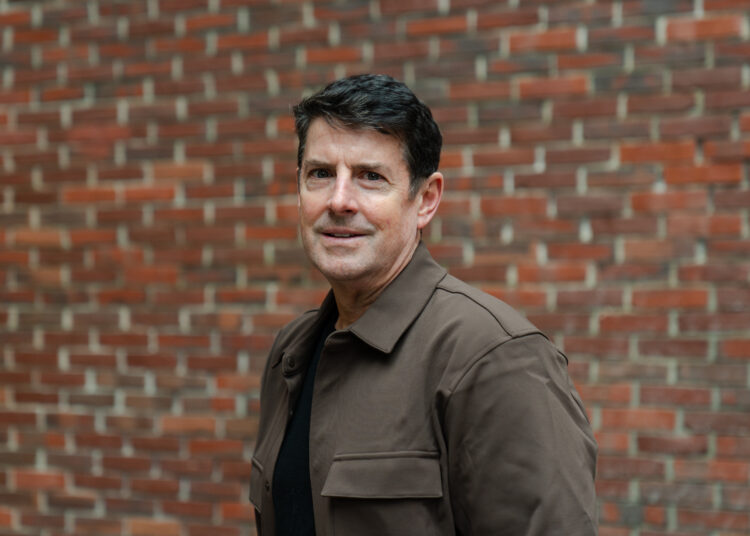
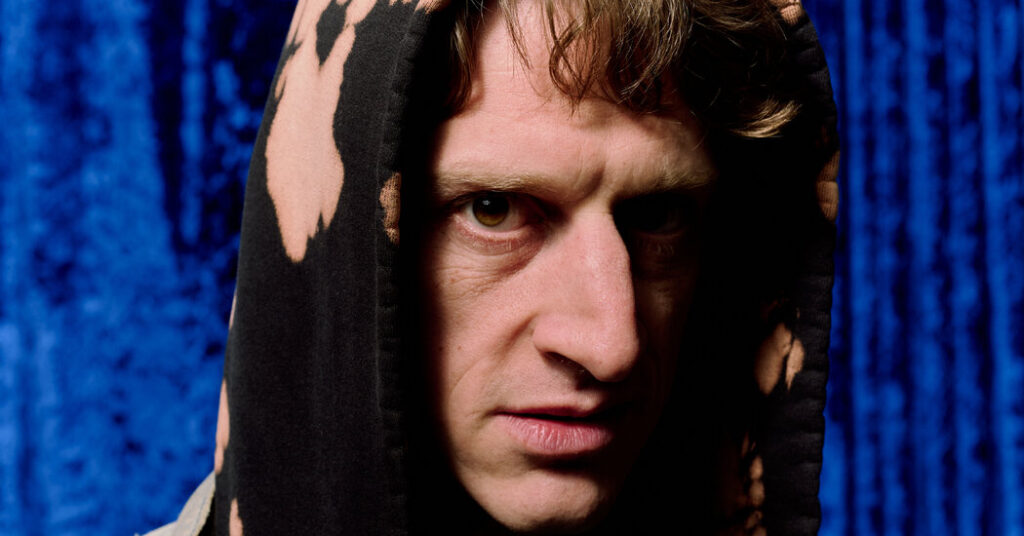
A guitarist and bandleader, Hanes, 34, is one of the younger heirs to the downtown New York scene, and is probably the earthiest and most irreverent. His ensembles Tredici Bacci and Tsons of Tsunami are known for their finely tuned genre pastiches — Italian soundtrack music and surf-rock — that also lean into raucous improvisation in concert. In New York, most regularly at the Brooklyn club Barbès, Hanes attracts a small but devoted following of musicians.
“A composer who plays” is how he described himself in an interview at his apartment in Bedford-Stuyvesant, Brooklyn. Then he cringed. “Now I feel pretentious.”
With a gap-tooth smile, Hanes speaks with warm enthusiasm and a class-clown energy that might explain the affection he has earned from the many musicians in his orbit. During our interviews, Led Zeppelin played on his stereo. His bookshelf was packed with volumes on medieval French music.
Hanes grew up in Berkeley, Calif. His father, a drummer in the post-punk band Chrome, and mother, a singer and vocal coach, both taught from home. “There was no sound proofing in the apartment,” Hanes said, imitating the racket of children hitting drums and warming up their vocal cords, constants throughout his adolescence.
He found guitar at age 9, then the guitarist and composer Frank Zappa, then the experimental composers of the early 20th century — Stravinsky, Webern, Varèse — who helped Zappa bring academic rigor to rock music.
“Studying music theory in reverse,” Hanes said of that lineage, “has helped because it makes it so that you are acutely aware of the fact that the rules are not necessarily rote.”
On guitar Hanes has a voice somewhere between the angularity of Marc Ribot and an earnestness that recalls Carlos Santana. He is a recurring player at the Stone in Manhattan, the new-music venue founded by John Zorn.
Playing with Hanes is “an adrenaline rush,” said the pianist and composer Anthony Coleman, who taught composition and improvisation to Hanes at the New England Conservatory of Music in Boston, and regularly performs with him. “He’s always on, and it pushes me to be on.”
“Gargantua” is a departure for Hanes. He doesn’t play in it, only conducts, which he is learning to do by taking lessons with the conductor Eli Spindel. And stylistically, “Gargantua” represents a maturation.
“It’s a full-on pie chart of everything that has been important to me,” Hanes said, “from a theory perspective, an orchestration perspective, from the perspective of improvisation.”
Zorn put it more simply. “‘Gargantua’ is a masterpiece,” he said in an email.
It took three years to write, Hanes said, and began with a hike up to the Molde Panorama in Norway, which affords a view of 222 mountain peaks. “All of a sudden it made sense to me that ‘Gargantua’ should be a bunch of different groups of three,” Hanes said. It is scored for three French horns, three trombones, three electric basses, three drum sets and voices.
“Gargantua” concludes with the movement titled “Hekla 1970,” a sonically catastrophic imagining of Iceland’s largest modern volcanic eruption. Hanes wrote the piece on the medieval principle of hocketing, in which musicians alternate notes in a melody, as if playing catch.
After his trip through Norway and Iceland, Hanes read Norse, Finnish and world mythology. He stayed, alone, for three weeks at the base of Kilauea in Hawaii, where by day he hiked, and by night he kept notebooks, which became the “Gargantua” scores.
Hanes said he received only one directive from his producer on “Gargantua,” the cultural impresario David Breskin: “Compose like no music has ever been written.”
The resulting anti-style sounds both antique and prehistoric. You hear it in the courtly nonsense vocals of “The Number of the Beast Is 666,” and the long, incantatory decrescendos of the overture, “A Series of Waves Tremble in a Sea of Blood.”
“Simon’s got a lot going for him because he’s not hamstrung by cool,” Breskin said.
“Gargantua” wouldn’t have been possible without an invitation-only grant from a private foundation that operates by word of mouth. The money allowed Hanes to assemble and record the extravagant ensemble he had built up in his mind, many of them friends. The premiere in Brooklyn showed trust among the musicians, and also abandon, complete with a staged fight between conductor and vocalists.
As a statement of artistic purpose, “Gargantua” explains how much an omnivorous young composer, in an age of record-label austerity, can do when given the studio freedom of a Carla Bley or a Frank Zappa.
Coleman said: “The way Simon operates inside of the world of the large ensemble and orchestration for acoustic instruments has to do with a kind of excellence that used to be much more common.”
The title, some libretto, and the ethos came from Rabelais’s 16th-century absurdist novel “Gargantua and Pantagruel.” Hanes likens the anarchy of that tale to the geological scale of volcanoes, to their “patience” and to the gestational labor of writing a piece of music that will outlast you.
“I wanted to be near a thing for which humanity is just a totally meaningless little blip,” Hanes said of his time in Hawaii. “I wanted to find that place where terror and joy in their most ecstatic forms are right up against each other.”
The joy, if you are looking for it, hits hardest in the tender movement “Moirai,” in the middle of an address to the god Vulcan from Dante’s “Inferno.”
Hanes’s principal singer, Jolee Gordon, breaks the chord established by her trio, the vocal group Chatterbox, with a high B that could stop traffic. Then Kevin Newton, the lead on French horn, picks up the B at an equally difficult low volume. Hanes wanted this melodic tag-team throughout the piece to resemble the thread that the three Fates in Greek mythology, the “moirai” of Hanes’s title, were said to have spun to determine the length of one’s life.
Back in the Lava Club, one such handoff came in on the boombox. The room fell silent and savored it. Hanes looked admiringly at Newton and said, “It requires an incredible amount of breath control,” Gordon said. “You find the perfect, tiny little spot where it’s not going to fall apart.” Jen Baker, one of the trombonists, added: “And then you don’t move.”
Hanes nodded his head in slow satisfaction. “Everybody was wicked pro,” he said.
The post The Volcano Lover: An Anarchic Young Composer’s Masterpiece appeared first on New York Times.