The high-stakes combat search and rescue missions to recover two downed US airmen stranded in Iran involved numerous aircraft, close calls, and a deception campaign, President Donald Trump and other administration officials said Monday.
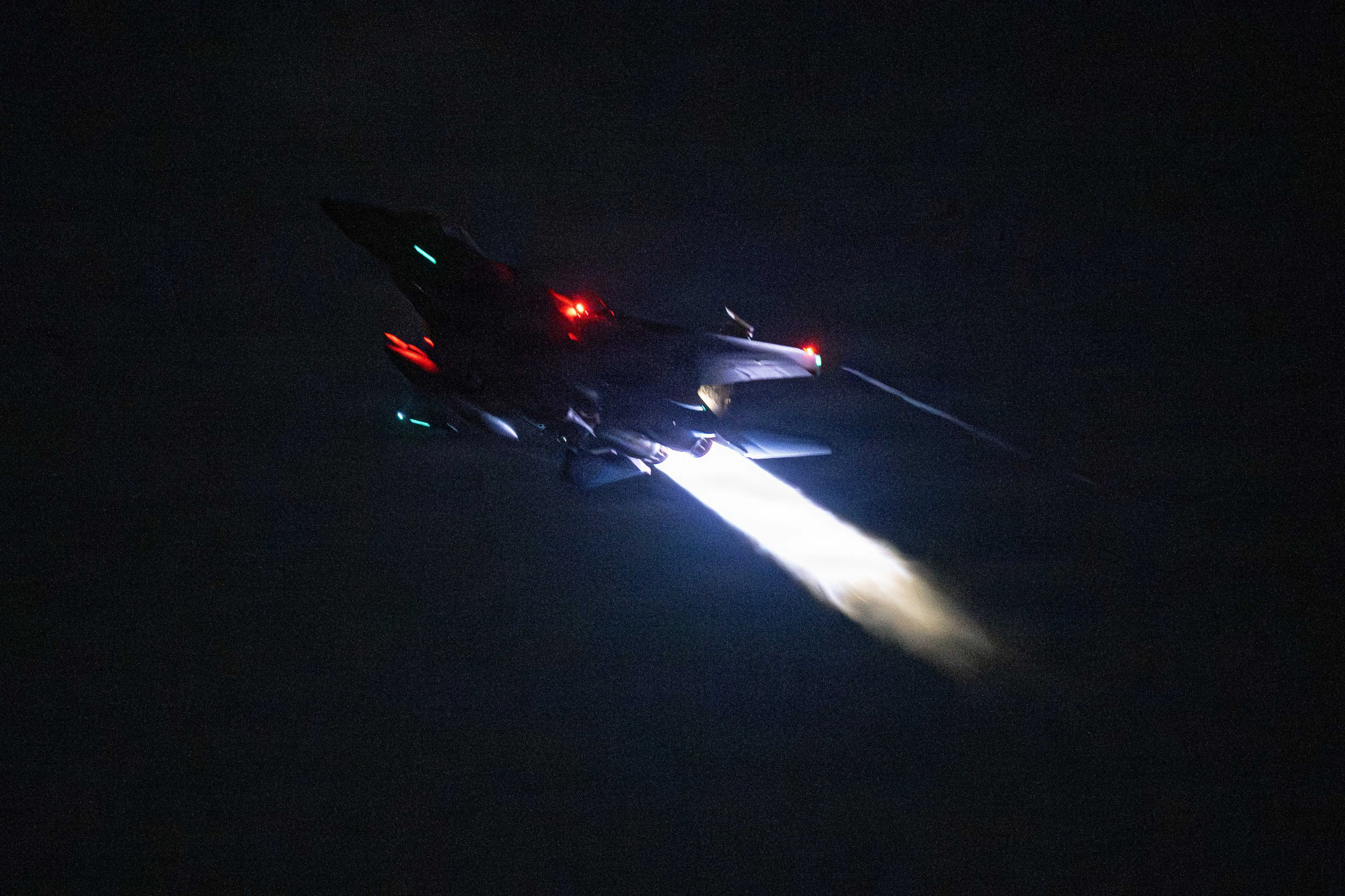
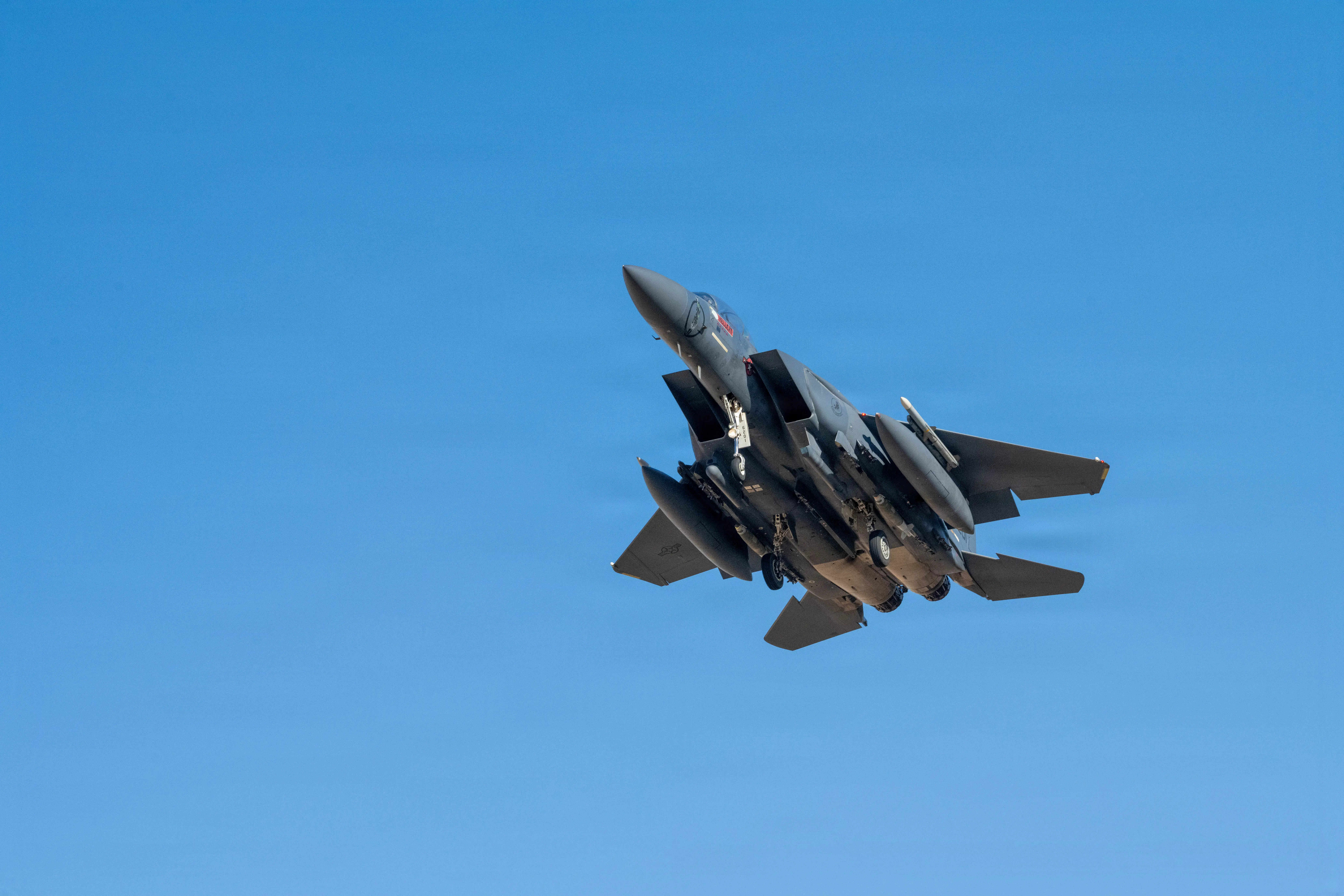
The shootdown of an F-15E Strike Eagle last Friday in Iran saw both the pilot and the weapon systems officer eject from the aircraft and land deep inside hostile territory. While the pilot was rescued quickly, the other airman landed miles away and hid for nearly 48 hours before being rescued.
At a press conference Monday, Trump and other officials shared details on the complex rescue mission. After the F-15 was downed by an Iranian shoulder-fired missile, Trump ordered the military to retrieve the two airmen, he said.
Within hours, 21 US aircraft launched to rescue the pilot, flying at very low altitude under fire, Trump said. The first wave located the pilot, who was extracted by an HH-60 Jolly Green II rescue helicopter.
The other F-15 crew member had landed a “significant” distance away from the pilot, the president said. The airman was injured and proceeded to climb into mountain terrain toward higher altitudes while treating his injuries. Trump said the officer was avoiding a very heavy Iranian presence in the area.
The weapons systems officer signaled his location with a beeper-type technology, the president explained without going into detail, and the US organized a major operation to rescue him from the mountains. The US dispatched 155 aircraft for the second rescue mission, including four bombers, 64 fighters, 48 refueling tankers, 13 rescue aircraft, and others.
Some aircraft, like A-10 Thunderbolt II attack aircraft, one of which was lost to enemy fire, engaged in close-in firefights with the Iranians to keep them away. Some were involved in recovery. Others were involved in deception.
Trump said much of the mission was “subterfuge” intended to throw off the Iranian hunt for the downed airman. “We wanted them to think he was in a different location,” he said.
He said that Iran had thousands of people looking for the airman, promising a reward.
“We were scattered all over” seven different locations across the country, intended to confuse the Iranians so they couldn’t figure out the officer’s actual location, the president added.
Trump said the US had planes circling dozens of miles down the coast, for instance. The deception was meant to mislead and misdirect to prevent the enemy from massing near the pilot’s real position.
In the actual area where the airman was hiding, US aircraft descended in force to rescue him, engaging the Iranians, pulling out the airman, and leaving. The officer had been out there for almost 48 hours. Trump said some aircraft were damaged by gunfire. Some aircraft were destroyed and left behind.
The CIA was also involved in executing an intelligence and deception campaign central to the mission. At the briefing, CIA director John Ratcliffe said the agency deployed “human assets and exquisite technologies that no other intelligence service in the world possesses to a daunting challenge comparable to hunting for a single grain of sand in the desert.”
While attempting to locate the second airman, the CIA also pursued a deception campaign to “confuse the Iranians,” Ratcliffe said. US officials confirmed Saturday that the weapon system officer was alive and hiding in the mountains and said the deception campaign helped prevent Iranian forces from finding him before the US carried out a rescue.
Radcliffe did not go into detail on the deception, but the New York Times and the Wall Street Journal reported that the agency bought the military time to find the second airman by spreading rumors that the US had already found him and was moving him out in an overland operation, the intent being to draw Iran’s focus away from the real mission.
The F-15 lost last week was flying a mission as part of the US war against Iran, now stretching into its fifth week. US forces have struck over 12,000 targets in Iran and conducted over 13,000 combat flights, targeting Iranian air defenses, missiles, command and control, and military infrastructure.
The ongoing conflict has resulted in Iran shutting down the Strait of Hormuz, a critical waterway for crude oil and gas shipments, resulting in price hikes for oil and international concerns over energy supplies.
Amid negotiations between the US and Iran, Trump has continued to threaten more strikes on the country. He has said that 8 p.m. ET tomorrow is a deadline for Iran to make a deal. Failure to do so, the president said, will result in bombardments of Iranian infrastructure, including bridges and power plants.
Read the original article on Business Insider
The post The US surged over 150 aircraft into Iran for a high-risk rescue and used deception to trick Iranian forces appeared first on Business Insider.