Peter Lucier is a Marine veteran from St. Louis who volunteered with Team America Relief and other Afghan evacuation efforts after the fall of Kabul.
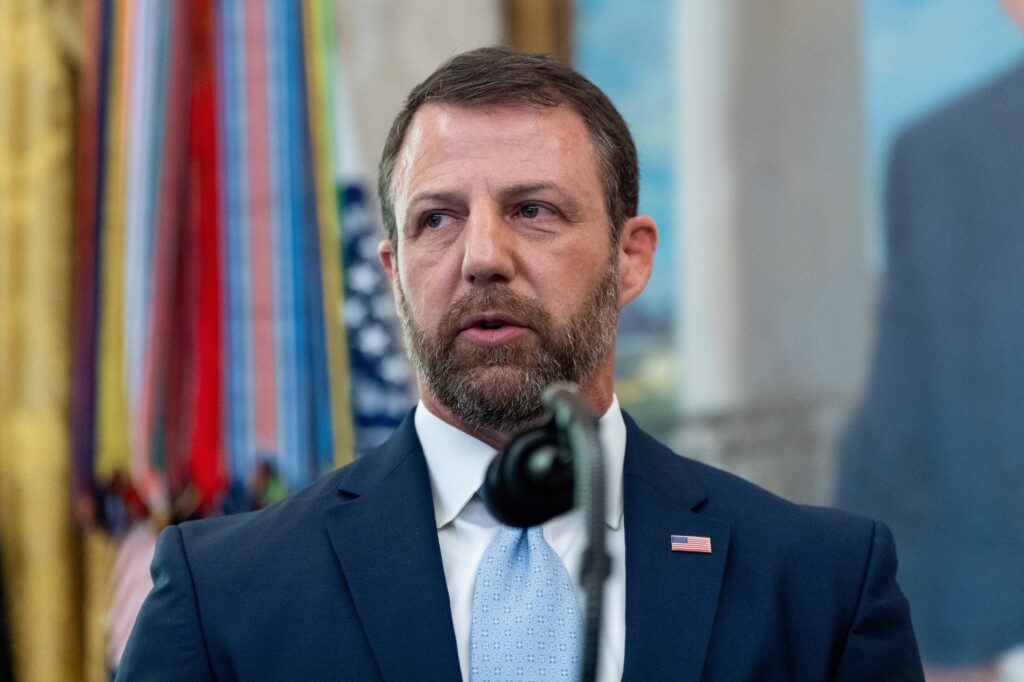
In August 2021, as Kabul collapsed and Afghans crowded the gates of Hamid Karzai International Airport, Homeland Security Secretary Markwayne Mullin — then a Republican member of Congress from Oklahoma — tried to travel to Afghanistan.
Amid the specter of Taliban rule, Mullin spoke out about the pleas flooding his office from stranded Americans and Afghan allies who had helped U.S. troops and diplomats. His mission to rescue them, he said, carried real risk with “a fifty-fifty chance of coming back.” But he tried anyway. Later, he accused the Biden administration of “absolutely lying to the American people about Americans and our friends being left behind.”
The language Mullin used then was familiar to anyone who served in America’s longest war. It carried the old rhetoric of the profession of arms: loyalty, obligation, and that when someone has stood beside you in danger, you do not abandon them.
I know that rhetoric because I lived it as a Marine infantryman in Afghanistan. In 2021, as Kabul began to fall, I joined the loose and improvised volunteer network that sprang up around the evacuation. I started by raising money for groups helping Afghans flee. Within days that turned into case work, then encrypted chats, spreadsheets, manifest lists and desperate efforts to get one more family to one more gate. By the end of August, the volunteer network had a list of more than 4,000 people desperate to escape.
In those days, veterans, advocates, lawmakers and ordinary citizens were all reacting to the same moral fact: America had made promises to people who had fought beside us.
For a time, Mullin clearly understood that duty extended beyond the chaos of the airlift. In 2024, he co-sponsored legislation that would have given Afghan partners in the United States a path to permanent residency after additional vetting.
But since taking office, the Trump administration that Mullin is now a part of has steadily narrowed the pathways and protections Afghan allies depended on. Refugee travel has been suspended, relocation infrastructure has been dismantled, entry into the U.S. has been restricted, and legal protections have been stripped from some already here — all in the name of national security. That Afghans were already among the most heavily screened entrants to the U.S. has been disregarded.
Mullin, however, did not emerge as a public defender of those whose cause he once made so personal. When Afghan allies faced intense political pressure following the D.C. shooting that killed one National Guard member and wounded another, Mullin instead said there should be a “pause” on the special immigrant visa program until the government could “get ahold of the people that came here through” it and make sure “they’re all in a good space.” He also said the Biden administration had “dumped” Afghans with special immigrant visas into the country without enough support.
At the same time, Mullin continued to use Afghanistan as a political accountability issue. In late 2024, he blocked the promotion of Lt. Gen. Christopher Donahue afterdeclaring that “no one has been held accountable” for the Afghanistan “disaster.”
For Mullin, Afghanistan remained a test of accountability when the burden fell on someone else. Now it falls on him.
As secretary of homeland security, Mullin now runs the department at the center of the administration’s immigration agenda. And he enters the job with something unusual in Trump’s orbit: a reputation for being his own man. Sen. Martin Heinrich (D-New Mexico) said he looked forward to having a secretary who “doesn’t take their orders from Stephen Miller.”
Mullin is no longer a senator issuing statements about what should have happened in 2021. He has a seat at the table inside the administration that will decide whether DHS continues to treat Afghan wartime partners with suspicion, delay and refusal.
Veterans remember the interpreter who stood next to them on patrol. The Afghan soldier who shared the same firefight. The guard who watched through the night while Americans slept. Mullin once spoke about these wartime allies in the same way.
If he meant what he said in the days after Kabul fell, then his first months at DHS should include a clear commitment to preserve legal pathways for vetted Afghan partners who remain in danger and to support permanent legal status for those already here.
After 20 years of war and thousands of American lives lost, America faces a question that is older than immigration politics and larger than any one administration: Does it stand by the people who stood by it?
Mullin once suggested it should. Now he can prove it.
The post Markwayne Mullin supported Afghan allies. Now he can prove he meant it. appeared first on Washington Post.