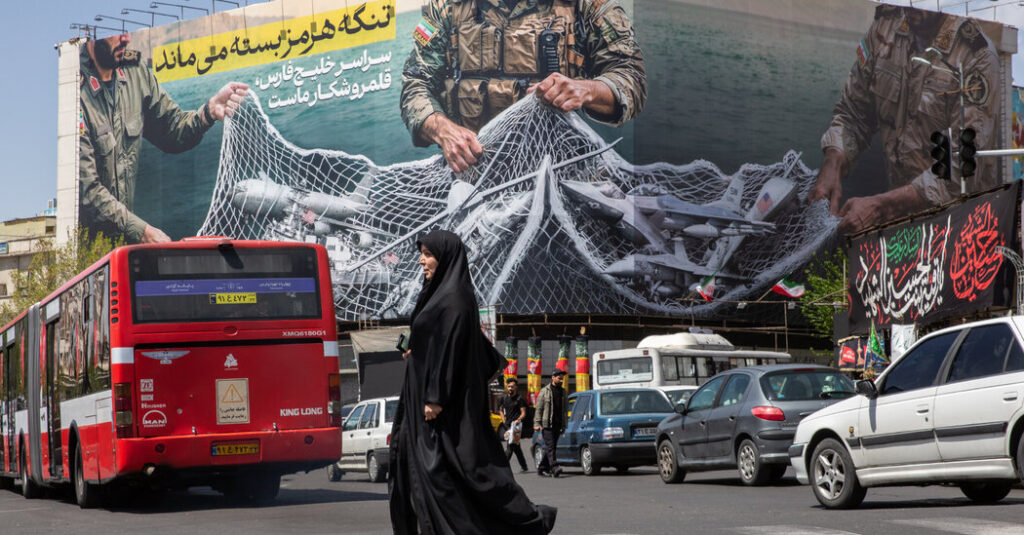
Iran on Monday delivered a 10-point proposal to end its war with the United States and Israel, according to Iranian state media. The plan was conveyed by Pakistan, which has been acting as a primary intermediary in the conflict, but appeared unlikely to resolve major questions ahead of President Trump’s Tuesday evening deadline for new attacks on Iran.
Two senior Iranian officials, speaking on condition of anonymity to discuss the sensitive negotiations, said the proposal included a guarantee that Iran would not be attacked again, an end to Israeli strikes against Hezbollah in Lebanon and the lifting of all sanctions.
In return, Iran would lift its de facto blockade of the key shipping route through the Strait of Hormuz. Iran would also impose a fee of roughly $2 million per ship that it would split with Oman, which sits across the Strait. Iran would use its share of the proceeds to reconstruct infrastructure destroyed by U.S. and Israeli attacks, rather than demand direct compensation, according to the plan.
Asked on Monday about the latest proposal involving Iran, President Trump said: “It’s a significant proposal. It’s a significant step.” He added, “It’s not good enough. But it’s a very significant step.”
In recent weeks, Mr. Trump has been threatening to bomb critical civilian infrastructure like bridges and power plants if Iran does not open the Strait of Hormuz, a major conduit for oil and natural gas, by Tuesday night. Such an onslaught would affect the daily lives of millions of Iranians, and many legal experts say that striking civilian infrastructure would be considered a war crime under international law.
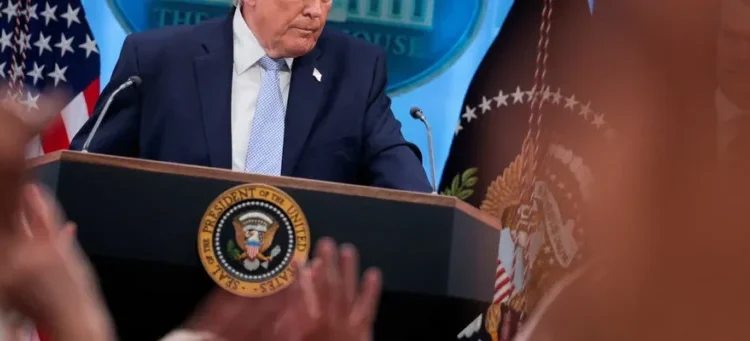
Later on Monday, at a news conference at the White House, Mr. Trump reiterated his threat that if his own conditions were not met by his deadline of 8 p.m. Eastern on Tuesday, he would order devastating new airstrikes across Iran to cripple the country. “It will take them 100 years to rebuild.” he said.
Iranian state media said that the text of the Iranian proposal “rejected a ceasefire” and “emphasized the necessity of a permanent end to the war in line with Iran’s considerations.”
In a reflection of how Iran sees its own position in the negotiation process, its state media said that the country had “demonstrated its upper hand in the war.” Iranian leaders are said to feel emboldened after shutting down most shipping in the Strait of Hormuz, and successfully shooting down an American F-15E fighter jet — even though the U.S. rescued both of the downed airmen.
While state media did not publish the entirety of the proposal, it said it included a protocol for safe passage through the Strait of Hormuz. It also outlined Iranian demands for sanctions to be lifted, reconstruction of damaged infrastructure, and an end to regional hostilities.
On March 24, the United States sent its own 15-point proposal to end the war with Iran to Pakistan. Iran rejected it and sent a list of counterproposals, some of which are reiterated in their proposal on Monday.
A spokesman for Iran’s foreign ministry, Esmail Baghaei, said on Monday at a news conference that the earlier U.S. proposal conveyed through intermediaries was “extremely excessive, unusual and illogical.”
Mr. Trump, for his part, said during a question-and-answer session at Monday’s news conference that he believed that the United States and Israel had achieved “regime change” in Iran by killing many of the country’s leaders.
“We’re dealing with different people now,” he said. “They’re smarter, they’re sharper, I think less radical.”
Max Bearak is a reporter for The Times based in Bogotá, Colombia.
The post Iran’s 10-Point Proposal Demands an End to Attacks and Sanctions appeared first on New York Times.