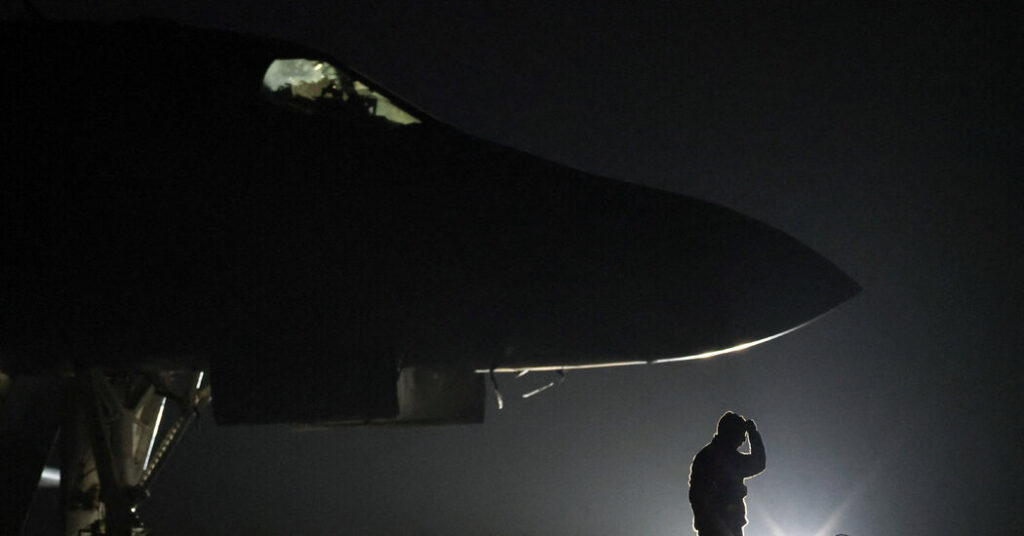
An Air Force officer whose fighter jet had been shot down in Iran was rescued by U.S. Special Operations forces in a risky Saturday night mission that took commandos deep into enemy territory, President Trump said on social media early on Sunday.
The rescue followed a life-or-death race between U.S. and Iranian forces that stretched over two days to reach the injured airman, who is a weapons system officer, current and former U.S. officials said. In the end, Navy SEAL Team 6 commandos extracted the officer in a massive operation that involved hundreds of special operations troops and other military personnel.
There were no U.S. casualties among the rescue team, Mr. Trump said. All the commandos and the weapons officer returned safely, a senior U.S. military official said. Rescue planes flew the injured airman to Kuwait for medical treatment.
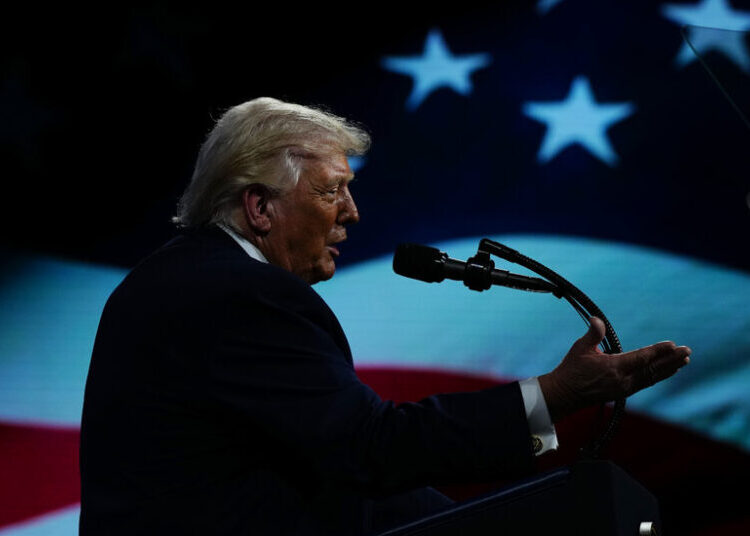
“WE GOT HIM!,” Mr. Trump exclaimed in the social media post. “This brave Warrior was behind enemy lines in the treacherous mountains of Iran, being hunted down by our enemies, who were getting closer and closer by the hour.”
Mr. Trump said that the rescued officer, an Air Force colonel, had “sustained injuries, but he will be just fine.”
The two crew members of the F-15E Strike Eagle, the first lost to enemy fire in the monthlong war, had both ejected from the cockpit on Friday after Iran’s military struck their plane. The jet’s pilot was quickly rescued, but its weapons systems officer could not be found, setting off an urgent search with major consequences for Mr. Trump and the war that the United States and Israel launched on Feb. 28.
Finding the downed airman, who had been hiding behind enemy lines with little more than a pistol as defense, had been the U.S. military’s highest priority over the last 48 hours.
After ejecting from the F-15E, the officer hid in a mountain crevice, his location initially unknown to either Americans trying to rescue him, or Iranians trying to capture him.
The C.I.A. initiated a deception campaign to try to confuse Iranian forces, and convince them the airman had already been rescued and was moving out of the country in a ground convoy, a senior administration official said. The agency also ultimately found the airman’s hiding place, passing the information on to the Pentagon, which mounted the rescue operation, the senior administration official said.
Mr. Trump’s exultant post celebrating the Air Force officer’s rescue contrasted with his threat on Saturday morning to strike Iran’s power infrastructure if the government did not open up the Strait of Hormuz to cargo traffic.
“Time is running out – 48 hours before all Hell will reign down on them,” Mr. Trump wrote.
The downing of the F-15E and the crash of another U.S. warplane, an A-10 Warthog, a short time later on Friday, raised questions about how much capability Iran retained after a month of attacks. Mr. Trump hailed the rescue as evidence that Iran’s defenses had been badly damaged, if not destroyed.
“The fact that we were able to pull off both of these operations, without a SINGLE American killed, or even wounded, just proves once again, that we have achieved overwhelming Air Dominance and Superiority over the Iranian skies,” he wrote.
The mission to save the crew member employed hundreds of special forces troops and other military personnel, dozens of U.S. warplanes, helicopters, and cyber, space and other intelligence capabilities.
The airman evaded Iranian forces for more than 24 hours, at one point hiking up a 7,000-foot ridgeline, a senior U.S. military official said. U.S. attack aircraft dropped bombs and opened fire on Iranian convoys to keep them away from the area where the airman was hiding. As U.S. commandos converged on the downed airman, they fired their weapons to keep Iranian forces away from the rescue site, but did not engage in a firefight with the Iranians, a U.S. military official said.
The airman was equipped with a beacon and a secure communication device for coordinating with forces mounting the rescue. But the airman restricted the use of his beacon, because Iranian forces could have detected its signal as well.
A senior U.S. military official described the mission to rescue the airman as one of the most challenging and complex in the history of U.S. special operations given the mountainous terrain, the airman’s injuries and Iranian forces rushing to the location.
In a final twist after the weapons officer was rescued, two transport planes that would carry the commandos and the airmen to safety got stuck at a remote base in Iran. Commanders decided to fly in three new planes to extract all the U.S. military personnel and the airman, and they blew up the two disabled planes rather than have them fall into Iranian hands.
The F-15E fighter jet was shot down in a region of Iran where there is significant opposition to the Iranian government. As a result, the airman may have been able to rely on locals for shelter and assistance.
The crash also drew the attention of Iranian military forces, who were reported to have been scouring the area. The Iranian government asked locals for help finding the downed airman, and had offered a reward for the airman’s capture.
The C.I.A. often also plays a role in making contact with civilians willing to help vulnerable troops stay alive, a process known as “unconventional assisted recovery.”
Eric Schmitt is a national security correspondent for The Times. He has reported on U.S. military affairs and counterterrorism for more than three decades.
The post U.S. Commandos Rescue Downed Air Force Officer Deep Inside Iran appeared first on New York Times.