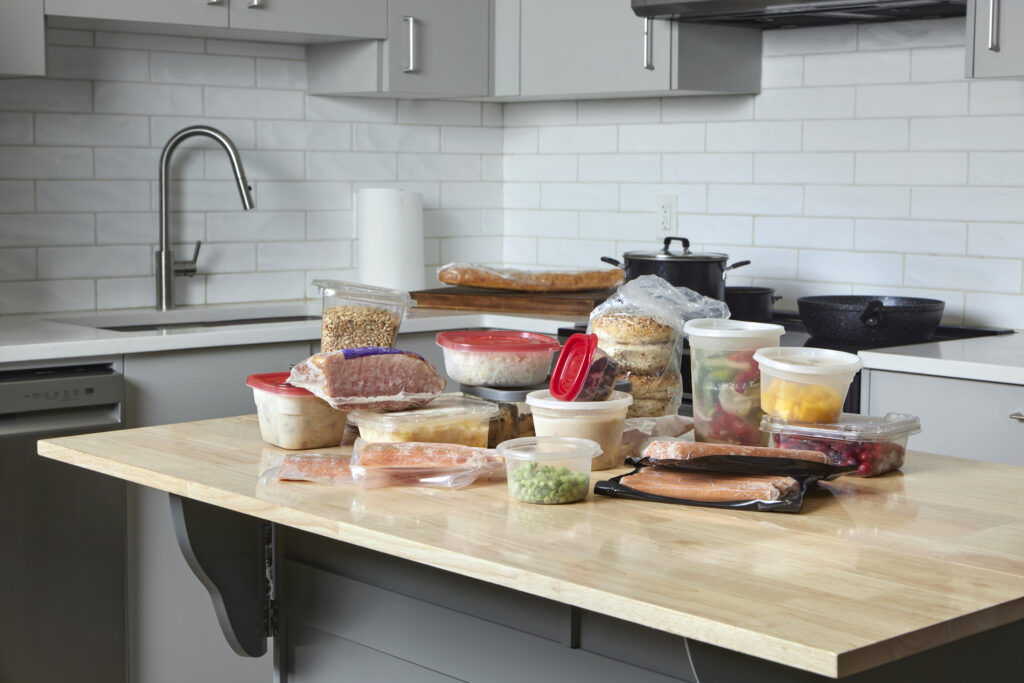
Andrew McCauley’s personal kitchen is divided. On one side are the items purchased at traditional supermarkets in his New York neighborhood. On the other are his “Airbnb foods.”
“My family is always grossed out by it,” said McCauley, who occasionally comes back with grub salvaged from his vacation rental properties.
They’re missing out. This week’s Airbnb menu features baked lobster macaroni and cheese and pau bhaji.
“Nobody wanted it,” McCauley said of the Mumbai street food left by an Indian visitor, “so I took it.”
Vacation rentals often contain a culinary Little Free Library filled with foodstuffs left by guests who may have miscalculated their appetite for cooking or consuming. Hosts and cleaning crews who discover edible odds and ends in the property’s fridges and pantries have to figure out what do with the remnants: toss them, leave them, eat them or donate them.
“People overbuy so much. The healthy stuff always gets left behind — so many salad kits, apples, bananas, limes,” said Diana Cruz, who runs a professional Airbnb cleaning company in Naples, Florida. “I didn’t have to pay for eggs for a hot minute.”
To avoid a larder full of leftovers, rental companies offer meal-planning guidance.
VRBO, for instance, recommends guests factor in length of stay, number of mouths to feed and dining-out schedule when assembling a grocery list. Vacationers should also consider portion size — if you can’t polish off an entire gallon of ice cream, buy pints or ice pops instead — and avoid duplicating staples by asking the host whether they provide basic provisions. And bring a cooler for cleaning out the fridge and taking uneaten items home.
Of course, even the most conscientious guests can get carried away. Their food waste, however, can become a windfall for people who have no qualms about grazing on strangers’ groceries.
Should you really eat this stuff?
The hosts, not the short-term rental platforms, devise their own checkout rules. Most try to limit the number of tasks to avoid overwhelming guests. Taking out the trash is common; emptying the fridge and pantry is not.
The professionals preparing the rental for incoming guests — the owners, managers or cleaning crews — are the first responders to abandoned goods. They decide what lands in the trash and what will live to see another mealtime.
“If it’s been opened, it’s most likely been touched, and you can’t tell if it’s been tampered with, so I’ll toss that,” said Sofia Kaiser, who rents the house her grandfather built near Fort Worth. “But everything that has not been opened, I always keep.”
For health reasons, food hygiene experts strongly suggest chucking the remains of take-out orders, restaurant meals and homemade dishes, particularly ones containing meat or seafood. To safely consume these items, you need to know when the food was prepared, how it was stored or whether the rental home cooks followed food safety protocols, such as preparing the meat to the correct temperature, avoiding cross-contamination and washing their hands.
Randy Worobo, a professor of food microbiology at Cornell University’s College of Agriculture and Life Sciences, said many foodborne illnesses, such as norovirus, shigella, salmonella and E. coli, are transmitted via the fecal-oral route. Improperly jockeying between ingredients can also lead to gastrointestinal ailments.
“If they handled raw meat and then stuck their finger in the spice jar, now they’ve contaminated the spice with whatever potential pathogen might be on the raw meat,” Worobo said.
During a recent vacation on Cat Island, Worobo discovered a stew in the fridge of his Bahamas rental. He bravely peered into the pot, identifying beef, potatoes and carrots. His curiosity stopped short of sampling.
Hosts say they prioritize the well-being of their guests but might be more cavalier about their own gut health.
While cleaning her Airbnb, Kaiser, who shares her discoveries on social media, unearthed a giant sheet cake covered in Pepto-Bismol-pink frosting. Half was untouched, so she dug in.
“It was a little taste test,” she said. “It was for science.”
The open container rule is more relaxed for packaged products that require cooking at blistering temperatures (rice, pasta) or are highly acidic (mustards, vinegars, pickles). The risk factor is low for these categories of foods, said Haley Oliver-Jischke, who runs a food safety lab at Purdue University in Indiana.
What’s more concerning, especially for people who are easily icked out, is the unknown. Did the previous guests double-dip, use their fingers as utensils or tamper with the food?
At his island rental, Worobo passed on the pickles, reasoning that “people reach into pickles jars, and their hand-washing practices are really poor.” He was, however, okay with seasonings stored in their original packaging as well as coffee in an unsealed bag, noting that java drinkers usually shake or scoop the grounds.
The hot sauce also met his standards: “People are not going to put their mouth on the hot sauce and drink it, right? And you can’t get your finger in the narrow opening.” As did the butter, which displayed a clean knife mark, the sign of good table manners.
A carton of ice cream with spoon tracks is clearly a no. Less obvious is ice. Envisioning a pair of unwashed mitts rooting around in the freezer tray, Worobo will toss the old cubes and make a new batch.
What, if anything, should you leave behind?
Leftovers are equal opportunity, crashing the vacations of incoming and outgoing visitors.
The newly arrived inherit other people’s supplies, and departing guests must contend with any surplus accumulated during their stay. Travelers restricted by car space, airport security or international customs rules have a few options.
They can off-load extra food through a donation app such as Olio and compost. The hosts can help, too.
“We support clear communication about preferences for unopened items — whether that’s taking them, leaving them for others to enjoy or composting when possible,” Airbnb said in a statement.
Many rentals will supplement their basic provisions with items orphaned by past guests.
At her St. Croix rental, Corina Marks provides a starter kit of staples including salt and pepper, coffee, tea, sugar and cooking oil. On occasion, stowaway items sneak into the pantry.
“Something that seems to multiply is tea, because people will buy a box of tea and use two or three tea bags and then leave it,” Marks said. “I’ll cull the tea boxes so there are two or three options instead of 10.”
In deciding the fate of her leftover bounty, Marks will rely on her “cultural judgment.” She will rehome chilled water bottles but remove alcohol, in deference to nondrinking guests. A can of beans is welcome, but Spam is not, and not just because Marks is vegan.
“It’s not necessarily my palate but my values,” she said.
At McCauley’s rental units, his guests are the primary provisioners. The countertop repository in the communal kitchen has grown to include honey, hot sauce, two types of cooking oil, tricolor quinoa and chocolate protein powder. When McCauley last checked, the vat of muscle-building powder felt a little lighter.
“It is possible that I have some Airbnb guests who are more adventurous than me,” he said.
Kaiser, whose five-bedroom Texas spread attracts groups celebrating special events, such as bachelorette parties or significant birthdays, fills the cupboard and two fridges with unopened products left by celebrants. The back fridge is often packed with Miller Light, Bud Light and Michelob Ultra. (She sets a minimum age limit of 25 years old.)
“It’s gone by the time I open the fridge again,” she said.
Leftovers on the move
Items that don’t make the cut for future guests can earn a second chance in a new home.
When Kaiser cleans out the rental’s kitchen, she will assemble the remaining goods on the counter and send photos through a family group text. Members of the chat will reply with their picks.
At properties with off-site owners, the cleaning crews are often the only employees on the scene. They get first dibs.
For liability reasons, Cruz said the property owners usually want housekeeping to discard the items, which can mean throwing them out or relocating them to a new address, such as her house. Her hauls, which she has valued at upward of $100, can feed her family of four, plus her extended kin.
“My sister and brother-in-law, and then my in-laws and cousins will see my videos, and are like, ‘Hey, I saw you got that drink. Can I have some?’” said Cruz, who documents her finds on social media.
Other hosts will donate items they can’t restock or repurpose.
Marks will drive three miles to a soup kitchen in Frederiksted — the second-largest town in St. Croix — that accepts items that have been refrigerated, a critical detail in a tropical destination with high humidity. Kaiser will bring nonperishables to a donation cabinet in a neighborhood park near Fort Worth. She will share her delivery on a community Facebook page.
“Hopefully, it will be eaten, because I don’t want to let anything go to waste,” she said.
A 16-ouncer of Pepsi was the catalyst for Airbnb Leftovers, an altruistic project started by Reid Kennedy, who rents a room in his St. Paul, Minnesota, home. About five years ago on a hot summer’s day, Kennedy marched that cold bottle of leftover soda to an area where unhoused residents frequently congregate. A grateful recipient jokingly told him to come back with the whole truck next time.
Though he couldn’t grant that wish, he returned with care packages starring his guests’ leftovers. He used three forsaken ears of corn to whip up Mexican street corn tacos. A container of abandoned peaches inspired a fruit-centric donation with peach-flavored iced tea and candied rings.
Kennedy posts clips of his donation creations on social media, and one guest recognized her serendipitous contribution.
“The woman who saw the video of the peaches was like, ‘Oh, my gosh, that’s what happened to my peaches.’” Kennedy said.
The post To eat or not to eat: The great Airbnb leftover food debate appeared first on Washington Post.