Many candidates’ daily campaign schedules today look very much as they have for most of my career. Speeches to community groups, interviews with journalists, fund-raising events and meetings with local party activists, with lots of driving in between.
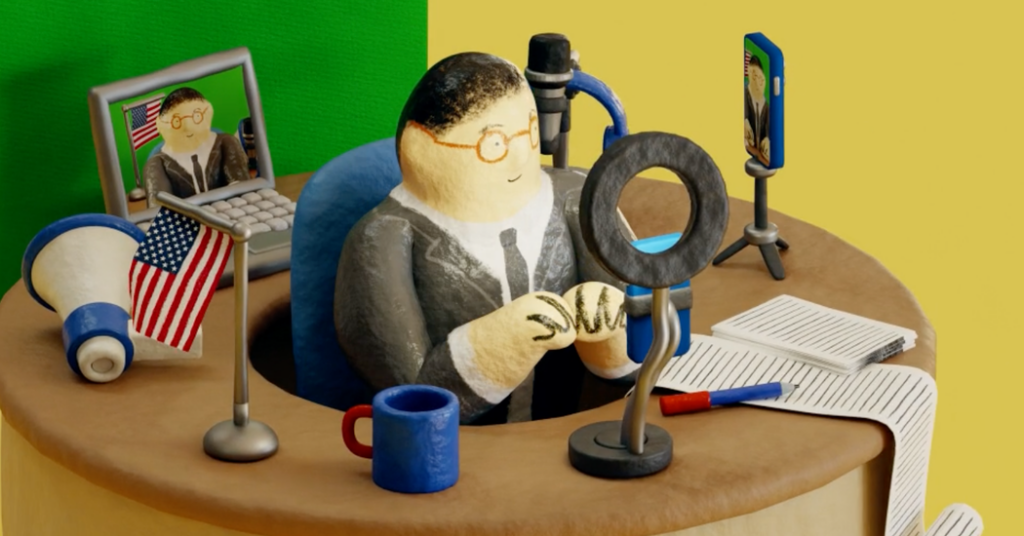
That won’t cut it anymore. A successful campaign in 2026 must operate like a full-time production studio.
Candidates and incumbents should center each day on content creation. That does not mean uploading the same video to every platform. It means creating output tailored specifically for TikTok or Instagram or YouTube.
It means several hours a day filming in campaign offices — even candidates’ homes — offering a message that buttresses the argument they are trying to land. It will still be a punishing schedule, just with less driving on roads and more driving of messages. Candidates still need to do the traditional stuff to stay in touch with voters’ concerns. But to the extent their schedules include speeches, events and interviews, they should be there only because they fit into the content calendar. The rundown of a candidate’s day is the best measurement of whether the campaign is consistent with its theory about how to win.
Is this a great way to audition and select our leaders, especially for executive offices? Not particularly. The ability to communicate and rally and comfort the public in a crisis are essential ingredients in a strong leader. Those skills at least, a voter can gauge through video. What’s harder to judge are the routine aspects of those jobs — how you hire and fire, make decisions and operate day to day.
Still, given the stakes, Democrats must meet the world where it is.
Successful candidates understand they are putting on a permanent show. Representative Alexandria Ocasio-Cortez of New York has championed the use of livestreams, including appearing on Twitch while playing Madden. James Talarico, the Democratic Senate nominee in Texas, has used town halls and a late-night TV appearance as part of a strategy to produce nonstop content. Zohran Mamdani did this in his campaign and is still doing it as mayor of New York, understanding that reaching citizens should not stop when the campaign does.
The bulk of Democratic candidates don’t have the range or talent of these three. Some who try to replicate it, like Andrew Cuomo, come across as more cringe than confident.
But they still need to build the production studio. To win today, you need to harmonize your message across the ever-growing list of ways people are reachable: traditional TV, connected TV, Instagram, Facebook, YouTube, TikTok, Reddit, podcasts, Snapchat, radio, video games, community events, door-to-door canvassing, phone calls and texting. There has to be a plan, budget and approach for each of these. Some voters can be reached via many of them. Some, just one. Communicators need to be everywhere all at once.
Search engine optimization used to be the coin of the realm, a digital tactic that allowed candidates to achieve high rankings in Google search. Now campaigns need to master “answer engine optimization,” which seeks to get their messages embedded in the responses churned out by A.I. chatbots such as ChatGPT.
Reddit and YouTube are critical feeders of answer engine optimization, as are news articles. You could make the argument that candidates should sit for interviews not to directly reach voters, but to shape the answers produced by tools like ChatGPT. The same goes for news releases and other written posts. The best campaigns, and really, any organization, should work to flatten and speed up the road from content idea to execution. That means removing layers of approval so people can move fast, take risks and experiment, and putting trust in the young staff members who are grew up using these platforms and understand culture sometimes better than politics.
Of course, even if you nail the medium, without a message that moves voters, candidates will fall short.
For Democrats to win the 2026 midterms, the election needs to be a referendum on the Republicans who control all the power in Washington.
Donald Trump is not on the ballot in 2026. His unpopularity is rising by the day. The task therefore is clear. The messaging must focus squarely on making vulnerable G.O.P. candidates, not the president, the face of the things voters are angry about: the higher prices, local businesses closing, farm community devastation.
So what should this look like?
No data. No stats. Instead, focus on personal stories from local voices who have sunk further into debt, have lost health care coverage and are upset about their tax dollars going to bomb Iran instead of helping their community. The voters who decide this election should be the lead storytellers, especially when candidates are not superstar performers.
Don’t script anyone. Turn on the phone and camera and let people tell their story. As a former political ad maker, I can humbly say the best lines never come from professionals. They come from people in a language that is raw, real and accessible. Regular, nonpolitical Americans are the most effective influencers. That’s especially true on TikTok, which prohibits political advertising. Anything that smells paid and prepackaged will backfire.
Most of the work I do today is with companies. There is not a single one that does not run advertising campaigns 365 days of the year. You can’t take a single day off from storytelling. Advertising is just a piece of the puzzle, not the whole, but it’s the only way to guarantee you reach your audience. Many progressive donors are increasingly turning up their nose at writing checks to support advertising. Yet to win tough races in tough places, we have to do it all.
By 2028, Democrats will hopefully have a standard-bearer who will improve Americans’ view of the party. Until then, they will have to win over voters who have soured on it. To win everywhere, Democratic candidates and groups will need to adopt a production studio mind-set.
David Plouffe was the campaign manager for Barack Obama’s 2008 presidential campaign and a senior adviser to Kamala Harris’s 2024 bid.
The Times is committed to publishing a diversity of letters to the editor. We’d like to hear what you think about this or any of our articles. Here are some tips. And here’s our email: [email protected].
Follow the New York Times Opinion section on Facebook, Instagram, TikTok, Bluesky, WhatsApp and Threads.
The post The Old Way of Campaigning Won’t Cut It Anymore appeared first on New York Times.